Showing posts with label Dorothy Dunnett. Show all posts

Saturday, 8 February 2025

Learning New Words with Lymond: L is for Lithless

Learning New Words With Lymond is back! This series wends its way through the alphabet in an attempt to understand and appreciate the intersection of word choice and character development in the work of the Scottish historical novelist Dorothy Dunnett. By thinking about how and why Dunnett does what she does with words, I aim to become more inventive, playful, and precise in my own use of language. Or, as Ellen Kushner put it,

 "Ever since I first read them in college, as a writer I've been in dialogue with the Lymond books...I kept trying to figure out, 'How did she just do that?' I learned a lot." ~ "All the Writers You Love Probably Love Dorothy Dunnett," Alyssa Dawn Johnson, NPR

We continue our journey through The Game of Kings with words beginning with the letters 'h,' 'i', and 'l'...

hagioscopic

"You have an entrancing and hagioscopic view of my character that is entirely your own." p. 298

Ever needed a adjective that describes someone (or something) with a small and limited view of a much larger whole? Enter hagioscopic, from the noun, hagioscope, which is an opening or window that allows Christian worshipers to see the elevation of the Host during the sacrament of the Eucharist. (OED) We the readers, together with Lymond's sister in law Mariotta, to whom this comment is directed, have a very hagioscopic view of his character at this point in the narrative.

 Hanno

 "Unless like Hanno you wish to sail by streams of fire. Unbuckle your sword. The suicide impulse is strong in the air." p. 336 

Lymond displays here his classical education. Hanno is the hero of an ancient Greek text called the Periplus which recounts his leadership of a large expedition of Carthaginian explorers and settlers along the Atlantic coast of Africa, c. 480 BCE. Towards the end of the journey, the party encountered a land where streams of fire fell into the sea. (Dictionary of African Biography, Oxford, 2012). 

Heliades

Despite almost tearful threats from Bowes, he sat amber-headed in the April sunlight, melting as the tears of the Heliades, and tore them to shreds. p. 315

The word play here is typical Dunnett--the Heliades were the daughters of the Greek son-god Helios, whose tears, when their brother Phaethon tried and failed to drive the chariot of the sun across the sky, fell into the river where he died and became amber (Wikipedia). One of the sources of humour is surprise--after such an innocent-seeming description, Lymond's subsequent words and actions are a delicious contrast.

Hippocrenes

"Did you do that?" snapped the Lord Lieutenant, and jerked a finger towards Acheson's prone body. Lymond turned his head. "Gushing Hippocrenes at every joint. No. Strictly speaking, the blame belongs to a strawberry roan." p. 427

Hippocrene (no s) was in mythology the spring of the Muses, said to inspire creativity in those who drank from it; by extension, the word means creative inspiration or a source thereof (OED). Lymond improvises brilliantly under pressure several times during this scene, with both words and weapons.

imbrocatta

In the middle of an imbrocatta he dropped his left hand, exposing his whole flank momentarily to Lymond's right blade. p. 417 

Finally, I found the historical fencing resource I was looking for! I once saw a post, somewhere on social media, about how intensely annoying it is that those invaluable late-1990s/early 2000's era websites, where some passionate enthusiast collected information on some obscure topic in minute detail without pictures, are rarely surfaced by modern search engines. Here is one such: an amazing glossary of historic fencing terms. Thus, what Richard is doing is an "attack over the adversary's blade, hand or dagger. It travels in a downward direction with the knuckles up." It looks--according to the Carolina Historic Fencing Association--something like this:

Surely there must be HEMA enthusiasts who are also Dunnett fans? My faith in Lady Dunnett's research prowess is sufficiently profound that I am sure her description reflects a realistic fight, but I would be interested to see how someone with actual knowledge of swordfighting would respond to this scene. Also, I would be wildly curious to see how a Bob Anderson-level fight choreographer would stage this scene and interpret the character work this fight does.

insifflating

It was not in the mind of Lord Grey, riding his bones loose between town and town, insifflating the precious troops and horses, the pikes and powder and footmen, the rolls and matches and demilances and oil and flour and money, the working tools and men, men, and more men into the feverish maw of the fort. p. 421

More usually spelled insufflate, this verb means "to blow or breathe in"; during certain Christian ceremonies, the celebrant sometimes blows on a person or thing to imitate the breath of the Holy Spirit (OED). Here, the word is used in an extended sense of "taking in," but the literal mean, "breathing in," also evokes what all this activity in the height of summer might smell like.

inspissate

The world vanished in a bloody mist, reappeared inspissate with pain, disappeared. Playful, inhuman fingers rested on his collar, hooked below it, and methodically began to flay his head against the high gloss of the tiles. p. 129

Marked as obsolete in the OED; means simply "thickened." (OED) As a verb, it means either to thicken or condense, or to become thick or dense. One of the many pleasures of Dunnett's writing is how she gives incredibly detailed descriptions of violence (here we see Lymond systematically--in the modern parlance--beating the crap out of Sir Andrew Hunter) without ever slowing down the narrative. 

Live footage of me reading a fight scene in Game of Kings

Kassidas

 "Go back and lie down. I don't want your coddled features singing Kassidas over me." p. 351

Initially, I though this was a misspelling of Kaddish, a Jewish prayer sanctifying the name of God; one form of which is associated with mourning the dead. It might also be a variant spelling of qasida, a "classical Arabic or Persian monorhyme poem in uniform metre, consisting of ten or more distichs set in a usually tripartite episodic structure, frequently with a panegyric or elegiac theme." (OED)

lapping

Will was ready for lapping. He picked up the waxed thread and glanced at the ruined Peel Tower, their present headquarters, which he controlled during Lymond's current absence. p. 98

Will Scott seems to be maintaining his bow by wrapping it with waxed thread. (OED) Rather than describe what the character is doing, Dunnett focuses on what he is thinking, which gives us a wonderful insight into the contrast between what Scott thinks he knows and how little he actually does.

Leibethra

"God, I've whined for ten minutes. Bury me at Leibethra, where the nightingale sings." p. 460

In mythology, Leibethra was where Orpheus was buried. Nightingales sang over his grave. (Wikipedia; also referenced in the Dorothy Dunnett Companion, vol 1, p. 262). This passage is from one of the many conversations between Lymond and his brother Richard during the former's convalescence. The development of their relationship and the revelation of their shared history is one of my favourite parts of Game of Kings.

lithless

He had seen these tarots several times in Scot's possession since he had come to Edinburgh. They were gruesome, Gothic, and graced with a kind of lithless malevolence all their own. p. 512

Lith is an old Scots word meaning a limb or body part--by extension, lithless means stiff or inert (Dictionary of the Scots Language). "Lithless malevolence" has a wonderfully evocative sound--I can picture the kind of grim and terrifying fifteenth century art that would have adorned Scott's cards.

lockfast

Instead, he bent his mind to weaving a fabric of steel: a case so massive, so intellectually secure, so lockfast that no man, however fluent and however gifted, should break it. p. 529

Not a hard word to guess in context, but still so delightful I had to include it on this list. It, too, is Scots, meaning "fastened by a lock, shut and locked, secured under lock and key against interference" (Dictionary of the Scots Language). Repetition in writing has fallen out of fashion, hasn't it? Most recent novels in the swashbuckling style would not allow the three parallel clauses beginning with so to qualify a single noun ("case") let alone the twice-repeated "however". There is a subtle, but important, difference between "however fluent and gifted" and "however fluent and however gifted."

Saturday, 2 November 2024

Learning New Words with Lymond: G is for Gimcrack

"Ever since I first read them in college, as a writer I've been in dialogue with the Lymond books," Kushner says. They captured her imagination from the beginning: "As I read, I kept trying to figure out, 'How did she just do that?' I learned a lot." ~ "All the Writers You Love Probably Love Dorothy Dunnett," Alyssa Dawn Johnson, NPR

Welcome back to another chapter of Learning New Words With Lymond, my attempt to understand and appreciate the intersection of word choice and character development in the work of the Scottish novelist Dorothy Dunnett. Earlier this year, I reread her first novel, The Game of Kings, and wrote down the many words and references I wanted to look up; put them in alphabetical order; and began the process of analyzing and enjoying how Dunnett does what she does with language.

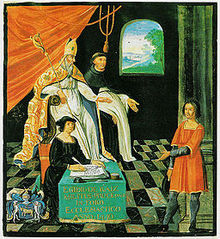
The Trial of Gilles de Rais, BNF Latin 17663 (Wikimedia Commons)

We continue our journey with words beginning with the letter 'g'...

galloon

"Mine all have whole necks, and go to bed with me for joy, not for lions on their quarterings and galloon on their underwear." p. 276

A galloon is "a kind of narrow, close-woven ribbon or braid, of gold, silver, or silk thread, used for trimming articles of apparel; a trimming of this material." (OED) The confrontation between Lymond and Margaret Douglas, Countess of Lennox, serves to illustrate magnificently, mostly through dialogue, their previous history and respective characters. 

gib-cat

"--But even a gib-cat has claws," said Lymond, returning the smile and answering the thought. "Where is Samuel Harvey?" p. 314 

A gib-cat is a neutered tomcat or a term of abuse for an older woman; the former is clearly what is meant here. (OED; see also the entry The Dorothy Dunnett Companion, vol 1.) In  Lymond's adversaries---here Sir Robert Bowes and George Douglas--ignore the threat of his claws, and are deservingly and entertainingly shredded over the succeeding pages.

Gilles de Rais

I'm used to being taken for a cross between Gilles de Rais and a sort of international exchange in young mammals, but I draw the line somewhere. p. 348 

Gilles de Rais (c. 1405-1440) features in neither volume of The Dorothy Dunnett Companion. Born into a powerful Breton family, he became Marshall of France and fought alongside Joan of Arc. Accused of summoning demons and convicted of raping and murdering over a hundred children, he was executed in 1440. Alongside that, "international trade in young mammals," is a bit of a damp squib, aside from being a glaring anachronism: mammalia isn't used as a zoological classification until the eighteenth century; mammal wanders into the dictionary in the nineteenth; and international trade in young animals would not then have been the moral outrage it is today. Lymond is speaking figuratively, not literally; since his audience is the hapless Will Scott, he could well be referring to his attempt to capture Margaret Douglas's son and use him as a bargaining chip. To say nothing of the other exchanges of hostages going on in Part 3, Chapter 2. Layers within layers!

gimcrack

"In a day of gimcrack cannibalism and snivelling atrocities, we have now touched rock bottom. God send," pursued the voice as Scott, descending, made his way to a trestle by the well, "God send that somebody else is about to flay the gristle from your inestimable backbone." p. 348

A gimcrack is either a "a fanciful notion; also, a ‘dodge’, underhand design;" a knicknack or ornament or insubstantial thing; a fop, especially a female one (noun); or as an adjective "trivial, worthless; showy but unsubstantial; trumpery." (OED) Lymond, in taking in Will Scott and attempting to teach him, runs a risk most teachers will ruefully recognise: a pupil who learns some unintended lessons. Will is a delightful point of view character and this scene in the cellar at Threave is a crucial turning point for him and for us as readers in discovering who Lymond is and what he really wants. And it's a delightful example of Lymond's ability to scourge with words alone.

girasol

There was a gleam of steel: a solitary, agonized, breathless moment in which the irony of the thing struck him like a cannon ball, and then the circle of dark heads above him opened out like a girasol to the sun. p. 476

A girasol can be either a fire opal or a sixteenth-century name for a sunflower, from an Italian portmanteau of the word girare (to turn) and sole (sun). (OED) If the repetition of sounds in "like a sunflower to the sun" bothers you (it wouldn't have bothered late Latin poets, who made an Olympic sport of alliteration and assonance), and "like a flower to the sun" feels to hackneyed and overused, try "like a girasol to the sun" today!

Glasgerion

There was a pause. Then Lymond, rather helplessly, began to laugh. "Strike on, strike on, Glasgèrion. Prophète de malheur, babillarde..." And as once before, was betrayed by the uncertain, wanton luxuriance of voice. p. 361

"Prophète de malheur, babillarde" is translated in The Dorothy Dunnett Companion. Come, let us add "prophet of misfortune, chatterer" to our mental libraries of French invective. The Companion doesn't list a literary source but a Google search suggests Lymond is quoting "L'Hirondelle et les petit oiseaux," a poetic retelling of Aesop's fable of the swallow and the other birds by Jean de la Fontaine (1621-1695). The swallow, warning the other birds to eat up a farmer's hemp seeds before they can grown into plants that will be made into rope for nets, is roundly rebuffed by the other birds.

Prophète de malheur, babillarde, dit-on,
        Le bel emploi que tu nous donnes!
        Il nous faudrait mille personnes
        Pour éplucher tout ce canton.
        La chanvre étant tout à fait crue

A full version of the text, with light commentary, can be found here.

Glasgèrion is a late medieval ballad, known to Chaucer, in which a king's daughter falls in love with a harper, Glasgèrion, and is deceived and raped by his servant.

Strike on, strike on, Glasgèrion,
Of thy striking doe not blinne:
Theres never a stroke comes oer thy harpe,
But it glads my hart withinne.

The ballad is partially quoted in The Dorothy Dunnett Companion; the full text can be found here. Lymond, wounded and physically exhausted, mocks himself for being a day late for a meeting that would been a crucial step towards proving his innocence.When and why Lymond engages in verbal acrobatics is always revealing for his character; to his interlocutor, Gideon Somerville, it seems a sign of inebriated insouciance; as readers, we can see how desperately Lymond is trying to keep it together, and how he compounds his self-reproach for being "too little, too late." Lymond's verbosity also distances and delays the melodrama of his situation, which makes it feel earned rather than excessive.

Glaucus

"Ah!" said Lymond, airy and stylish in dark blue. "There's a but. Like Galucus, we have a but, but no honey in it. Lord Grey has changed his mind?" p. 313

Not the Greek god of fisherman, but a mythological character, the son of King Minos. He accidentally drowned in a jar (aka, a butt) of honey and was brought back to life by Polyidus using a magic herb. (Wikipedia; see also The Dorothy Dunnett Companion.) The prince was promised and then deprived of the gift of prophecy, paralleling Lymond's own situation of being promised and deprived of a key witness to his innocence.

gomerel

Sir Wat said: "Ye gomerel: if that's right, why the devil didn't you watch that first letter?" p. 523 "That boy," bellowed Sir Wat, "was a shilpit, shiftless, shilly-shallying gomerel before he met up with Francis Crawford." p. 525

Clearly, a term of abuse favoured by the redoubtable Wat Buccleuch; a Scots and northern dialect word for a silly person, fool, or simpleton. (OED) A ninteenth century word, as far as the dictionary says, rather than an early modern one; its earliest print user was Christian Isobel Johnstone (1781-1857) (ODNB), an important Scottish novelist, journalist, and editor; another early user was the great Scottish historical novellist, Sir Walter Scott.

Thursday, 31 October 2024

Learning New Words with Lymond: F is for Fustic

Welcome back to Learning New Words with Lymond, a series of blog posts about word choice and storytelling in the works of Dorothy Dunnett, an internationally beloved historical novelist. Like Ellen Kushner, when I first read the Lymond Chronicles, my immediate reaction was "How did she just do that?"

The Game of Kings (Legendary Lymond Chronicles)
Dorothy Dunnett, The Game of Kings

This project attempts to answer this question by analyzing Dunnett's use of rare and obscure words. What do these words mean in context? What do they reveal (or conceal) about character and plot? We continue our journey through The Game of Kings with words beginning with the letter 'f'...

feal 

"All right, but remember, although you've bought the rights of fuel, feal, and divot, I shan't be lying here like an upset sheep forever." p. 461 
Dunnett's recondite vocabulary functions like a camera obscura of the past: through the tiny hole of one now-obsolete word, we get a shadow-picture how and why that word was once common. At first sight, feal looks at first like it might simply be a misprint. It's not. Feal can be a noun, meaning a feudal tenant or vassal, or a payment to a feudal lord; an adjective, meaning faithful or constant; or a verb meaning to hide or conceal. And that's not getting into the possibilities that feal is, in older spellings of English, another way to write feel, fall, or fail! This particular sentence, spoken by Lymond to his brother Richard, has already come up once before, when I looked up the word divot, thinking that this had to be a new-to-me use of that word. And it was. "Feal and divot" comes from Scottish law: it is "a rural servitude, importing a right in the proprietor of the dominant tenement to cut and remove turf for fences or for thatching or covering houses or the like purposes, within the dominant lands." (OED).
 

fenestration

Something--hardly laughter--glimmered in the heavy eyes. "Neither do I. But the fenestration seems fairly extensive." p. 438 

The first thing that comes to mind when I see the word "fenestration" is the Defenestration of Prague, which involved the people of Bohemia tossing Habsburg officials out a window into a refuse-choked moat for failing to keep their promises. According to the dictionary, it can refer both to "the arrangement of windows in a building," and also "the process of becoming perforated; the formation of small holes." (OED) The first attested use of fenestration is nineteenth century, but since the word comes directly from the Latin word for window, fenestra, it's not inconceivable that it was in use earlier. I think I've looked up more words from these scenes where Richard Crawford tends his brother than any other part of the book--Dunnett does absolutely fascinating things with subtle revelations of character through language. "My injuries seem fairly extensive" and "the fenestration seems fairly extensive" are the statements of two very different men.

flamens

Lymond looked over his shoulder and back. "Spaniard? Behold," he quoted sadly, "my countenance and my colour. It's only Sweet Cicely awaiting the bees, and blushing in young modesty like a seraphim, two wings over the eyes, and the other four pinned with some some damnably hard knots: God save Flamens and keep all the knotless from high winds and short memories." p. 316 

Lymond, in temporary captivity to a group of Englishmen whom he tricked and soundly humiliated by pretending to be Spanish, proceeds to drive them to distraction by making ceaseless, subtle fun of them. He quotes King Herod's speech from the fifteenth- century Coventry Nativity play:

Behold my countenance and my colour,
Brighter than the sun in the middle of the day!
Where can you have a more greater succour,
Than to behold my person that is so gay;
My falchion and my fashion with my gorgeous array?

The reference to Sweet Cicely is partially explained by the site of Lymond's captivity--a kitchen garden; in Isaiah 6:2 the seraphim in cover their feet and faces with their wings and fly with the third set. In Roman culture, a Flamen is a priest of a god. Surely in this case, Lymond propitiates Momus, the god of ridicule, mentioned on the previous page. The rest of his  mockery is unfortunately lost on me; as far as I can tell from skimming the Spanish episode (pp 111-7, if you want to see for yourself), there is nothing that would make these particular words into the carefully aimed insult they undoubtedly are. If either the penultimate (God save Flamens) or final clause (keep all the knotless from high winds and short memories) are references to literature, they have thus far escaped me. Knotless, in any event, means "like a thread without knots, smoothly, without check or hindrance," in other words, the opposite of how Lymond's hapless opponents' plans have gone. (OED)

fleshers

The fleshers and brewers and smiths and weavers and skinners and saddlers and salters and cappers and masons and cutlers and fletchers and plasterers and armourers and porters and water carriers, and the one-eye man who had called at Bogle House selling fumigating pans. p. 138

A flesher is a Scottish word for a butcher. (OED) Names of historical occupations are such an evocative window into how people lived.

fossorial

But whatever happens, you have from these fossorial depths my unstinted gratitude and fondest applause. p. 304
A synonym for burrowing, used to describe an animal that burrows or is capable of doing so. Lymond's admiration and gratitude for the help of Christian Stewart, to whom he is speaking, goes a long way down.

frangible

A frangible and archaic courtesy reigned at Flaw Valleys. p. 378 

Frangible is a word I've seen before but have trouble remembering because it doesn't sound at all like its meaning, which is breakable, or capable of being broken; it can be used as an adjective or a noun. I was delighted to discover that it's an old word, dating back to at least the late fifteenth century, with roots in Old French. (OED) Not a load-bearing word, since the sentence would have much the same flavour if it were "A fragile and archaic courtesy reigned at Flaw Valleys," although breakable (frangible) is subtly different from easily broken (fragile). The sentence does start to change into something very different if one plays with alternatives for "archaic." A fragile and old-fashioned courtesy reigned at Flaw Valleys is something out of a comedy of manners, which this is decidedly not.

froissèes

The men watching, unable to breathe, heard the click and clash and slither of contes, froissées, beating and binding: saw first one man and then the other bring his art to the pitch of freeing his blade for the ultimate perfection, only to bow before the other's defence. p. 419

While froissées is the feminine past participle of the French verb froisser, which can mean "to take offence, to be hurt" or "to crumple or crease," it is clearly has another meaning here. As happened when I looked up contes, I am unable to identify the precise technique described--no joy from my beloved Oxford English Dictionary or a damnably AI-infested Google search. A quick word search of Mahon's English translation of L'Abbat's The Art of Fencing, or, the Use of the Small Sword (1735) and George Silver's Paradoxes of Defence (1599) turns up neither term. However, the Wikipedia article on martial arts manuals shows that there was a whole industry of seventeenth century Scottish fencing manuals. These are of course, a century too recent, but one assumes Dunnett had the linguistic facility and curiosity to consult early modern fechtbücher (fight books) in the original. Digging into them all goes beyond the scope of these posts, but hopefully, at some point, someone who is both a Dunnett fan and a practitioner of historic martial arts will investigate. In the meantime, one need not be able to follow the precise technical terminology of the duel between the Crawford brothers to appreciate the story it tells.

fustic

Sir Robert Bowes straightened, nodded, and surveyed the Master at leisure from fustic head to silver spurs. He smiled. "Is this the fellow?" p. 314

Fustic refers to a yellow dye made from the wood of either the Venetian sumac (Rhus cotinus) or Cladrastis (Chlorophora, Maclura) tinctoria. Those who are deep into their Dunnett will be delighted to learn that one of the earliest published uses of the word is by royal Latin tutor Roger Ascham in Toxophilus, the schole of shootinge (1545). (OED) We are told a few times that Lymond is very blond; Bill's Dunnett Blog has a recent post which gathers a number of physical descriptions of the character. Impossible that anything male should be as fair as that, memory whispers; there is a more than superficial resemblance between Lymond and Peter Wimsey. It interests me how often Dunnett uses action to described character, and how selectively she uses details of physical appearance. Descriptions of how characters speak are perhaps rarest of all. Without being told anything, we are shown that Bowes thinks he has the upper hand.

Spoiler: he doesn't.

A Note on Links

Because I work at a university, I have access to the subscription version of Oxford English Dictionary, and indeed the luxury of the online Oxford Reference series at my fingertips. As a matter of principle, I try to use and link to material that anyone can access when writing for public audiences. However, the OED has features--like the ability to explore the etymology, frequency, history of use, and meanings of words, that free online dictionaries simply don't have. Thus, I quote relevant bits of entries, and include open access links wherever possible, so that anyone who wants to do so can retrace my steps for themselves.

Friday, 18 October 2024

Learning New Words with Lymond: E is for Epopee

Welcome back to Learning New Words with Lymond, in which I blog my way through the rare and obscure words used by Dorothy Dunnett in The Game of Kings. Over the six books of the Lymond Chronicles, we follow the misadventures of the title character, Francis Crawford of Lymond, across the sixteenth century world, from Scotland to Russia. Dunnett is known for the beauty of her writing and notorious for the complexity of her language.

The Game of Kings (Legendary Lymond Chronicles)
Dorothy Dunnett, The Game of Kings

In these posts, I explore Dunnett's many sesquipedalians. What do these words mean? Why do they make sense in context? How do they enhance our understanding and enjoyment of what is happening in the story? This occasional series wends its through the alphabet from A to Z.

We continue with words beginning with the letter 'e'...

eddish

The lids veiled Lymond's eyes as they disengaged. "Reaping the eddish. Try the other side next time." p. 416 

Eddish is the grass which remains after mowing or haying, so "reaping the eddish" is trying to cut down something that isn't there. An apt and biting comment from Lymond on his brother's failure to wound him during their duel. Unbeknownst to Richard, Lymond is protected by bandaging from a previous injury. A good fight scene isn't just exciting, it tells us something about the character of the fighters, and we learn so much about the brothers Crawford in this one.

eidelweiss

The last thing Janet saw was Sybilla's head, like eidelweiss on some black, mirrored tarn. p. 473

Sybilla, Lymond's mother, has beautiful white hair. Edelweiss (the extra 'i' seems to be a typo) is "an Alpine plant, Gnaphalium Leontopodium or Leontopodium alpinum, remarkable for its white flower, growing in rocky places, often scarcely accessible, on the Swiss mountains. Also attrib., as in edelweiss-lace." (OED)

encycsted

"And yet you rather expected Richard to read your mind, didn't you? You thought he pictured you encysted forever with pots and pans--A woman is. a worthy thing; they do the wash and do the wring. And so on. Whereas--" p. 355 

A literal or figurative way to describe something enclosed in a cyst, capsule, or bag. This is such a fun, wise conversation between Sybilla and her daughter-in-law, Mariotta, about the many ways husbands and wives can have a good relationship with one another.

enteere

Come, my friend, my brother most enteere; for thee I offered my blood in sacrifice; and all that. Except that it was Janet Beaton's blood. p. 460

The word can be an adjective meaning whole or complete, but when used of people it can also mean "wholly devoted to another, perfectly beloved." Later, it was used of friends or friendly conversation to mean "unreserved, familiar, intimate." Used by Lymond when speaking to Richard, as they make their peace with each other.  

enteric

"Oh my dear, Catherine has made enough martyrs without adding more. I shall tell Dandy you drained every drop and left in a state of enteric rapture: only remember to fib when you see him." p. 261

Sometimes, when reading Dunnett, I am convinced that Sybilla, Lymond's mother, and Honoria, Dowager Duchess of Denver (Lord Peter Wimsey's mother) would have got on like a house afire, innocent bystanders fleeing into the night, no survivors, et cetera. They have a similarly elliptical, even malapropistic, way of speaking. An enteric fever is typhoid; as a noun, the word is used to refer to a medication to treat diseases of the digestive tract; as an adjective, it relates to the intestines or digestive tract in general. Like her son, Sybilla can tell the truth in such a roundabout fashion that it sounds like a lie: as is revealed later in the book, if Richard had drunk Catherine Hunter's nostrum, he would indeed have become a martyr, and his stomach would have been in anything but raptures.

Epaminondas

"Do you think if you didn't clutch them to your chest like Epaminondas and his javelin, your affairs might be less ruinous?" p. 303

Epaminondas (419/411-362 BCE) was a Theban general and statesman, responsible both for freeing his city from the domination of Sparta and, in later historians' estimation, leaving it vulnerable to annihilation at the hands of Alexander the Great a few decades after his death. The javelin seems to be a reference to the account of his death given by the Roman biographer Cornelius Nepos:

He was also an able speaker, so that no Theban was a match for him in eloquence; nor was his language less pointed in brief replies than elegant in an elaborate speech. [At the battle of Mantinea, while his Boeotians were winning the day, he was mortally wounded by a javelin]: when he saw that if he drew out the iron head of the dart he would instantly die, he kept it in until they told him "that the Boeotians were victorious." "I have lived long enough," he then said, "for I die unconquered." The iron head was then extracted, and at once he died.

epopee

I should make a wonderful epopee, don't you think? p. 304

Christian Stewart is one of the few characters in Game of Kings around whom Lymond lets down his guard and one of the only ones in the entire series to not only return his verbal serves but even beat him at his own game. (Epaminondas and his javelin is her pointed comment on Lymond's dangerous habit of playing his cards close to his chest.) Lymond, who has spent the previous page dancing a desperate tarantella around explaining to her what is really going on with him, concludes with the truth and a bit of self-mockery. An epopee (pronounced, despite its French origins, exactly as it looks, eh-poh-pee) is an epic poem. Christian gives this the response it deserves.

escharotic

The carrying, escharotic voice was thick with sheer cold fury for half a dozen words, and then he had it controlled. p. 526

 An eschar is, according to the dictionary, a "a brown or black dry slough, resulting from the destruction of a living part, either by gangrene, by burn, or by caustics." (OED.) An escharotic is something that causes an eschar; in other words, it's a beautiful early modern synonym for caustic. Would this passage, which describes Lymond's tone of voice in the dramatic courtroom scene at the end of the book, land the same if the sentence began "the carrying, caustic voice...?" Or does using the word escharotic allow Dunnett to strengthen the sentence's euphonious series of c-sounds by slipping in two for the price of one? Caustic would do the same. Once again, I am made wildly curious about what Dunnett was reading to come up with some of these words. As of about 2010, escharotic occured 0.005 times per million words (OED).

ethological

"For all his ethological small talk," Lymond said. "You must decide on the data you have." p. 324

Much of the plot of Game of Kings hinges on Lymond attempting to capture the testimony necessary to prove his innocence, without explaining what he is doing or why. Ethological is a highfalutin' synonym for ethical; in John Stuart Mill, it also describes something "of or relating to the study or formation of human character." (OED) Ethology, delightfully, sometimes means "the portrayal of character by gestures; the representation of character through action," something at which Dunnett excels. (OED)

Eulenspiegel

She said tartly, "It doesn't help to find oneself bedevilled with persons making Eulenspiegel-like appearances. I live for the day when we can be formally introduced. Don't you think it would be better than coming to me like--" p. 302

I really should have recognized this one! Till Eulenspiegel is a figure from medieval German folklore, a trickster whose practical jokes expose his contemporaries' folly and hypocrisy. There's a fairly famous tone poem by Richard Strauss "Till Eulenspiegel's Merry Pranks," which I recommend listening to if you don't know it.

exigent

Threave, pockmarked and exigent, hung above them. p. 342

Threave is a Scottish castle on a riverine island; while describing it as pockmarked makes sense (as Dunnett describes, it has been the site of decades of violence); I'm puzzled by what to make of exigent in this context. As a noun it means "a state of pressing need; a time of extreme necessity; a critical occasion, or one that requires immediate action or aid; an emergency, an extremity" (with related meanings or needs or quantifiable requirements); as an adjective, it can mean "necessary, requisite, needful" or "requiring immediate action or aid; pressing, urgent" or "requiring a great deal; demanding more than is reasonable; exacting" or "strongly desirous; much in need" (with or without the word of). (OED)

Sunday, 4 August 2024

Learning New Words with Lymond: D is for Decorticate

Welcome to our fourth episode of  Learning New Words with Lymond, in which I blog my way through the rare and obscure words used in Dorothy Dunnett's The Game of Kings. The first of the six books in the Lymond Chronicles, Game of Kings follows the eventful return of its eponymous character, a fictional Scottish nobleman named Francis Crawford of Lymond, to mid-sixteenth century Scotland. Described on the back of my copy as "a scapegrace of crooked felicities and murderous talents, possessed of a scholar's erudition and a tongue as wicked as rapier," Lymond is one of the great (anti)heroes of fiction, and Dunnett's writing is one of my personal touchstones: baroque, playful, savage, and dazzling intricate. Frequent use of rare and obsolete words are one of the principal ways in which which this complexity is achieved.

In these posts, I aim to enjoy my favourite sesquipedalians. What do these words mean? Why do they make sense in context? How do they enhance our understanding and enjoyment of what is happening in the story? I hope this provides me--and any fellow Dunnett fans who stumble on these posts--two opportunities.

  1. To learn new words!
  2. To bask in the beauty and complexity of Dunnett's writing.

This occasional series wends its through the alphabet from A to Z.

We continue with words beginning with the letter 'd'...

dammar

He was bearded like a Dammar pine, of the fashion of prophets and pards, one hair sitting here, another there. p. 429

A type of pine tree yielding resin; depending on the species of tree, used to make resin, varnish, or a substitute for pitch in caulking ships. The needles and branches don't look especially beard-like to me but then neither does the proverbial beard of the pard (panther). (OED)

dancetté

The moon copied on the cobbles the profile of all the new, high houses: the thatched gables and uncertain slates and the dancetté roofs; and the gutters ran in and out of the shadows like pied and silvery eels. p. 533

Another architectural term, usually used to refer to "zigzag or chevron moulding" (OED); it's found in Francis Grose's The Antiquities of Scotland to describe zigzag ornament around a door (if you've ever seen the doorways of Norman church or cathedral, you've probably seen this). It's the beauty of the gutters in the nighttime, of all things, that gets me. "Pied and silvery eels." Glorious.

decorticate

If I allowed any one of your dear old friends now on Crawfordmuir to hear this they would decorticate you like an onion, and you'd deserve it. Next time I shall inform them myself. Is that clear? p. 255 
It's clear from context that decorticate is a fancy word for 'peel'; it also means "to remove the bark, rind, or husk from; to strip of its bark." Figuratively, it is also a verb meaning "to expose," "to flay," or "to divest of what conceals" (OED). Will Scott here is getting upbraided by Lymond for attempting to meet in secret with his father (something the rest of Lymond's followers don't know about); so even though the literal meaning is clearly intended, the figurative one also applies in two different senses for the scene's two secrets.
 

decumbiture

Sitting before the fire, a sweet and ample version of pink and gold, was Molly. Divorced from the glittering background of the Ostrich, the shining hair and limpid eyes were emblems of innocence: she looked as if she had been attending decumbitures all her life. p. 295

A fancy word for a sickbed; also describes the act of taking to a sickbed, or the time at which one does so, or even just lying down in general. Also an astrological term for a figure set up when a person takes to their sickbed, which can predict whether they recover. (OED) This seems like a fun word to keep in store for the next time I come down with a terrible cold and am feeling especially vile.

dempster

Abandoning sense, revenge, and the role of complacent dempster and letting reason fly like a hag through the night wind, Richard Crawford struck off through the darkness, plunging over myrtle and bracken and torn boughs and boulders, between thorn and furze and blurred trees and low thickets, in the direction last taken by his brother. p. 454

Dempster is a medieval word for a judge; in early modern Scotland, a dempster was the clerk in the courtroom who pronounced the sentence handed down by the judge. (OED) Richard Crawford's stubborn effort to save his brother despite himself is one of my favourite sections of the novel. Also, "letting reason fly like a hag through the night wind" is a delight of a simile.

divot

"All right, but remember, although you've bought the rights of fuel, feal, and divot, I shan't be lying here like an upset sheep forever." p. 461 
I added this word to the list because divot is clearly not being used in its most common meaning, a small dent or hole. The phrase "feal and divot" is from Scottish law, "a rural servitude, importing a right in the proprietor of the dominant tenement to cut and remove turf for fences or for thatching or covering houses or the like purposes, within the dominant lands." (OED) An interesting insight into Lymond's feelings about needing his brother's care to get well.   

douce

"Don't be deceived," said Lymond with equal dryness. "That's only remorse because he bit me and I didn't bite back. He'll settle in time into a decent, douce Buccleuch." p. 460

A medieval from Norman French adjective meaning "sweet, pleasing or gentle"; in its Old French (12th century) usage, it also means "well-behaved, prudent". (OED) Having matured in Lymond's following, Will Scott has a different future in store.

dub

Dod, d'ye need a dub and a whistle? p. 510

More fun with old and obsolete meanings of words! It's the "beat of a drum; the sound of a drum when beaten." (OED) Will Scott, having twice failed to intervene in Lymond's trial, is being gently mocked by his father for his failure. 

Dumyat

"You're so small. I have something for you, my lady, but it's like Abbey Craig speaking to Dumyat. Perhaps, if you'll allow me, we should settle our differences first." p. 228

Dumyat is hill in central Scotland; Abbey Craig, nearby, is less than half its height. An utterly charming small scene between Agnes Herries, a young heiress with romantic notions of how she wants to be wooed, and her husband-to-be, who is indulging them. You don't get many moments of pure fluff and cuteness in a Dunnett novel, but this is one of them.

dwale

"And then food. Is he choosy? We could manage stavesacre and dwale, with a little fool's parsley and half a thorn apple, stewed, with toadstools." p. 368

Dwale is the late medieval and early modern name for deadly nightshade (belladonna); every single plant listed here is poisonous. Kate Somerville, speaking here to her husband about keeping Lymond captive in their house, is still angry about the theft of her family's livestock and the interrogation of her daughter.

Saturday, 20 July 2024

Learning New Words with Lymond: C is for Chatoyant

Welcome back to Learning New Words with Lymond, in which I blog my way through The Game of Kings, the first book of Dorothy Dunnett's Lymond Chronicles, a series of six novels which follow the career and (mis)fortunes of a fictional Scottish nobleman, Francis Crawford of Lymond. Described on the back of my copy as "a scapegrace of crooked felicities and murderous talents, possessed of a scholar's erudition and a tongue as wicked as rapier," Lymond, to those of us who love him, is one of those characters who moves into our minds and never moves out, the standard by which all clever, beautiful, morally complex, multi-talented protagonists are judged and (often) found wanting. Dunnett is one of those authors I feel barely coherent about, I love her so much. The characters are great, but the writing--ah, the writing! What can I possibly say about the writing? It is baroque, playful, savage, and almost always above my head. I love it so.

In these posts, I aim to learn from Dunnett's use of rare and obscure words. What do these words mean? Why do they make sense in context? How do they enhance our understanding and enjoyment of what is happening in the story? I hope this provides me--and any fellow Dunnett fans who stumble on these posts--two opportunities.

  1. To improve my vocabulary! I want to be able to imitate the depth and complexity I admire in older writing in my own work. One way to do this is to learn new words.
  2. To bask in the beauty and complexity of Dunnett's writing.

This occasional series wends its through the alphabet from A to Z.

We continue with words beginning with the letter 'c'...

cacodemon

Credit the boy with more strength of mind than a newly gutted lamp-wick. Or are you maybe not so much worried about Will as anxious to put a bit of rope around the yellow-headed cacodemon's neck? p 165

From the Greek, κακοδαίμων, an evil genius (noun or adjective). In English, from the late sixteenth century, a noun meaning "evil spirit". From the early nineteenth century onward, the word was also also used in a medical context to refer to nightmares. In astrology, it is "the Twelfth House (or Scheme) in a figure of the Heavens, so called from its baleful signification." This last use is seventeenth century but too fun not to include. (OED.) Wat Buccleuch is the speaker here; unlike Lymond himself, his speech is typically rather plain, if peppered with lots of Scots dialect. This is a rare and delightful bit of recherché wordplay for him.

calcination, cibation

Calcination, dissolution, separation, conjunction, putrefaction, congelation, cibation, sublimation, fermentation, exaltation, multiplication, and projection," chanted Johnnie, his dark face ferociously solemn. "These and none others are the twelve processes." p. 326 

Calcination is "the action or process of calcining; reduction by fire to a ‘calx’, powder, or friable substance; the subjecting of any infusible substance to a roasting heat." It can also be used as a synonym for processes which produce similar results. More broadly, it can also simply refer to burning something to ashes. Lastly, it can be something in "a calcined condition" or "that which has been calcined, a calcined product or ‘calcinate’". It comes from the Classical Latin noun calcinātio which became the Medieval Latin verb calcināre. (OED)

While calcination became a word widely used outside of alchemy, cibation seems to have stayed firmly inside of it. It's defined as the "name of the seventh process, ‘feeding the matter’". And of course, it comes seventh on Johnnie Bullo's list, as a demonstration that, like any good conman, he knows enough to convince. Cibation can also simply refer to "taking food, feeding." In the process of looking up words, it's the first one I've seen that is simply marked as "obsolete", with no statistics given on the frequency of its use. (OED)

calyx

The empty calyx he was attacking made infinitesimal efforts to avoid him; to refuse his services; to deny his proximity; but he persevered. Hatred was life; shame was life; humiliation was life; the trivial movements Lymond was making in his extremity were life. Richard Crawford was a very stubborn man. p. 456

A word from seventeenth century botany for the green leaves which cover a flower bud before it blooms, which can also be applied to similar parts of other living things. The etymology is worth quoting in full

Latin calyx, < Greek κάλυξ outer covering of a fruit, flower, or bud; shell, husk, pod, pericarp (from root of καλύπτειν to cover). In medieval Latin and in the Romanic languages, this word has run together in form with the much commoner Latin word calix ‘cup, goblet, drinking vessel’; and the two are to a great extent treated as one by modern scientific writers, so that the calyx of a flower is commonly explained as the ‘flower-cup’, and the form calyx and its derivatives are applied to many cup-like organs, which have nothing to do with the calyx of a flower, but are really meant to be compared to a calix or cup. (OED)

If you are a normal, sane person, you may here be wondering, if she meant cup why didn't she just say that? Vessel would also do! But there is something so elegant, so fragile, about the word calyx that cup or vessel just doesn't cover. Lymond, in this scene, is at his lowest point--severely injured, he has made a fruitless effort to escape the care of the elder brother who isn't sure whether he wants to save him or kill him or save him so he can kill him. 

When I first read the Lymond books, I was younger than the protagonist, and I imprinted on him much the same way I did as a teenager encountering the figure of Peter Wimsey for the first time. He was captivating. All his wrongs could be justified. Rereading it now, almost a decade older than Lymond, it is Richard Crawford's unflashy, inflexible, uncompromising decency, that draws me in.

canescent

To the French, dropping like canescent frost on the discreet slopes about Haddington, it was a small, acute campaign ordered by His Most Christian Majesty out of a fine warm regard for Scotland and a need to spit in the Protector's other eye. p. 451

Another word that comes from Latin; in this case, the present participle, cānēscentem of of the verb cānēscere, to grow hoary. The OED defines it as "Rather hoary; greyish or dull white, like the down or hairs on the leaves of plants", but provides only one citation of it in use, from a dictionary published in 1847. It occurs approximately 0.01 times per million words in modern English, leaving me to once again reflect on how reading Dorothy Dunnett is like winning the rare-word lottery. This is another one to bring back, especially since it sounds so close to something that ought to mean "shiny", and doesn't.

cappers

The fleshers and brewers and smiths and weavers and skinners and saddlers and salters and cappers and masons and cutlers and fletchers and plasterers and armourers and porters and water carriers, and the one-eye man who had called at Bogle House selling fumigating pans. p. 138

"Duh!" I exclaimed to myself when I looked this one up. A capper is just an old word for a cap-maker. By the early nineteenth century, this seems to have fallen out of use, and other uses, including an accomplice in a game of chance or rigged auction, came to predominate. (OED) Someone tell Scott Lynch, it's a word that would suit his Gentlemen Bastards series splendidly.

caracole

And, rising in the saddle, Lennox's men with whoops and cracking of whips cantered down the road towards the hill; and the herd, after much eye-rolling and heavy breathing and ponderous caracole, heaved itself around and trotted back the way it had--supposedly--come. The citizens of Cumberland gambolled after it. p. 200

As a noun, this is a turn or wheel to the right, executed on horseback. It's a borrowing from French to refer specifically to wheeling left and right in a zigzag course; it's also a verb, meaning to execute caracol(e)s, or more generally "to caper about". This is the first word I've seen where the dictionary-makers permitted themselves the luxury of snark. "Many writers have used the word without any clear notion of its meaning". (OED) And while Dunnett is describing the movement of a herd of stolen cattle and sheep, not horsemen, the word perfectly captures the nature of their movement. This is one of my favourite scenes in the book, not least because it showcases Lymond's brilliance as a strategist, Will Scott's growing maturity, and several characters (among them my beloved Richard Crawford) completely losing their tempers.

carking

"Then you supposed wrong," said Lymond shortly. "I've had a damned carking afternoon. A Moslem would blame my Ifrit, a Buddist explain the papingo was really my own great-grandmother, and a Christian, no doubt, call it the vengeance of the Lord. As a plain, inoffensive heathen, I call it bloody annoying." p. 160 

From context, one would guess that this means "irritating", but it actually means something more like distressing, wearing, toiling, or anxious. (OED) Lymond when thwarted tends to resort to parallel syntax and learned references as a means of relieving his feelings, which is immensely entertaining.

catafalque

From his low and castellated rampart he caught a glimpse of a yellow head. He raised himself higher. At the same moment Lymond stepped back before Lennox, who was shouting abuse: this brought him halfway along the table with his right side to the balcony and the catafalque with Acheson on his left. p. 430

Oh, this is a good one! A catafalque is a stage or platform built to hold a coffin or effigy, or a temporary wooden structure used in funeral ceremonies to represent a tomb or cenotaph. (OED) Here, it seems to be used as a straightforward synonym for tomb. Dunnett never uses a one-syllable word where polysyllables will do; though table and tomb have a nice parallelism, there's the significant fact that Acheson is not (yet) dead, so the fact that he is lying on a structure that only represents a tomb is perfect.

catalysis

Babies bounced and abounded in the Scott household; babies with mouths round and adhesive as lampreys; babies like Pandean pipes, of diminishing size and resonant voices; babies rendering torture and catalysis among the animate, the inanimate and the comatose. The Buccleuchs themselves were totally immune. p 163

A word derived from the Greek κατάλυσις, meaning dissolution. Used in seventeenth century English to mean "dissolution, destruction, ruin", a usage which is now rare if not obsolete (it's now mostly used as a synonym for a process in chemistry that also goes by the name of contact action). OED

cataphract

So he quoted Latin, and Lymond, breaking painfully from his numb cataphract, retaliated. p. 522 

Literally, armour or a coat of mail, or a soldier in full armour. (OED) Here, Lymond's armour is figurative--Henry Lauder is the one person in Game of Kings who gives Lymond a fair fight in a battle of wits. If I have to rank my favourite scenes in the novel Lymond's trial is definitely near the top. Why? The descriptions of how Lymond speaks. They are an absolute masterclass in the impact of a few well-chosen words.

Casuistry

What are we discussing, a test case in casuistry or my personal complexity of habits? p. 210

Conversations between Lymond and Will Scott always delight; this is a particularly good one. Casuistry is "The science, art, or reasoning of the casuist; that part of Ethics which resolves cases of conscience, applying the general rules of religion and morality to particular instances in which ‘circumstances alter cases’, or in which there appears to be a conflict of duties. Often (and perhaps originally) applied to a quibbling or evasive way of dealing with difficult cases of duty; sophistry." (OED)

chabouk

In that case she's probably in the room at the end of the passage with a chabouk. Or is it locked? p. 368
Sometimes spelled chawbuck, this is simply a horsewhip, coming from chābuk, which is the word for horsewhip in both Persian and Urdu. (OED) Philippa Somerville--the she of this passage--really does not like Lymond.

chatoyant

The familiar, chatoyant glint was in Lymond's eyes. p. 173 

Oh, let's bring this one into wider usage! Have you ever wanted for a single word to describe the look of a cat's eye glowing in the dark, or a light that has a similar quality? Mostly, this is an adjective "having a changeable, undulating, or floating lustre, like that of a cat's eye in the dark," but it is occasionally also used as a noun, referring directly to this sort of lustre itself. French-speakers may already know this one--it's a direct lift from that language. OED

chiel

Jamie! Tell me! Ye havena had an encoonter with a sleekit-spoken chiel...p 223

A Scots word for "any man without reference to age; a lad, fellow, chap. Frequently used contemptuously or affectionately." OED

chub

When you know the art of living, you don't look for death, or half-death; you don't hide in a hole like a chub. p. 272

A chub is "a river fish (Cyprinus or Leuciscus cephalus) of the Carp family (Cyprinidæ), also called the Chevin. It is a thick fat coarse-fleshed fish, of a dusky green colour on the upperparts and silvery-white beneath, frequenting deep holes, especially about the roots of trees, and in warm weather rising near the surface." OED. This comes from a conversation between Lymond and Margaret, Countess of Lennox, and it sets up an absolute wrecking ball of a simile four pages later.
 

cobalt

How may a breed freshen except under mutation? How improve its whiteness, except by admitting a rogue cobalt to its meadows? p. 540 

One of the fun things about paying attention to rare and unusual words is discovering completely new meanings of words I already know well. I know cobalt as a deep, rich blue but that doesn't make sense in the context of the passage, which comes from a scene where Sybilla, Lymond's mother, thinks about the fate of her three children in terms of a nursery rhyme about lambs. Cobalt here seems to refer to a sheep the colour of the raw metal itself, which is silvery-white. Contextually, I thought it might be a specific type of sheep, but it doesn't seem to be, although, in the most stunning example of a false friend I have yet found in this project, sheep and cattle do suffer from cobalt deficiency

cobble

Her friends and contemporaries of church and nobility, the suitors of the Court of Session, the powerful of both sexes at Court, had all felt the impact of the Dowager's fear, and many of them had tried to help because she was Sybilla, and people would lend her a needle to cobble the moon to her gates if she asked for it. p. 540

I can't help but think there's a specific literary reference hiding here but I am unable to find it. Cobbling (mending or joining roughly or clumsily--OED) the moon to a gate isn't the first thing that springs to mind as a metaphor for an impossible task but that's clearly how it is here being used.

colletic

If he had expired in a paste of perspiration, nobody would have noticed. The colletic stare of guards and Englishmen alike was on the sweating, subsaltive hands and on the grinning tarots: the impious Papess, the lascivious Lover, the jeering Fool. p. 521 

And in looking this one up in the dictionary, we learn a new polsyllabic word for glue (agglutinant); the word itself is an adjective meaning "having the property of joining as with glue." (OED) Isn't it great? Saying their stares were glued on the cards and the hands of the players slows the sentence down; saying only that the audience stared doesn't convey the intensity with which they watched. The tarot game keeps climbing to the top of my list of favourite Game of Kings scenes.

concamerate

But I prefer my truth flat and not concamerate, even with the most dulcet spring of famous rhetoric in spate beneath. p. 522

A rare verb, meaning to arch or to vault, or to set in an arch or a vault (another meaning is "to divide into chambers"). (OED) The adjectival form in the dictionary is concamerated. Concamerate appears in the rarest of OED's frequency bands, which are words that appear fewer than 0.001 times per million words. They are typically highly specialized technical vocabulary; concamerate is an architectural term.

contes

The men watching, unable to breathe, heard the click and clash and slither of contes, froissèes, beating and binding: saw first one man and then the other bring his art to the pitch of freeing his blade for the ultimate perfection, only to bow before the other's defence. p. 419 

From context, this is clearly a term for a specific move in fencing, but even attempting to search for "contes, froissèes, beating and binding" stumps Google altogether. Trying to find "contes" on fencing websites is fruitless; in our text-matching world, one is simply directed to pages containing the words "contest" or "contestant", or, if searching for the singular, "content." Eheu, but raise a glass to Dorothy Dunnett's local librarian, who must surely have passed that rare book on medieval swordplay around the break room when it came in for her favourite patron.

corium

"It isn't quite conscience so much as horrified admiration," said Lymond. "From cuticle to corium in four days." p. 379

Corium is "the true skin or derma under the epidermis" (OED), a word which the dictionary thinks is nineteenth century, though the earliest examples of cuticle, the outer layer of the skin (dermis), is seventeenth. Would someone in 1547 or thereabouts have known the skin had inner and outer layers? Let's not worry about that, and instead delight in a marvelously toothsome way to say someone has gotten under your skin. 

corybantic

 The argument became corybantic and public; it blared; it stopped. p.166

"Of, pertaining to, or resembling the Corybantes or their rites". (OED) We then have to chase down the word Corybant, who is "a priest of the Phrygian worship of Cybele, which was performed with noisy and extravagant dances." (OED) Janet and Wat Buccleuch argue as one of their love languages, but I love how this silly word for loud hints that their argument is somewhat staged, or at least performative.

corymb

There was no room left to stand and no air to inhale, but the light beat down on a swaying corymb of heads, and shone on necks craning with a nervous, avid tension like beasts at a water hole. p. 533
A corymb is "a cluster of ivy-berries or grapes"; but here, it seems to be used in its botanical sense, of a raceme where lower flower-stalks are proportionally longer than upper ones, so all the flowers appear at the same height (something like a stalk of baby's breath in a floral bouquet, perhaps). (OED)

cribble

You may set fire to churches and cribble empires through your bloody fingers, but the one irretrievable mistake is to misjudge a fellow human being. p. 324 

A lovely old word for "to pass through a sieve, to sift". (OED). I love the alliteration of "churches" and "cribble"; I love even more what Lymond's interactions with the Somerville family (he's speaking here to Gideon Somerville) reveal about his character, flaws, and motivations.

cushats

The cushats had long since returned sidling to their roosts. As stillness fell, they settled too, with frilled feathers and the rasp of dry feet. p. 438

A Scots or northern English word for wood pigeons or ring doves. Which could be gathered from the fact that Lymond and his brother are in a dovecote and the birds have come back, but it's fun to learn that the word comes directly from Old English. (OED)

Lastly...

We all know "The Game of Kings in Fifteen Minutes", right? If not, go read it, immediately, and tell all your Dunnett-loving friends.

A Note on Links

Because I work at a university, I have access to the Oxford English Dictionary, and indeed the entire Oxford Reference series of dictionaries and encyclopedias. It is a principle of this blog to try to use and link to sources that anyone can access, but the OED has features--like the ability to explore the etymology, frequency, history of use, and meanings of words, that free online dictionaries simply don't have. My plan is to quote relevant bits of entries, and to include open access links wherever possible, so that anyone who wants to do so can geek out with me, paywalls be damned.
Friday, 14 June 2024

Learning New Words with Lymond: B is for Butter-Tooth

Welcome back to Learning New Words with Lymond, in which I blog my way through the Lymond Chronicles with a specific focus on Dorothy Dunnett's use of rare and obscure words. When I reread The Game of Kings in December 2023, I made a note of every unfamiliar word or reference. In these posts, I will work my way through the alphabet, looking up each new word and reflecting on what it means in context. I hope this practice will improve my own vocabulary and provide opportunities to bask in the beauty and complexity of Dunnett's writing.

We continue with words beginning with the letter 'b'...

barghest

 
Lymond flushed. "Instead of surviving to bellow like a barghest?" (p. 459)

One of most interesting things about tracing a writer's use of rare words is the way it shows what they have been reading. For instance, the use of the word "barghest" suggests that Dorothy Dunnett had been reading Sir Walter Scott, who is one of the earliest writers to use the word in print. The OED defines a barghest as "a goblin, fabled to appear in the form of a large dog, with various horrible characteristics, and to portend imminent death or misfortune."
 

barmecide

 
The procession next time along the top corridor was formidable: a kind of barmecide feast of invalid diet as well as jugs, bowls, bandages and clothes, towels, ointment and a small wooden bathtub bound in brass. (p. 369)
 
The word derives from the patronymic of a character in the Arabian Nights, a prince who provided a beggar with a series of empty dishes, pretending it was a feast. The beggar went along with the joke. The word can be used as an adjective, meaning illusory or imaginary, or a noun, describing someone who offers imaginary or illusory food or benefits. (OED)
 

Bateleur

 
He had the World and the Bateleur in his hand. (p. 534)

The dictionary says a bateleur is a species of short-tailed eagle (Terathopius (Helotarsus) ecaudatus), found in Africa and Arabia. Given that The Game of Kings begins in 1547 and the word is used to describe different kinds of tarot cards, an eagle clearly isn't the right definition. In the tarot deck, the Bateleur is a wild card, or a low-ranked card that can also be worth a lot of points (Wikipedia). The fact that Will Scott has it in his last hand before winning his game of tarocco confirms his skill and his luck as a card player. Again, when I think about the level of research that went into that single card playing scene, I want to applaud. There are academic articles that are less well-researched.

bauchly

 
You'll solve nothing planted there like a couple of bauchly tenors at a glee. (p. 306)
 
An adverb, described from a Scots adjective meaning "weak, poor, pithless, without substance or stamina"; it the adjective can also mean "indifferent," "sorry," or "shaky." (OED). A glee, of course, is an old, old word for a musical entertainment. I do enjoy how Dunnett seems to put older words in the mouths of her characters (the dictionary claims the earliest attested use of bauch is from 1575), and uses more modern, eighteenth and nineteenth century words, in description and narration.

bêtise

 
He retorted instantly. "Oh, nothing better--in the right place. 'It's only right you should know'--I wonder how many that classic bêtise has driven to the river and the dagger and the pillow in a quiet corner." (p. 157)
 
A borrowing from French, meaning stupidity (coming from the French word, bête, foolish, from the Old French word, beste, meaning beast.  In English, "a foolish, ill-timed remark or action; a piece of folly." (OED). A word I would like to adopt into my own vocabulary, once I learn to pronounce it correctly.

bog-orchis

 
Plump clouds like amoretti hung in a blue sky; shining rooks cawed among shining leaves and an otter with a half-eaten fish shivered the bog orchis with his shoulder as he passed. (p. 360)

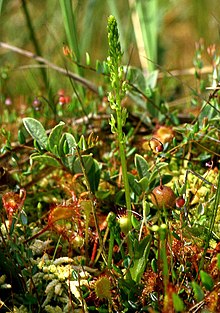
An older spelling for a bog orchid, which is exactly what it sounds like, a species of orchid that grows in a bog (Malaxis paludosa). (OED) It looks like this:
Bog orchis (Malaxis paludosa). Wikimedia Commons.

bonzelike

 
His expression altered from the grave to the bonzelike. (p. 327)
 
I have to say, I miss the internet before the age of artificial intelligence, when one could look up a weirdly spelled word and not have it automatically corrected to a more common spelling. If I meant bronze-like, I would have looked for that! Ugh. Eventually, I was able to disgorge a match, bonze-like, in James Hueneker's Mezzotints in Modern Music (New York, 1899). In any event, this particular word isn't in the OED, but the word bonze is--it means a Buddhist religious teacher or priest, particularly in China or Japan. (OED) We might thus picture Johnnie Bullo's expression moving from serious to serene. 

burin

 
His gaze never left Lymond: inexorable, ruthless, dissecting, hygienic as a burin or a scalpel. And there was a change in his brother's face: a fissure, the first break. p. 447
 
A burin is a tool used by artisans. It is used to work marble or engrave copper. A burin can also be a flint tool with a point like a chisel. (OED). The oldest usage seems to be in reference to copper engraving so I would guess this what Dunnett has in mind particularly since she pairs it with a fine cutting tool (a scalpel). On the other hand, we have fissures and breaks in the next clause, which would suggest stone carving. Isn't it beautiful?

butter-tooth

 
The point was made. Sir Thomas, butter-tooth veiled, seized a pigeon and said no more until the end of the meal. (p. 464) 
 
Where did Dorothy Dunnett acquire her early modern vocabulary, I wonder? Extensive reading was obviously part of it but some of her word choice seems so idiosyncratic as to make me deeply curious what reference books she had at her disposal. The imagery here is just so, so fantastic--Thomas Palmer, at dinner, tweaking the beards of his fellow guests, and then sitting back to enjoy his handiwork. Butter-tooth is first used in the sixteenth century (the earliest use is about 1566), and refers either to the incisors (front teeth); later, especially as a plural, to yellowing or poorly cared-for teeth. (OED)

A Note on Links

 
Through my university, I'm incredibly lucky to have access to the Oxford English Dictionary, and indeed the entire Oxford Reference series of dictionaries and encyclopedias. It is a principle of this blog to try to use and link to sources that anyone can access, but the OED has features--like the ability to explore the etymology, frequency, history of use, and meanings of words, that free online dictionaries simply don't have. My plan is to quote relevant bits of entries, and to include open access links wherever possible, so that anyone who wants to do so can geek out with me, paywalls be damned.

Tuesday, 26 March 2024

Learning New Words with Lymond: A is for Azulejos

In December I began rereading the Lymond Chronicles by Dorothy Dunnett. This series of six novels follows the career and (mis)adventures of their eponymous character, Francis Crawford of Lymond, a sixteenth century Scottish nobleman "of crooked felicities and murderous talents, possessed of a scholar's erudition and a tongue as wicked as rapier. In The Game of Kings, this extraordinary antihero returns to the country that has outlawed him--to redeem his reputation at risk of his life," as the back cover of my copy has it. (I own used copies of the 1997 American reprint for Vintage Books.)

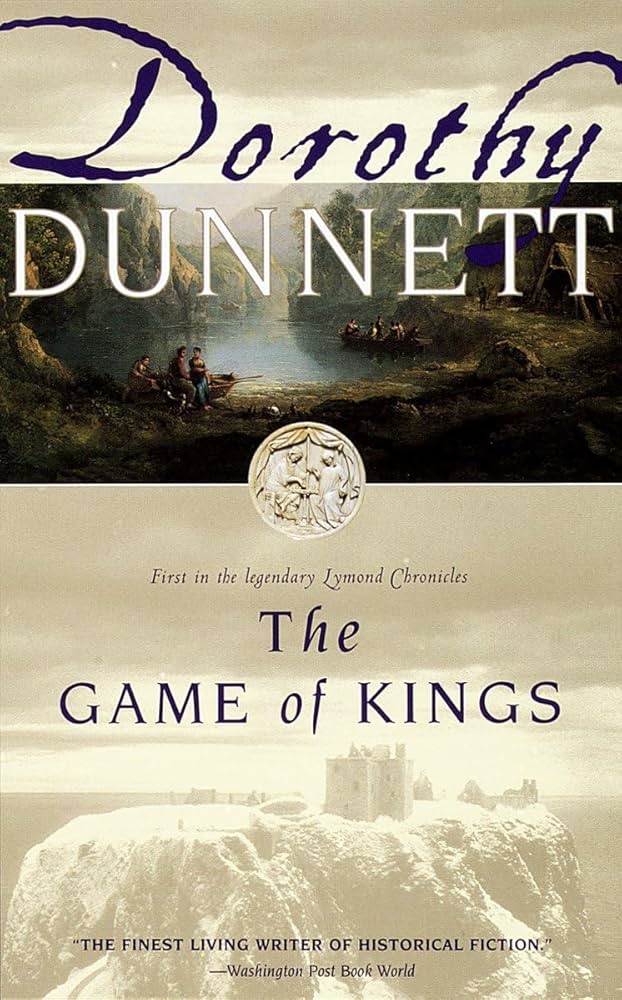
https://m.media-amazon.com/images/I/71cIFpYS1xL._AC_UF1000,1000_QL80_.jpg
The Game of Kings by Dorothy Dunnett

I love these books. I love these books so deeply I can hardly bear to write about them, because whatever I say will inevitably fail to convey everything I love about the experience of reading them: the dense layers of historical and mythological and literary allusion; the sheer baroque opulence of their use of language; the intricacy of the plots; the deepest imperial purple of their melodrama; the depth and variety of the characters; their wicked, subtle humor; and the way they make me feel. Putting it this way, if "when bad things happen to good characters" is your idea of laissez les bons temps roule as a reader--and it often is mine--you may enjoy Dunnett. I feel absolutely evangelical about these books--I want them to reach everyone who would love them and I want them to be loved by everyone they reach.

Welcome to Learning New Words with Lymond, a series of posts in which I will blog about re-reading the Lymond Chronicles focusing on Dunnett's language and vocabulary. In my reread of the Game of Kings, I made a note of words or references I wanted to look up in the dictionary or encyclopedia and put them in alphabetical order. I hope these posts will function as my own personal Dunnett Dictionary, a way to more deeply appreciate her writing through an in-depth look at the language she uses.

We begin with words beginning with the letter 'a'...

Al-Mokanna

It's a sad world, and the candle is going, so unless like Al-Mokanna you can cause moons to issue from our well, we are destined to sorry together in the dark. (The Game of Kings, p. 352)

Al-Mokanna is a variant spelling of al-Muqannaʿ (“the veiled one”), an eighth-century messianic prophet in Sogdia. He was the leader of syncretic religious movement that blended Islam with other religious traditions including perhaps Buddhism. He and his followers, the Mubayyiḍah, resisted the Abassid caliphate for fourteen years. In the eyes of his followers, he had the power to perform miracles, including making a moon rise and set at his command; Islamic sources attributed this to an illusion involving quicksilver and a well, or an illusion crafted with mirrors, lights, and water. How Lymond (and his author) knew this story, I cannot say. 

Incidentally, the use of the word sorry here--"to sorry together"--is not a typo, but a use of the word sorry as a verb meaning "to sorrow" that comes from Old English.

Further Reading

Here are two open access resources if the above has piqued your interest.

Adam Ali, "Al-Muqanna‘: The Veiled Prophet of Transoxiana", Medievalists.net, 2022 available at https://www.medievalists.net/2022/04/al-muqanna-veiled-prophet-transoxiana

Crone, Patricia “Moqanna," Encyclopædia Iranica, online edition, 2011, available at http://www.iranicaonline.org/articles/moqanna 

amoretti

Plump clouds like amoretti hung in a blue sky; shining rooks cawed among shining leaves and an otter with a half-eaten fish shivered the bog orchis with his shoulder as he passed. (The Game of Kings, p. 360

Not cookies, but a very old word for cupids. (OED). 

Anent

And here's his father, worried yellow in case the poor creature scandalizes the nation and promotes an international incident anent the Buccleuch family. (The Game of Kings, p. 165)

A preposition, coming from Old English and used in Scottish, Irish, and regional English dialects (especially northern). Has an amazing variety of meanings, but the one that makes the most sense here is "with reference to, in relation to; regarding, concerning, about", used in Scottish legal writing from the fourteenth century onwards. OED

Apollyon

No appointment with Apollyon. (The Game of Kings, p. 539)

This one went on my list because, although I've seen it before, I wanted to look up its meaning and origins. Apollyon comes to English from Latin via the Greek word ἀπολλύων ("destroying"); to quote the dictionary, "The destroyer, a name given to the Devil." OED See also Revelation 9:11. I would swear "an appointment with apollyon" is an idiom, but none of the free dictionaries of sayings on the internet yield results.

aposteme

The Dowager reached Ballaggan on the first of August, carying the date in her breast like an aposteme. (The Game of Kings, p. 484)

This is a medieval and early modern word for a large and severe abscess. OED. Dunnet may have conciously or unconciously recalled a line from a poem "Of the Progress of the Soul: The Second Anniversary" by John Donne ("a dangerous Apostem in thy brest").

Asmodeus

Other than apologizing for not being Asmodeus, what can I do? (The Game of Kings, p. 339)

Again, I was vaguely familiar with this name, but wanted the pleasure of looking up exactly what it means. Asmodeus is a character from the Book of Tobit, a wicked angel who kept murdering the husbands of a woman named Sara until the prophet Tobit exorcised him and drove him into Egypt. See Elspeth Morrison, The Dorothy Dunnett Companion (New York, 2001), p. 28.

atavistic

It made him feel uneasy, the prey of dark and atavistic caprice. (The Game of Kings, p. 459)

I've seen this used as an adjective modifying the word greed, but wanted to look up what it means. The dictionary helpfully says, "Of or pertaining to atavism; atavic"; the latter word means "of or pertaining to a remote ancestor." OED

In other words, atavistic is used as a fancy synonym for primal.

atous

"My pretty atous," he said, and admired them, his broad fingers spread across the painted backs. (The Game of Kings, p. 534)

Surprisingly, no joy from the OED, and it was singularly hard to convince the Google algorithm that I was in fact searching for a real word and not misspelling the word autos. Pulling together the French Wikipedia entry on tarot français; this phenomenal post on the Tarot History Forum attempting to trace the etymology of the word tarot; and the board game manuals wiki on "Tarot, tarock and tarocchi games", this is either simply the French word for tarot cards (and the game of tarot as whole); or, as seems more likely, a set of twenty one numbered cards in the total deck; their numbers correspond to their value, with one being weakest and twenty-one being strongest. If I think too hard about how much research went into writing the scenes where Will Scott and Thomas Palmer play tarocco, I might need to lie down on the floor for awhile.

Audhumbla

I have licked you like the cow Audhumbla from the salt of your atrocious upbringing and am watching the outcome with fearful joy. (The Game of Kings, p. 350)

No joy from Oxford Reference or the OED, but there is a Wikipedia entry. Auðumbla is a character from Norse mythology, mentioned in the Prose Edda. She is the primordial cow who fed the frost giant Ymir with her milk and licked away salt from the rocks to reveal Búri, grandfather of Odin and other gods.  Auðumbla is a deeply obscure character--she only appears in the Prose Edda, of which only seven manuscripts survive today. I wonder how Lymond knows of her, let alone thinks of this simile.

azulejos

No rushes covered the floors: these were set with Spanish azulejos and covered with rugs from Turkey and the Levant. (The Game of Kings, p. 124)

Mirabile dictu, the (online) Oxford English dictionary has an error. The OED entry for azulejos reads "a kind of Dutch glazed tile painted in colours" and cites a book from 1845 as the earliest use of the word. But in the Oxford Dictionary of the Renaissance we read,

"Azulejo, The Spanish and Portuguese name (from Arabic al-zulayj, ‘the tile’) for a glazed polychrome tile used in Moorish architecture for exterior and interior walls and for floors. The tiles were typically about 15 centimetres (6 inches) square and brightly coloured, sometimes with geometrical patterns. The reflective surface of azulejos caught the sun, and in Spanish gardens and Portuguese gardens they were used to reflect water. After the reconquista the manufacturing of azulejos continued, often in mudéjar designs." (Campbell, G, "Azulejo," The Oxford Dictionary of the Renaissance (Oxford, 2003), Available from https://www-oxfordreference-com.proxy.library.uu.nl/view/10.1093/acref/9780198601753.001.0001/acref-9780198601753-e-271.

Hey, I'd have those in my house, they sound gorgeous. The fact that the character, Dame Catherine Hunter, who owns the house being described, has azulejos installed and then piles luxury carpets on top of them, tell us something about who she is and who she wants to be.

A Note on Links

Through my university, I'm incredibly lucky to have access to the Oxford English Dictionary, and indeed the entire Oxford Reference series of dictionaries and encyclopedias. It is a principle of this blog to try to use and link to sources that anyone can access, but the OED has features--like the ability to explore the etymology, frequency, history of use, and meanings of words, that free online dictionaries simply don't have. My plan is to quote relevant bits of entries, and to include open access links wherever possible, so that  anyone who wants to do so can geek out with me, paywalls be damned.