Showing posts with label academia. Show all posts

Saturday, 30 November 2024

See you in Leeds!

The Leeds International Medieval Congress, or IMC, is one of the largest medieval studies conferences in the world, welcoming close to 3,000 medievalists to the city of Leeds for four intensive days of scholarship, networking, and conversation. The announcement of paper acceptances for 2025 includes a cute digital postcard. The full program is forthcoming early next year.

postcard with three photographs of medieval reenactors in armor and the text "I have been accepted for the Leeds International Medieval Congress 2025" against a red background
#IMC2025 Postcard
From 2025, the UK has introduced an electronic travel authorization, which costs £10 and lasts two years. For many it will be a new addition to the substantial costs of attending a multi-day international conference. If you are in a position to contribute, consider donating to the IMC Bursary Fund. The fund offers full or partial coverage of registration fees, food, and accommodation to students, independent scholars, pensioners, unwaged scholars, and delegates from outside Western Europe.

Each year, I look forward to the IMC as an opportunity to learn from some of the latest work in the field and meet up with colleagues and friends old and new. Hope to see you there!

Thursday, 4 January 2024

Goals for 2024

Gelukkig nieuwjaar! Wishing you and yours all the very best of health and happiness in the year ahead.

Last year was the third year in a row I posted a set of goals for the coming year. As is usually the case with these posts, the balance between my ambitions, capacities, and the surprises of the year meant that many of these goals went unmet. The resolutions below are also more than likely to be abandoned or shifted as the year goes on. I find setting them a useful and enjoyable process anyway so here we go again. 

What are your hopes or ambitions for the coming year? Whether you have many New Years' Resolutions or none, I wish you a fulfilling and fruitful 2024.

In academia... 

  • My SMALL goal to attend at least one panel at the International Congress on Medieval Studies, in Kalamazoo, Michigan, or the International Medieval Congress, in Leeds, on a subject about which I want to learn more, and speak to people there before or afterwards
  • My MEDIUM goal is to give a paper or talk in a venue or format that is new to me.
  • My LARGE goal is to say thank you, congratulations, can I help, and yes, whenever the opportunity arises.

In blogging...

  • My SMALL goal is to write a blog post about things to do in Utrecht, based on the (many!) page flags I stuck into my copy of Utrecht: Sights and secrets of Holland's smartest city, which was a leaving gift from my wonderful library colleagues. And/or, write a post that references this amazing list of things expats should do in the Netherlands.
  • My MEDIUM goal is to finish the posts I have drafted about Before We Were Trans by Kit Heyam, The Bright Ages by Matthew Gabriele and David M. Perry, and The Gates of Europe: A New History of Ukraine by Serhii Plokhy, plus one new post about a history book.
  • My LARGE goal is to publish 52 posts over the course of the year, using this space as a place to share what I read and play with non-academic writing.
Big Red, aka my mother's birthday afghan, a decade in the making, blocking in December 2023

In crafting...

  • My SMALL goal is to finish the ten-stitch blanket I started in late November 2023.
  • My MEDIUM goal for this year is to remove two UFOs from my flat. I moved to the Netherlands with several UFOs (unfinished objects, not alien spacecraft), and derived enormous satisfaction from finishing one of them. Let's finish more in 2024!
  • My LARGE goal is to purchase fabric from the Lapjesmarkt and use it to sew a set of fabric boxes for my flat.
Buttons at the Lapjesmarkt, November 2023

In living in the Netherlands...

  • My SMALL goal is to write a letter to Sinterklaas and get a reply--an idea that comes from the brilliant and hilarious blog Accidentally Dutch, written by an expat Englishman, which I read a lot before moving to the Netherlands.
  • My MEDIUM goal is to sign up for a Netherlands Museum pass and go to at least three exhibits, ideally in different cities.
  • My LARGE goal is to take at least one Dutch language class, and get to A1 Level. (To be precise, skills I want to acquire are: numbers in Dutch; basic vocabulary to discuss hobbies; the ability to understand when someone is offering me a receipt and politely decline; the ability to understand when a cashier is offering to have a holiday gift wrapped and politely say yes; greetings for times of day and the holidays; and a few idioms, specifically the equivalent for "you're pulling my leg" that mentions dragons.)

In publishing...

  • My SMALL goal is to write something about my research interests or teaching for a history or ancient studies periodical I admire--JSTOR Daily, the Public Domain Review, Piecework, Ancient Jew Review, etc.
  • My MEDIUM goal is to complete all three of my unfinished book chapters.
  • My LARGE goal is to finish and submit a draft of a peer-reviewed journal article on marginalised participants in early medieval letter exchange for my postdoc, as well as to reach the finish line of three other articles.
the UFO at the Inkpot, Utrecht (August 2023)

In reading...

In running...

  • My SMALL goal is to run more than 592 miles, in order to beat my total mileage from last year.
  • My MEDIUM goal is to join a running group and attend at least twelve times over the course of 2024.
  • My LARGE goal is to train for and finish a 10k, improving my personal best time at this distance (49:24, set in 2020).

In teaching...

  • My SMALL goal is to attend at least one in-person event or workshop related to teaching and professional development.
  • My MEDIUM goal is to ask one of my colleagues to observe my teaching during the semester.
  • My LARGE goal is to meet and adapt to the challenges and rewards of teaching in a new country and academic system by meeting deadlines for marking and getting materials ready, building a good rapport with my students, and keeping a reflective log throughout the semester.

In writing...

  • My SMALL goal is to participate in the Mini 1000 writing challenge for a second year in a row, aiming for a consistent 750 words per day (plus one session of editing at the end).
  • My MEDIUM goal is to participate in 1000 Words of Summer, aiming for a consistent 750 words per day (plus two sessions of editing at the end).
  • My LARGE goal is to participate in National Novel Writing Month, including the NaNo Prep 101 exercises, with the purpose of finishing a first draft of a story with the working tagline "fight princesses and rescue dragons." Given that my previous two years of NaNo efforts were for 500 words/day, this is a pretty big leap. But as my grandmother said, if you don't shoot for the stars, you never get off the ground.
At the risk of tempting the fates, my overall goal for 2024 might be summarised as "landing the fleet of UFOs"-- aka finishing unfinished work, be it in my craft bags or on my hard drives! In the immortal words of Emperor Gregor Vorbarra, let's see what happens.
 

Previous New Years' Posts:  2021 2022 2023

Wednesday, 7 June 2023

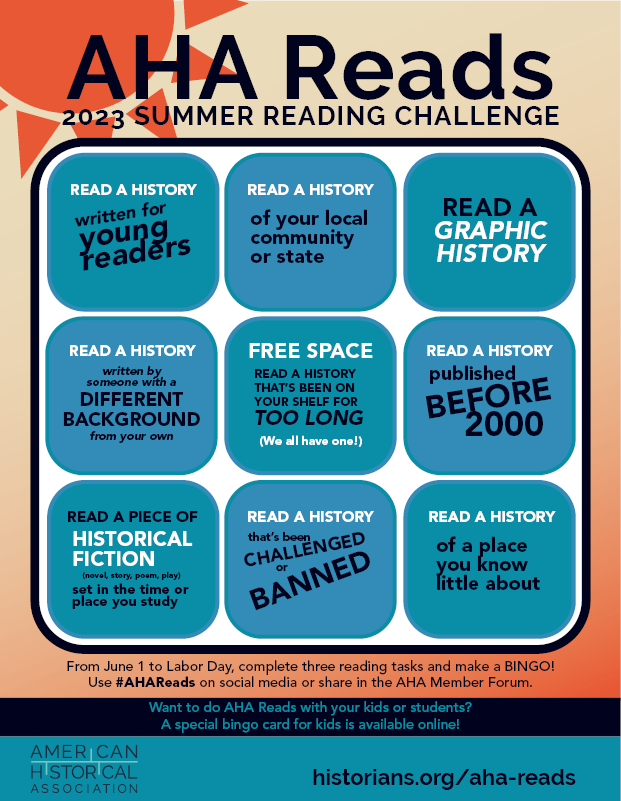
#AHAReads: 2023 Summer Reading Challenge

It's time for the second annual #AHAReads, a summer reading challenge for historians. Even though it took me a year to finish, I loved participating in the 2022 challenge. Despite what a busy summer ahead, I still want to participate in the 2023 challenge and write about what I read.

Here's this year's bingo card.

AHA Reads Bingo Card 2023
#AHA Reads: 2023 Summer Reading Challenge Bingo Card

Between 1 June and 4 September (Labour Day in the United States), one can complete the challenge by picking three of the following options:

  • Read a history written for young readers
  • Read a history of your local community or state
  • Read a graphic history
  • Read a history written by someone with a different background from your own
  • Free space: read a history that's been on your shelf too long (we all have one!)
  • Read a history published before 2000
  • Read a piece of historical fiction (novel, poem, story, play) set in the time or place you study
  • Read a history that has been challenged or banned
  • Read a history of a place you know little about

As I did last year, I'm setting the following additional guidelines:

  • No purchasing books for the challenge. Books must either be already in my collection, borrowed from my library, or loaned by a friend.
  • Print books only--summer reading challenges are supposed to be fun, and for me, reading an ebook is not.
  • Blog about what I read and finish writing all posts by 4 September.

So which challenges have I chosen and what am I reading?

 
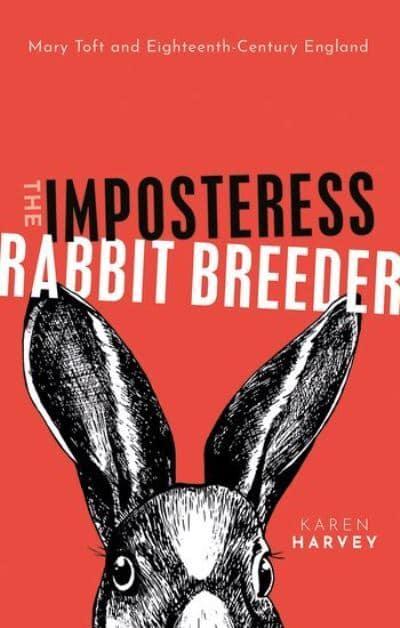
My first choice is to read a history that's been on your shelf too long (we all have one!). Although there are many late antique and early medieval history titles I could choose, I'm going to go with Karen Harvey's The Impostress Rabbit Breeder, which has been on loan from a friend for over a year, and which I need to return before the end of August.
 
The Imposteress Rabbit-Breeder
The Imposteress Rabbit Breeder by Karen Harvey
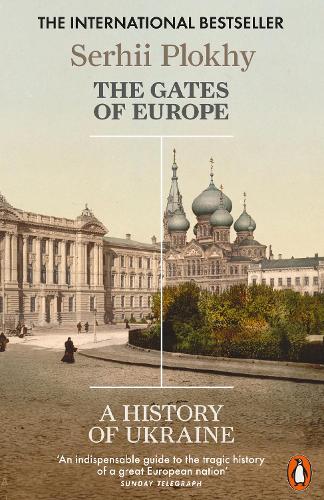
My next choice is to read a history of a place you know little about. My choice is a book I've had borrowed from the library for awhile, Serhii Plokhy's The Gates of Europe: A History of Ukraine.

The Gates of Europe: A History of Ukraine (Paperback)
The Gates of Europe by Serhii Ploky


My final choice is to read a graphic history. Thanks to the incredible work of my University's fine art librarian, the library where I work now has a zine collection! I've been wandering by and flipping through them for the past few months but haven't made the time to sit down and read one properly. Plus, zine are usually pretty short, and I may not have a lot of time for reading this summer.
 
Which should I read first? Wishing everyone participating in the challenge a fun selection of books, and the time and space to enjoy them.

Sunday, 21 August 2022

A Scholar

 pro captu lectoris habent sua fata libelli
 
The light is dying, and the clock has died;
the page succumbs to the atrocious care
that disinters the things not wholly there
by which your solemn field is justified.
You burnish them until they bear the shine
of common knowledge, knowing one black skill
is yours alone: before the greater will
all text is dream, and takes on the design
of what was sought there. Thus your word is god.
This grammarie electrifies the gate;
none pass but such as you initiate.
The students hurry by you in the quad
attending to their feet. What can you say?
You know Shakespeare would have walked that way.

~ Don Paterson, 40 Sonnets (London, 2015)

Gatekeeping and exclusion are endemic to academia, but it's not often you get a beautiful poem about it. I love how Paterson's scholar is an eerie figure whose work includes necromancy, black magic, and spellbooks. At the moment, this poem has particular resonance for me because I am in the final stages of checking over the typeset manuscript of my book and preparing the index. "All text is dream," indeed.

The epigraph is from the second-century grammarian Terentianus Maurus, De Metris; a literal translation is: books have their destinies according to the capability of the reader; or as William Camden translated it books receive their Doome according to the reader's capacity. Another way to put it (though not literally) might be the reader makes the book, in the sense that because of our own abilities and experiences and understandings, our encounters with a particular book will be utterly unique to us as individuals.

Friday, 3 June 2022

#AHAReads: Summer Reading Challenge

One of the professional associations of which I am a member is the American Historical Association. I joined when I was graduate student, and plan to keep paying membership because I support their advocacy for the profession, efforts to include historians working beyond academia, and support for secondary-school history teachers. I usually read their newsletter when it lands in my inbox, which is how I came across their summer reading challenge. 

Between 1 June and 5 September (Labour Day in the United States), I aim to tick off at least three items from their checklist:

  • Read a “classic” of your field that you’ve never read before.
  • Read a history published in the past 2 years.
  • Read a piece of historical fiction (novel, story, poem, play) set in the time or place you study.
  • Read a history of the place you know the most about that takes place at least a century before or after your time period of expertise.
  • Read a history written by a historian who works in a day job different from your own.
  • Read a history of an identity group you don’t belong to.

I'm going to try to stick with their guideline of completing one task per month but won't be holding myself to this too strictly. I am introducing three rules of my own:

  • No purchasing books for the challenge
  • Avoid ebooks
  • Blog about what I read

So which challenges have I chosen and what am I reading?

The challenge that immediately appealed was read a “classic” of your field that you’ve never read before. One of the things I miss most about being a student is the requirement to read widely across late antique and medieval primary sources--while I read extensively for presentations and publications, this tends to have a specific objective--finding evidence of birds stealing mittens (for example)--rather than simply for curiosity or pleasure. My choice, then, is a text I've enjoyed my encounters with but don't know very well, the Res Gestae of Ammianus Marcellinus. Ammianus' Res Gestae covers the history of the Roman Empire from the first through fourth centuries, finishing with the Battle of Adrianople in 378 CE, where Gothic refugees rebelled against Roman mistreatment and defeated several legions. We only have the last eighteen out of the original thirty-one books, covering 353 to 378 CE. Ammianus was a solider, as well as a scholar, and was present at some of the battles he describes; recent scholarship has focused on his craft and subtlety as a writer.

The Res Gestae is a classic because it's such an important source for the history of the fourth century, and I'd like to know it a lot better than I do. I've enjoyed teaching bits of Ammianus in undergraduate seminars on late antique history, and have listened to some excellent talks about the messy history of making editions of his work (most notably by Gavin Kelly). The abridged Penguin Classics translation by Walter Hamilton isn't in my library, so I'll be reading the Loeb Classics translation by John C. Rolfe, which is in three volumes. My library seems to have volumes I and II; I may need to go looking for book three elsewhere. While my Latin isn't up to reading all of Ammianus untranslated, I like the fact that Loeb volumes offer English and Latin on facing pages, so I can at least get some sense of the translator's interpretative choices.

The next challenge I've chosen is to read a history published in the past 2 years. I've chosen Shelley Puhak's The Dark Queens (published in 2022), which is a biography of the Merovingian queens Brunhild and Fredegund. (This could also meet the challenge to read a history written by a historian who who works in a day job different from your own; Puhak is a professional writer.) The breathless copy of the back cover and the tagline a gripping tale of power, ambition, and murderous rivalry in early medieval France were cause for exchange of skeptical merriment among classicist and medievalist colleagues at my university. As someone who knows this period and these stories really, really well, I'm of two minds about this book.

On the one hand, I'm genuinely excited to see a major popular history of the Merovingians in print. I sometimes have trouble explaining what I study to friends and family, and having something good and readable to recommend would be amazing. On the other hand, I'm concerned that it will go for sensationalism rather than accuracy (girlboss Fredegund, shudder) and give people a misleading impression of the period. Or, it will be one of those plucky-journalist-reveals-unknown-story...that professional historians have been studying for decades. Hard Paddington bear stare at Mary of Egypt.
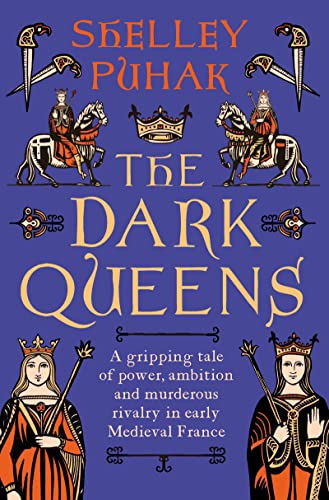
Cover of The Dark Queens: A gripping tale of power, ambition and murderous rivalry in early medieval France
There's a lot happening on this cover...

As a Merovingianist and a writer, I have high hopes and high standards for this book. I'm intrigued to see what it's like.

My final choice is to read a history of an identity group you don’t belong to. In the class on Roman women I taught this semester, students asked a number of great questions about trans history in the ancient world, and that inspired me to include a book on trans history in my summer reading, C. Riley Snorton's  Black on Both Sides: A Racial History of Trans Identity. The book blurb describes it thusly: "Snorton identifies multiple intersections between blackness and transness from the mid-nineteenth century to present-day anti-black and anti-trans legislation and violence. Drawing on a deep and varied archive of materials, Snorton attends to how slavery and the production of racialized gender provided the foundations for an understanding of gender as mutable." It seems like an important and timely book, and I'm looking forward to learning from it.

Finally, I want to mention the books that I considered reading for the challenge but which didn't make the cut, both in the category read a “classic” of your field that you’ve never read before

Taking the definition of 'never read' to mean 'never read cover to cover', first on this list is Chris Wickham's Framing the Early Middle Ages. I've read chapters of this book and made a doomed effort to read it all in the summer of 2009. I'll keep it on the list for the future--it would be fun to take the time to sit down and work through it properly.

Framing the Early Middle Ages.jpg
Not clear from this photo but this is an absolute door-stopper of a book.

Also not on this list is Edward Gibbon--my quest to read Decline and Fall of the Roman Empire began in 2015 and continues to march ever-slowly onward, but slipping a book I am already reading into the challenge feels unsporting.

So, there's my #AHAReads summer reading! I hope it might inspire you to tackle some reading adventures of your own.

Tuesday, 30 November 2021

A Busy Week

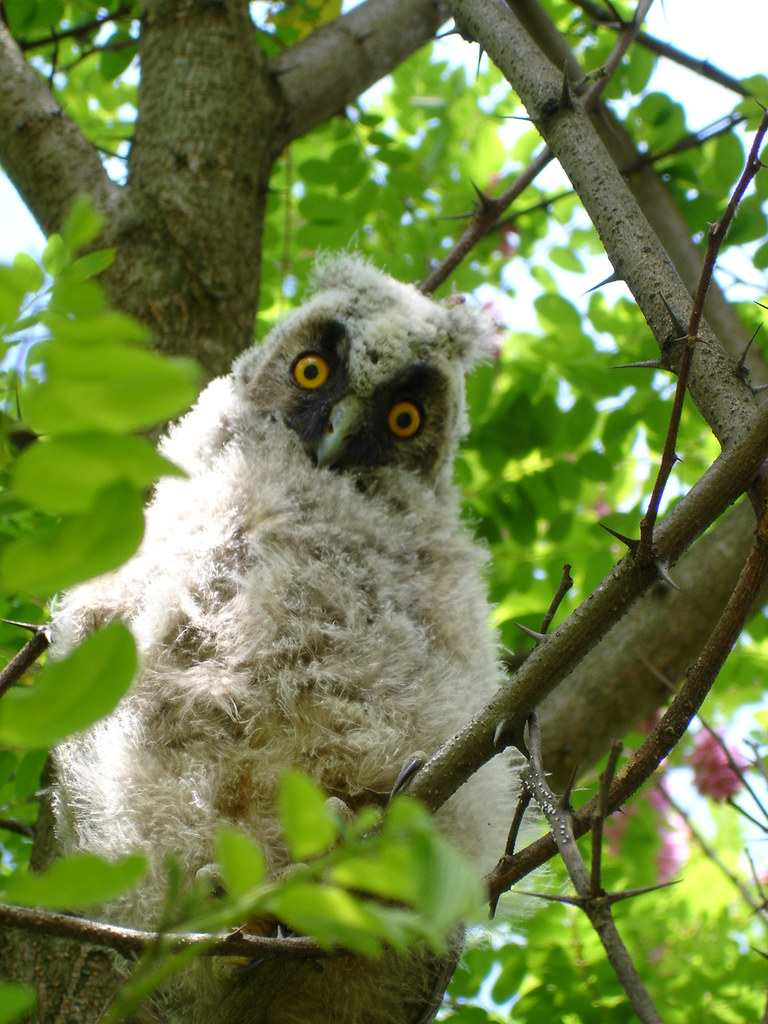
Hard to believe it's almost the end of my November posts! It's an exciting week here in Lincoln--an application to finish and lots of grading to do, so here is a picture of a fine and fluffy owl.

Owl
"Owl" by g_kovacs is licensed under CC BY 2.0

Hang in there!

Friday, 19 November 2021

What it really means

Sometimes when I'm trying to analyse a medieval text, I can take things too seriously.

Searching out the meaning and implications of every word and phrase, turning the text inside out.

Abingdon Abbey, 6 September 2021

I like how this poem reminds me to hold the text lightly and daydream.

Introduction to Poetry

I ask them to take a poem
and hold it up to the light
like a color slide

or press an ear against its hive.

I say drop a mouse into a poem
and watch him probe his way out,

or walk inside the poem’s room
and feel the walls for a light switch.

I want them to waterski
across the surface of a poem
waving at the author’s name on the shore.

But all they want to do
is tie the poem to a chair with rope
and torture a confession out of it.

They begin beating it with a hose
to find out what it really means.

~ Billy Collins, The Apple that Astonished Paris (University of Arkansas Press, 1996).

Sunday, 14 November 2021

My Favourite Print

The last time I was home for Christmas, my sister gave me the print which hangs above my desk.

Done is better than perfect.

The root of most procrastination--certainly mine--is wanting to do something perfectly but despairing that I will meet that standard. My sign reminds me not to take myself or my work too seriously, and helps me encourage myself to keep going and finish projects I care about.

Sunday, 11 July 2021

Learning from the Best: Reflections on IMC 2021

This past week was the second virtual International Medieval Congress--one of the world's largest gatherings of scholars and students of the Middle Ages. For many medievalists, it's known simply after its location, Leeds (as in 'are you giving a paper at Leeds this year?')

A black bingo card with white text
An accurate reflection of my conference experience

Although I've attended and presented annually since 2013, for the past few years I have only attended part of the conference, rather than the full five days. I learned early on that less could be more: rather than attending the full five days, I actually got more value for my money if I left blank spaces in my schedule for browsing the book fair, refueling with coffee, or seeking a quiet place to reflect and recharge. One of the advantages of an online conference is that taking breaks can be much easier; but I still haven't gotten used to the disorientation of cutting off a shared experience at the click of a little red button.

Among the many highlights of the online conference (not least among them the famed conference dance, surprisingly successful in a virtual format), was conversations with other early career scholars. This was the first year I have volunteered as a mentee for the Medieval Academy of America's Graduate Student Committee mentoring scheme, which pairs doctoral students and more established researchers for a conversation about careers. Having benefited from mentoring through the program in the past, this year I felt established enough in my own career and goals to try to give back as a mentor, and had lovely conversations with two PhD students.

My conversations made me think about the importance of examples in learning how to do something well, and it just so happened that Session 2026, Monastic Education and Formation in the Early Middle Ages, II: New Approaches and Case Studies picked up on that theme. In a paper on the early medieval saint Radegund (c. 520- 587) as an example for others, Dr Maria Munkholt Christensen introduced the importance of learning from exemplary figures in monastic education by referencing one of the letters of the early Christian thinker Jerome (c. 342/7-420). 

I hadn't read the passage before, so after the paper I went and looked it up:

Every mode of life has its own exponents. For instance, let Roman generals imitate men like Camillus, Fabricius, Regulus, and Scipio. Let philosophers take for models Pythagoras, Socrates, Plato, and Aristotle. Let poets strive to rival Homer, Virgil, Menander, and Terence. Let writers of history follow Thucydides, Sallust, Herodotus and Livy. Let orators find masters in Lysias, the Gracchi, Demosthenes, and Tully. And, to come to our own case, let bishops and presbyters take for their examples the apostles or their companions; and as they hold the rank which these once held, let them endeavour to exhibit the same excellence. And last of all let us monks take as the patterns which we are to follow the lives of Paul, of Antony, of Julian, of Hilarion, of the Macarii. And to go back to the authority of scripture, we have our masters in Elijah and Elisha, and our leaders in the sons of the prophets; who lived in fields and solitary places and made themselves tents by the waters of Jordan.  ~ Epistle 58.5, to Paulinus, in Nicene and Post-Nicene Fathers, vol. 6,  ed. Phillip Schaff and Henry Wace (Edinburgh, 1996), online at tertullian.org

This in turn called to mind my earliest memory of writing advice that really resonated with me. In eighth grade English class, I read the novel version of Flowers for Algernon; what I remember most is not the story (though that has stayed with me) but the essay at the end of our Providence Public School District supplied copies, in which Daniel Keyes reflected on the process of learning to be a writer (I remember this as a freestanding essay, but in trying to locate it again, it seems may have been an excerpt from Keyes' book Algernon, Charlie, and I). As I remember it, he wrote that he learned to write science fiction by reading widely, reflecting on what he thought was good, and then trying, as precisely as he could, to imitate it.

Lately, learning by example has fallen out of pedagogical fashion--and for some good reasons. Teachers can alienate and frustrate their students by insisting on rigid imitation of a particular example; prescribed definitions of what counts as excellent can enforce sexist, classist, homophobic, or racist norms. But learning by imitation, when it is directed by the students themselves--when their task is to figure out what they think is good, why it works for them, and how to reproduce it in their own work--it can be an incredibly powerful tool for becoming an effective speaker and writer. Each year, the IMC provides me with the opportunity to work through these ideas for myself--to reflect on what challenged or inspired me, why it did so, and how I might take up those ideas or methods in my own writing. 

The opportunity to learn from the best--it's the best. Thanks everyone. Till next year!