Sunday, 28 February 2021

The Barbarians Are Listening: Online Seminars and Events of Interest, Spring and Summer 2021

An unexpected silver lining of my pandemic has been attending talks and events on a huge range of subjects--from teaching webinars, to medieval studies and manuscript talks, to late antique, late Roman, and early medieval online seminars. In case it is useful or of interest to anyone else, in what follows I've curated a list of talks and events I have attended or plan to attend. I've also included a handful of links to asynchronous content--recordings or self-guided workshops--that are of interest to me as a teacher and scholar.

The social aspect of seminars and talks simply can't be replicated in an online space, but I for one have been exceptionally grateful for the move online. Under normal circumstances, the only way I could attend an event in London or Oxford or Princeton would be if I were a) speaking there and b) able to take time off work. Being able to tune in from the comfort of my own couch has been AMAZING. I hope that online workshops, seminars, and events will continue to be a part of the academic landscape for many years to come. 

This is definitely not a comprehensive list and there are surely many important and interesting events missing. If you'd like to copy, edit, or add to this list, the link to do so can be found here.

Saturday, 20 February 2021

A Jobseeker's Request to Search Committees

The fact that the academic job market is grim is not news: one has only to look at the data on the history profession collected by the American Historical Association to know that a secure, stable position is vanishingly unlikely for the majority of hopefuls who enter the academic job market. Research on the effects of the coronavirus on the higher education sector in the UK paints a similarly depressing picture. The longer one reads, the more hopeless it seems: US universities prefer to hire faculty who earned PhDs at a shockingly small number of schools. Both anecdata and the studies linked above show that success on the academic job market must occur relatively quickly if it is to be achieved at all.

As far as I can tell, there are no similar studies about the UK, and professional organisations such as the Royal Historical Society do not seem to track career outcomes for PhDs (if I am wrong about that, please let me know!) Anecdotally, Oxbridge PhDs seem to make up the majority of permanently employed history faculty in this country, as well as the holders of prestigious early career fellowships such as those from the Leverhulme Trust and British Academy. One might argue that these institutions simply produce the majority of PhD graduates; it would be interesting to see research on this.

With these things in mind, applying for an academic position can feel like a fool's errand. Some applications are more torturous than others and as Zeb Larson pointed out in a 2020 thinkpiece on academic job applications:

Even 70-page applications -- with their requisite cover letter, CV, teaching philosophy, research statement, writing sample, student evaluations, references and sample syllabi -- are unkind things to ask for when most applicants will never proceed to the interview stage.

I've just had the rare experience of doing an application that was clear and relatively reasonable in what it requested from applicants and it made me think about what makes for a good academic job application from the perspective of someone applying. So, here are things I wish search committees would do to make the experience better for applicants.

Saturday, 13 February 2021

A Diptych for the Golden Crows of Academia

My pandemic reading has involved a lot of poetry.  For one, I've studied it for over eight years and am presently writing a book about it; for another, I find it challenging to pay attention for any great length of time these days. I need reading that makes space for my focus to fracture. Poetry is perfect for this--even long poems have line breaks, allowing my mind to wander and then return.

I wrote in my New Year's resolutions that I wanted to

Celebrate other people's good news. I sometimes feel that academic has a toxic culture of always finding fault, rather than celebrating achievements. Some of my most joyful moments as a historian last year came from celebrating others' achievements or having them celebrate mine. I want to be the kind of person who enjoys a colleague's article or book, hears about their grant or job success, and sends them a note of congratulation.
And then, in my poetry reading over the past month, I came across two poems which for me perfectly talked back to academia's culture of fault-finding. There are so many beautiful phrases in these poems--for example, Jaqypbek's description of people who are rude to those they perceive to be their inferiors

those men
who, like overfed lice and swine,
are rude to the servants sweeping courtyards,
desperate to marry a king's daughter.

has the magic and incisiveness of a fairytale. I hope you enjoy these poems as much as I did.

Sunday, 31 January 2021

A Diptych of Snowdrops


16 January 2021

Snowdrop

When you say, 'The earth is warming up
and you will get warm too', a snowdrop
peeks out from under the snow. She climbs up
from a gorge filled with melodies and dreams.

Sunday, 24 January 2021

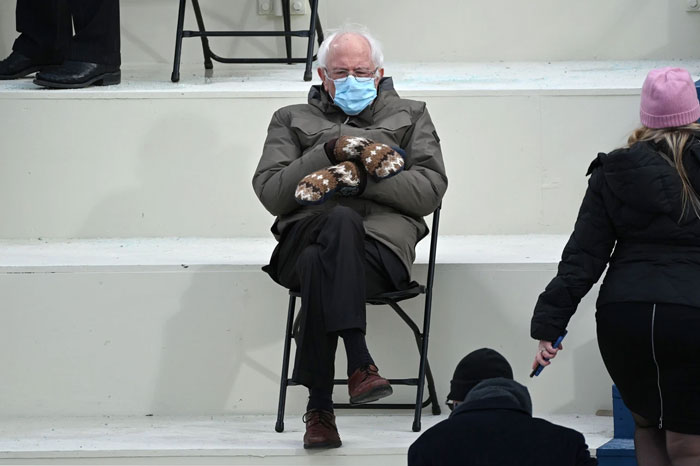
Mittens Make the News Again

As a mitten enthusiast and collector of Medieval Mitten Miracles (another post in the series coming soon), you can imagine my delight that the meme of the American presidential inauguration featured mittens.

Picture: Image credits: Brendan Smialowski. Source.

 And what mittens they are! 

Wednesday, 13 January 2021

Let Evening Come

Sunset, 16 September 2019


Let the light of late afternoon
shine through chinks in the barn, moving
up the bales as the sun moves down.

Monday, 4 January 2021

Goals for 2021

 Gentle reader, how do you mark the new year? My family typically has a holiday dinner on New Year's Day, and we went to First Night celebrations when I was a child, but I don't usually do much in the way of celebrating. This year marks the first year I stayed up to see in the new year, and that was mostly because some people in my neighbourhood set off some midnight fireworks. 

Like a lot of people, I often mark the new year by writing a set of resolutions. I rarely check back on or revisit these once I've written them in my journal.