Sunday, 19 June 2022
No Such Thing as Too Many Books

Sunday, 12 June 2022
A Diptych on Affairs
A Note on Intellectuals
~ W.H. Auden, reprinted in Essential Poems for the Way We Live Now, edited by Daisy Goodwin (London, 2003)
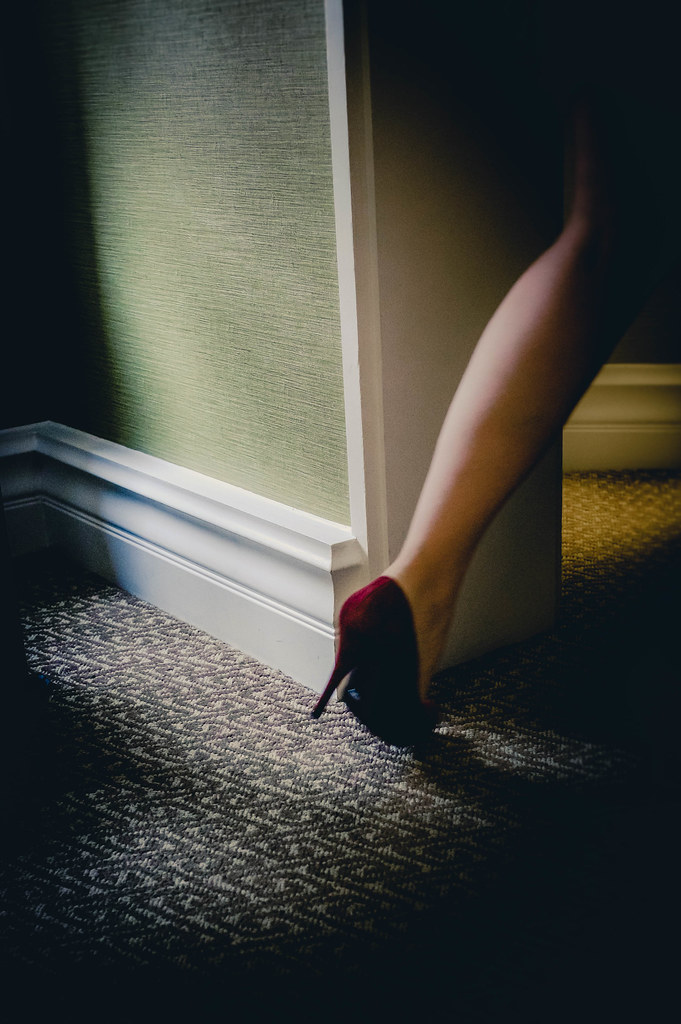 |
| "Walking away" by Braiu is licensed under CC BY 2.0. |
'I, being born a woman and distressed'
Friday, 3 June 2022
#AHAReads: Summer Reading Challenge
One of the professional associations of which I am a member is the American Historical Association. I joined when I was graduate student, and plan to keep paying membership because I support their advocacy for the profession, efforts to include historians working beyond academia, and support for secondary-school history teachers. I usually read their newsletter when it lands in my inbox, which is how I came across their summer reading challenge.
Between 1 June and 5 September (Labour Day in the United States), I aim to tick off at least three items from their checklist:
- Read a “classic” of your field that you’ve never read before.
- Read a history published in the past 2 years.
- Read a piece of historical fiction (novel, story, poem, play) set in the time or place you study.
- Read a history of the place you know the most about that takes place at least a century before or after your time period of expertise.
- Read a history written by a historian who works in a day job different from your own.
- Read a history of an identity group you don’t belong to.
I'm going to try to stick with their guideline of completing one task per month but won't be holding myself to this too strictly. I am introducing three rules of my own:
- No purchasing books for the challenge
- Avoid ebooks
- Blog about what I read
So which challenges have I chosen and what am I reading?
The challenge that immediately appealed was read a “classic” of your field that you’ve never read before. One of the things I miss most about being a student is the requirement to read widely across late antique and medieval primary sources--while I read extensively for presentations and publications, this tends to have a specific objective--finding evidence of birds stealing mittens (for example)--rather than simply for curiosity or pleasure. My choice, then, is a text I've enjoyed my encounters with but don't know very well, the Res Gestae of Ammianus Marcellinus. Ammianus' Res Gestae covers the history of the Roman Empire from
the first through fourth centuries, finishing with the Battle of
Adrianople in 378 CE, where Gothic refugees rebelled against Roman
mistreatment and defeated several legions. We only have the last
eighteen out of the original thirty-one books, covering 353 to 378 CE. Ammianus was a solider, as well as a scholar, and was present at some of the battles he describes; recent scholarship has focused on his craft and subtlety as a writer.
The Res Gestae is a classic because it's such an important source for the history of the fourth century, and I'd like to know it a lot better than I do. I've enjoyed teaching bits of Ammianus in undergraduate seminars on late antique history, and have listened to some excellent talks about the messy history of making editions of his work (most notably by Gavin Kelly). The abridged Penguin Classics translation by Walter Hamilton isn't in my library, so I'll be reading the Loeb Classics translation by John C. Rolfe, which is in three volumes. My library seems to have volumes I and II; I may need to go looking for book three elsewhere. While my Latin isn't up to reading all of Ammianus untranslated, I like the fact that Loeb volumes offer English and Latin on facing pages, so I can at least get some sense of the translator's interpretative choices.
The next challenge I've chosen is to read a history published in the past 2 years. I've chosen Shelley Puhak's The Dark Queens (published in 2022), which is a biography of the Merovingian queens Brunhild and Fredegund. (This could also meet the challenge to read a history written by a historian who who works in a day job different from your own; Puhak is a professional writer.) The breathless copy of the back cover and the tagline a gripping tale of power, ambition, and murderous rivalry in early medieval France were cause for exchange of skeptical merriment among classicist and medievalist colleagues at my university. As someone who knows this period and these stories really, really well, I'm of two minds about this book.
On the one hand, I'm genuinely excited to see a major popular history of the Merovingians in print. I sometimes have trouble explaining what I study to friends and family, and having something good and readable to recommend would be amazing. On the other hand, I'm concerned that it will go for sensationalism rather than accuracy (girlboss Fredegund, shudder) and give people a misleading impression of the period. Or, it will be one of those plucky-journalist-reveals-unknown-story...that professional historians have been studying for decades. Hard Paddington bear stare at Mary of Egypt.
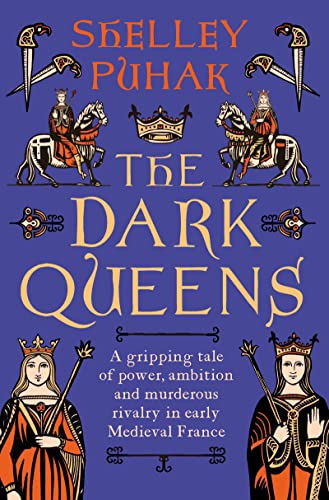 |
| There's a lot happening on this cover... |
As a Merovingianist and a writer, I have high hopes and high standards for this book. I'm intrigued to see what it's like.
My final choice is to read a history of an identity group you don’t belong to. In the class on Roman women I taught this semester, students asked a number of great questions about trans history in the ancient world, and that inspired me to include a book on trans history in my summer reading, C. Riley Snorton's Black on Both Sides: A Racial History of Trans Identity. The book blurb describes it thusly: "Snorton identifies multiple intersections between blackness and transness from
the mid-nineteenth century to present-day anti-black and anti-trans
legislation and violence. Drawing on a deep and varied archive of
materials, Snorton attends to how slavery and the production of
racialized gender provided the foundations for an understanding of
gender as mutable." It seems like an important and timely book, and I'm looking forward to learning from it.
Finally, I want to mention the books that I considered reading for the challenge but which didn't make the cut, both in the category read a “classic” of your field that you’ve never read before.
Taking the definition of 'never read' to mean 'never read cover to cover', first on this list is Chris Wickham's Framing the Early Middle Ages. I've read chapters of this book and made a doomed effort to read it all in the summer of 2009. I'll keep it on the list for the future--it would be fun to take the time to sit down and work through it properly.
 |
| Not clear from this photo but this is an absolute door-stopper of a book. |
Also not on this list is Edward Gibbon--my quest to read Decline and Fall of the Roman Empire began in 2015 and continues to march ever-slowly onward, but slipping a book I am already reading into the challenge feels unsporting.
So, there's my #AHAReads summer reading! I hope it might inspire you to tackle some reading adventures of your own.
Sunday, 22 May 2022
Good Question
 |
| The Book of Queer Prophets, ed. Ruth Hunt (London, 2020) |
One of Jesus' most profound and enigmatic sayings came alive for me: 'For those who want to save their life will lose it, and those who lose their life for my sake will find it.' It is a statement with endless ripples, a stone thrown in the mind's waters. (196)
For me, some of the most moving passages in the book come when the writers reflect on their relationships with their parents. Some of these relationships have come to places of understanding, as in Episcopal priest Winnie Varghese's relationship with her mother.
I still ask for my mother's prayers, and she for mine. I don't pretend to know how any of it works, except that there is this place that we get to go where we lay down all our pain, confusion and limitation in the presence of a wondrous holiness who, like us, knows pain and loss. "How Do All the Parts Fit?" (30)
Some of them remain fractured and full of silences. I loved Garrard Conley's reflections on the things he has never been, and likely never will, be able to talk to his father about.
I don't tell him that sitting there beside my husband was like church for me, that our partnership has been an act of faith that continues to challenge and astound and enrich my life. "Phantom Pain," (41)
One of my very favourite essays in the book is Keith Jarrett's "50 Observations on Avoidance" (I do love a good list), in which he reflects on his upbringing and growing awareness of his own sexuality. "If I employ a broad meaning of queer to mean 'at odds with the prevailing culture'--including the way said culture handles relationships--my upbringing was radically queer." (213).
Many of the writers express active hope and faith that churches will continue to grow into spaces that are more welcoming to all kinds of people. As Rachel Mann writes,
I hope and pray that as the Church evolves, trans candidates for leadership should not be expected to be like me--boring, old-fashioned, binary, capable of passing or going stealth--but be themselves in the full richness of God's human, rainbow calling. I hope to live to see a day where there are a rich varieties of trans leaders--non-binary, agender, and so on. I refuse the invitation to be seen as the trans norm. The only 'model' worthy of being held up by Christians is Christ. (203)
Having grown up in the United Church of Christ (which adopted a resolution publicly supporting gay marriage in 2005), I wrestle often with whether I should keep attending the church where I currently worship. In the Church of England, same-sex partners cannot marry; the liturgy and readings used enforce and affirm gender binaries. Discovering The Book of Queer Prophets in my local library was a timely and welcome surprise.
Is a perfect book? No. Unsurprisingly for a book about sexuality and religion published in England, quite a lot of the essays are by Christian writers (predominately Anglican); atheist, agnostic, Jewish, and Muslim perspectives are represented by a single essay each. Writers typically make general comments about queerness and religion solely in reference to Christianity, which feels like a missed opportunity. In the essay "Jenga-Block Faith", Lucy Knight quotes the film Pride, which about the 1980s solidarity movement Lesbians and Gays Support the Miners,
Mark [one of LGSM's leaders], in one of the film's many poignant moments, says 'I've never understood--what's the point of supporting gay rights but nobody else's rights? You know? Or workers' rights but not women's rights. It's--I don't know--illogical. (156)The statement applies to the variety of faiths and sexualities and identities represented in the book. I'd recommend it.
Sunday, 15 May 2022
The Sweetness of Dogs
of sitting out on the sand to watch
the moon rise. It's full tonight.
So we go
 |
| 9 April 2022 |
Sunday, 1 May 2022
Attending
How do you know when to stop thinking and pay attention? As you may have gathered from the infrequency of posting this year, I've been struggling with this a lot. A weekly routine of teaching and work has helped, as has training for a half marathon, but has left me able to do very little outside of those things.
Today's daily devotional from the United Church of Christ, the church I grew up in, stopped me for a moment of thought, and I wanted to share my response to it. Phiwa Langeni writes,
At a recent meeting, the centering activity snatched my attention. The leader invited attendees to imagine this scenario (greatly paraphrased with some creative liberties): You’re on your way to a long-awaited event that’s been postponed since 2020. You’re quietly enjoying your ride to the venue when a fiery red Japanese maple in someone’s front yard catches your attention. You suddenly realize you forgot to prepare the event’s opening reflection entitled “Barefooted Blessings” based on Exodus 3:5! Your ridesharing app says you’re two minutes away....Set a two-minute timer and ponder. What will you say?
My first thought is that I would take at least thirty seconds of the time to explain my situation to the driver, and ask them to take the long way around and drop me off at the far end of the block, to give me a bit more time to scramble an answer.
My second thought is that I would open my reflection by saying that I had forgotten to give it, and then speaking the truth that I came to when I set my two-minute timer, and bowed my head, and thought about it: sometimes we don't know when we're in the presence of something sacred. We don't know, or we can't see. We need someone, or something--like our gods, if we have them; like a beautiful tree--to tell us to stop and pay attention.
Tuesday, 29 March 2022
A Diptych on Hope
314.
 |
| "Small Bird On Sunflower S Bud (235884211).jpeg" by Yoshihiro Abe 阿部嘉浩 is licensed under CC BY 3.0 |
A Woman Named Hope
it rained for four straight months
knocking down crops, trampling gardens
they came as new recruits
diligently watering the roadside bushes
as long as they could to slow their march to foreign war
and none of us knew
where the war zone actually was
no one understood the true scope of the losses
when a woman called Hope came to lift our spirits
she had no intention of dying
each person, she told us, carries their own war
and a weapon
they’ll clutch to the end,
and victory is a whore — she doesn’t care where she lies
she belongs to anyone
and we listened to a roll of thunder leave her throat
while she sang to us strange marching drills and lullabies
every drop of her saliva a balm
containing the poison of love
because every woman, she warned, knows this kind of love
that brings her low, shoves a gun barrel in her mouth
and does not kill her. After, the rains pass through her,
troop after troop
washes away the blood.
~ Halyna Kruk trans. by Sibelan Forrester and Mary Kalyna with Bohdan Pechenyak, Words for War: New Poems from Ukraine (Boston, 2017)
 |
| "Wet feather" by nutmeg66 is licensed underCC BY-NC-ND 2.0 |