Sunday, 23 July 2023

#AHA Reads 2023: The Illustrated History of Football by David Squires

One of the tasks I selected from the 2023 AHA Summer Reading Challenge was to read a graphic history. After searching my local library's catalogue, I selected cartoonist David Squires' The Illustrated History of Football, for the reasons that, 1) there were few options to choose from and 2) I know very little about sports history.

AHA Readings Bingo Card
#AHAReads Bingo Card

The Illustrated History of Football is a book by a football fan for football fans. The book focuses on major games, tournaments, and players, with just enough cartoons covering the state of the sport to give an overall sense of narrative. An example:

The British Empire stretched to all corners of the globe, generously freeing foreign lands of their natural resources and introducing native people to order, genocide, and a ruddy good dose of fair play. The British also gave the gift of football to the world. The world showed its gratitude by becoming really good at it and ritually humiliating them on the international stage every couple of years or so. It wasn't just jackbooted imperialists who were spreading the game though. Britain's wealthy industrialists were setting up global operations too, taking with them workers who enjoyed nothing more than a lunchtime kickabout. Teachers, bankers, engineers, dock workers, sailors, miners; all of them plying their profession overseas, all of them displaying the famed British work ethic of wiling away the working hours until they could piss about with their friends. (16)

I'm writing this post as the 2023 FIFA Women's World Cup begins. You wouldn't learn that women watch, let alone play, football from The Illustrated History of Football. The one mention of women in the entire book is a joke about English football managers resisting the inclusion of women's toilets in stadiums, a single panel in a cartoon about the renovation of stadiums and skyrocketing of ticket prices in the 1990s (123). There's also joke about a female television anchor being a football fan in a later panel of the same cartoon. 

To be fair to Squires, it's meant to be a funny book and the harassment and abuse experienced by female football fans is anything but amusing. While a 2021 survey by the Football Supporters Association shows that fans' disapproval of sexist and misogynist behaviour has increased since 2014, recent reporting by The Athletic shows that the sport still has a long way to go. (I read the latter piece after it was recommended in the Longreads weekly newsletter earlier this year.) Kick It Out's statistics for the 2022-2023 season show a massive increase in reporting of sexist and misogynistic abuse, especially online.

While we're on the subject of discrimination in football, a few comics in the book do highlight the long history of racism in football, especially in the 1990s, with the media response to Cameroon at the 1990 World Cup (118) and Jean-Marie Le Pen's bigotry towards France's 1998 World Cup team (141) held up as examples. The last cartoon in the book is from 2016, so more recent events, such as the 2020 European Championship are not covered.

While the experiences of female football fans might be hard to highlight in a cartoon history, the complete lack of mention of female footballers is surprising. Given that Squires wrote his football cartoons for the Guardian, this is baffling, but it also seems like a missed opportunity for poking fun at the outrageous, unjust or just plain ridiculous, something that Squires does elsewhere in the book. The British Ladies football association was founded in the 1890s, and the reporting about early women's football matches is unhinged. Jokes about newspaper reporting on early women footballers practically write themselves. Consider, however, fact that the largest crowd ever gathered in the UK for a women's football match was 53,000 people, and the match in question occurred in 1920. A year later, the Football Association banned women's football, a ban that was not lifted until 1971. The first women's World Cup took place in 1991--Squires' recent comic shows some of the highlights up to the present day.

These are all facts I learned from reading I did while writing this post; things I learned from The Illustrated History of Football itself include:

  • that football fanzines exist
  • an outline history of 1976 and 1978 World Cups
  • that Steve McMahon and Bruce Grobbelar had a "hip-hop battle [sic]", the "Anfield Rap," one of the worst sports songs even made 
  • that Columbian footballer Andrés Escobar was murdered after the 1994 World Cup 
  • that the US Department of Justice indicted multiple senior of officials of FIFA (Fédération internationale de Football Association) on corruption charges in 2015
  • that footballer Luis Suárez has bitten opponents, repeatedly, making him a gift to football cartoonists everywhere
In sum, this is book isn't an introduction to the history of football and isn't designed to be. If you have a father, brother, cousin, partner, or friend who is mad about football, this book might make a good present. I suspect that comics included have been selected make the book saleable to people who don't read the Guardian. While it did make me laugh in places, I'll keep looking for a book on the history of football the covers the larger social and cultural context that makes sports interesting to me.

Wednesday, 7 June 2023

#AHAReads: 2023 Summer Reading Challenge

It's time for the second annual #AHAReads, a summer reading challenge for historians. Even though it took me a year to finish, I loved participating in the 2022 challenge. Despite what a busy summer ahead, I still want to participate in the 2023 challenge and write about what I read.

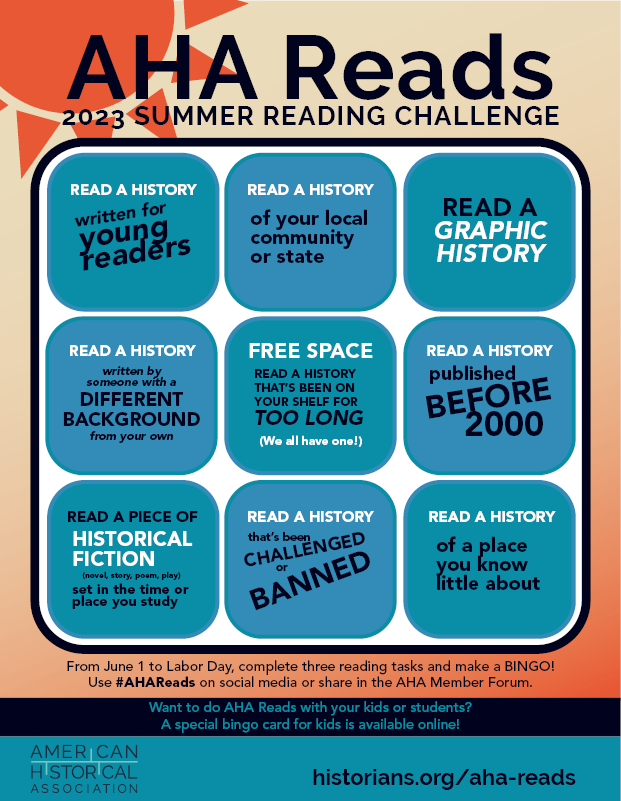
Here's this year's bingo card.

AHA Reads Bingo Card 2023
#AHA Reads: 2023 Summer Reading Challenge Bingo Card

Between 1 June and 4 September (Labour Day in the United States), one can complete the challenge by picking three of the following options:

  • Read a history written for young readers
  • Read a history of your local community or state
  • Read a graphic history
  • Read a history written by someone with a different background from your own
  • Free space: read a history that's been on your shelf too long (we all have one!)
  • Read a history published before 2000
  • Read a piece of historical fiction (novel, poem, story, play) set in the time or place you study
  • Read a history that has been challenged or banned
  • Read a history of a place you know little about

As I did last year, I'm setting the following additional guidelines:

  • No purchasing books for the challenge. Books must either be already in my collection, borrowed from my library, or loaned by a friend.
  • Print books only--summer reading challenges are supposed to be fun, and for me, reading an ebook is not.
  • Blog about what I read and finish writing all posts by 4 September.

So which challenges have I chosen and what am I reading?

 
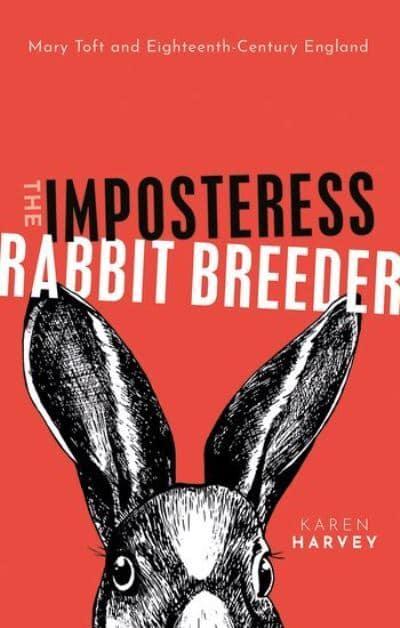
My first choice is to read a history that's been on your shelf too long (we all have one!). Although there are many late antique and early medieval history titles I could choose, I'm going to go with Karen Harvey's The Impostress Rabbit Breeder, which has been on loan from a friend for over a year, and which I need to return before the end of August.
 
The Imposteress Rabbit-Breeder
The Imposteress Rabbit Breeder by Karen Harvey
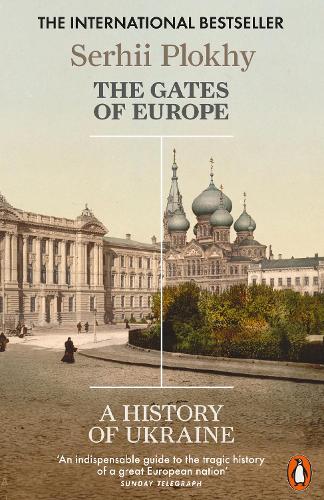
My next choice is to read a history of a place you know little about. My choice is a book I've had borrowed from the library for awhile, Serhii Plokhy's The Gates of Europe: A History of Ukraine.

The Gates of Europe: A History of Ukraine (Paperback)
The Gates of Europe by Serhii Ploky


My final choice is to read a graphic history. Thanks to the incredible work of my University's fine art librarian, the library where I work now has a zine collection! I've been wandering by and flipping through them for the past few months but haven't made the time to sit down and read one properly. Plus, zine are usually pretty short, and I may not have a lot of time for reading this summer.
 
Which should I read first? Wishing everyone participating in the challenge a fun selection of books, and the time and space to enjoy them.

Saturday, 3 June 2023

#AHAReads 3: Black on Both Sides by C. Riley Snorton

Last year I took part in the American Historical Association's first annual summer reading challenge. While I met my goal of reading and taking notes on three books between the first of June and the end of August, I didn't finish blogging about them. Until now!

The third and final book I read for #AHAReads 2022 was C. Riley Snorton's Black on Both Sides: A Racial History of Trans Identity, which was inspired by the prompt to read a history of an identity group you don’t belong to.

The book blurb reads:

Black on Both Sides identifies multiple intersections between blackness and transness from the mid-nineteenth century to present-day anti-black and anti-trans legislation and violence. Drawing on a deep and varied archive of materials, Snorton attends to how slavery and the production of racialized gender provided the foundations for an understanding of gender as mutable.
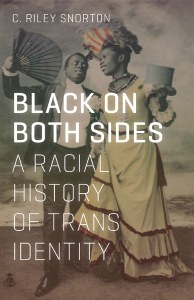
Cover of Black on Both Sides by C. Riley Snorton

From the start of the book, Snorton makes it clear that he is not writing a traditional historical study.

 'Organised around a series of events that provide occasion for bringing both signs--blackness and transness--into the same frame, Black on Both Sides is not a history per se as much as it is a set of political propositions, theories of history, and writerly experiments." p. 6

Non-traditional methods of analysis, he asserts, require non traditional structures (p.11-12). As a reader, I found these experiments thought-provoking and persuasive. The author's use of literary theory, trans theory, black studies, and theories of history, is that of an expert, and seeks to engage an audience able and willing to keep up. As a non-expert in any of these areas, I found it challenging, and worth it. As Snorton express it at the end of the book, 

'theory, at its best, is nothing more than "dreams/myths/histories" aimed at giving expression to ways of seeing and ways of being in the world.' (p. 185)

My main takeaway from the introduction and the first chapter was that, when blackness and transness coexist, this creates the possibility of flexibility in gender. Or as Snorton puts it,

'Together this chapter and its companion, "Anatomically Speaking" (chapter 1), explore how transness became capable, that is, differently conceivable as a kind of being in the world where gender--though biologized--was not fixed but fungible, which is to say, revisable within blackness, as a condition of possibility.' p. 59

The book's five chapters are presented in three parts. The first chapter focuses on James Marion Sims' surgical experiments on enslaved black women, as way to examine how nineteenth century scientists categorised physical attributes of the body to create and support racial hierarchies. Snorton points out that, Sim's 'patients', as enslaved women, were fundamentally unable to consent to his experimental, unanesthetized surgical procedures (p. 24), yet his discussion of how Sim's autobiographical writings, and the nineteenth century medical establishment's responses to his work, focus on the experiences and perspectives of Lucy, Betsy, and Anarcha, and the unnamed enslaved women who were his experimental subjects and unacknowledged surgical attendants. Anarcha's experiences, in particular, lead into a discussion of the relationship between odour and disgust; Snorton raises the possibility that enslaved people may have deliberately use body odour for protection (p. 27). In discussing the limits of what we can understand about the experiences of enslaved women, Snorton uses Evelyn Hammond's work, particularly her  formulation of "black holes" in our evidence, to argue that historical analysis should be "attuned to the effects of an undetectably present thing" (p. 43)

The chapter serves to establish our understanding of the relationship between race and gender in nineteenth century America, which builds into the second chapter, discussing the ways that free Black people, and slaves seeking freedom, used mutability of gender. While an overseas slave trade became illegal in the United States in 1808, domestic slavery was legal until 1865, leading local and federal laws to 'articulate a grammar rife with euphemism to disavow the violent processes by which land and persons would find primary legal expression as property' (p. 56). One of the chapter's case studies is of the lives and writings of William and Ellen Craft. The Crafts fled enslavement in disguise--Ellen, who could pass for white, dressed in male clothing; her husband pretended to be her slave. Snorton describes the couple's different kinds of transition--between black and white, male and female, enslaved and free--as 'transubstantiation', and also explores the transformations wrought by their nineteen years of residence and activism in England, where they published an autobiography, Running a Thousand Miles for Freedom. Their book, Snorton argues, plays with audiences understandings and perceptions of racial characteristics.

'Speaking to a transnational audience of abolitioinists and others, whom he hoped to persuade to an antislavery position, Craft frames the 'cruelty' of American whiteness in terms of its particular species' characteristics.' (p. 85)

As Snorton makes clear, William and Ellen Craft's story is complex: their activism in England included support for British colonial expansion into Africa, and the educational and Christianizing projects that were part of this (p. 95). 

The complexities of race and self-representation are explored in the next section, 'Transit', which contains a single chapter focused on the "female" (the quotation marks are Snorton's) in books anthologised in Three Negro Classics (1965): Up From Slavery by Booker T. Washington, The Souls of Black Folk by W.E.B Du Bois, and The Autobiography of an Ex-Coloured Man by James Weldon Johnson. Once the chapter's theoretical groundwork has been laid, Snorton's focus is on exploring the figure of the black mother. 'The black mother's gender is vestibular, a translocation marked by a capacity to reproduce beings and objects. But one should not mistake her figuration for the real.' (p. 107) The importance of keeping the differences between literary representation and reality is one that the authors Snorton examines emphasized to their audiences. As Snorton demonstrates in his analysis of the Souls of Black Folk, Du Bois explores

'how racism produces myriad institutional impediments for black artists while also undermining a myth of meritocracy, which would suggest that those black people who have been successful have done so because their work is so exceptional as to transcend race or racial prejudice...the popularity of black artists does not indicate more positive conditions for black people.' (p. 114)

These third and final section of the book, Blackout, focuses on the journalistic representations of trans stories. Snorton's methodology in engaging with the news as a source is to recognise midcentury framing and its purpose (which was to make those profiled seem like jokes), refrain from adding a 'conventionally satisfying ending' to stories that do not have one, and avoid including birth names or deadnames or accounts of trans awakenings, in favour of trying not to 'perform gender as teleology' (p. 145). The chapter focuses on reporting on the stories Black trans women, including Lucy Hicks Anderson (145-151), Georgia Black (151-157), Carlett Brown (157-161), and Ava Betty Brown (161-166), in the midcentury Black press. Reporters often reached for the story of Christine Jorgensen, a white trans woman, as a point of comparison, which in turn enables Snorton to analyse the role of race in reporting on trans stories. A key difference, as Snorton shows in the case of Ava Betty Brown, was the importance of 'black sociality'--Ava Betty Brown's friends, acquiantances and business associates all saw her as a woman, and as she said in court "If I am a man, I don't know it." (p. 162). The chapter concludes with a discussion of the story of James McHarris / Annie Lee Grant (162-174); a reporter's use of the word 'restive' sparks a thoughtful investigation of McHarris/Grant's gender fluidity. As Snorton writes,

'There is a growing consensus in transgender studies that trans embodiment is not exclusively, or even primarily, a matter of the materiality of the body. Where one locates a 'transsexual real,' whether phenomenologically, in the practices (social, legal, medical, and so on) of transition, in  narrative, via the cinematic, or even in the unspeakable and unrepresentative aspects of imagining transness, shifts in relation to racial blackness. In apposition with transness, blackness, as, among modes of valuation through various forms, producing shadows that precede their constituting subjects/objects to give meaning to how gender is conceptualized, traversed, and lived.' 175

The final chapter brings together investigations of the intersection of transness and Blackness by examining reporting and film-making about the1993 murders of Brandon Teena, Philip DeVine, and Lisa Lambert. Despite the journalistic fever around Christine Jorgensen, Brandon Teena, after his murder, was characterised in the news 'as America's first glimpse into the world of transgender people.' (178-180) In the film Boys Don't Cry (1999), and other formulations of what Snorton calls 'the Brandon archive', Philip DeVine, who was Black and disabled, is left out of the story. Snorton stresses that the chapter does not aim to add Phillip DeVine back into the story or pull on the heartstrings. Instead, 'this chapter, following Sylvia Winter's work, asks, What aspects of DeVine's figuration, as a matter of sociogenesis, constitute a usable history for more liveable black and trans lives?' (p. 183). The final section of the chapter looks at the Black Lives Matter, Trans Lives Matter, and Black Trans Lives Matter movements, and how to create a future where 'all of these lives will have mattered to everyone' (p. 198). Learning from and listening to the past, as Snorton has done in Black on Both Sides, is hopefully one step towards that future.

Further Reading

Black on Both Sides was the subject of an African-American Intellectual History Society online roundtable, found on their blog, Black Perspectives. Each of the chapters is the subject of an essay, and the roundtable concludes with an author's response. Highly recommended if you want to see expert perspectives on this book--after reading it, it's clear to me that I missed or didn't follow a number of important points.

Professor Snorton was interviewed for UChicago News; it's a great read and includes discussion of Black on Both Sides.

There is also further reading in the book's endnotes. Jacqueline Dowd's idea of the long Civil Rights Movement seems very important to think with; it helps 'unsettle the version of linear progression that the previous chronology implied.' (p. 233) The notes also cites Tavia Nyong'o's Essay about Caster Semenya, which links contemporary panics about Semenya's gender and athletic performance with journalistic reactions to other people with 'non-normative gender presentations', like Peter Jones; there is a later version as a journal article here.

#AHA Reads

The rest of my #AHAReads posts can be found here:

The AHA has just shared the 2023 challenge and I'm looking forward to taking part and blogging about what I read.

Monday, 1 May 2023

A Diptych on the Past as Story

Not quite entries for my growing collections of contemporary poems about late antiquity (even with the broadly definition I typically apply, these aren't about that period of history). Still, close enough to count as poems about history that I want to include on this blog, my commonplace book. I love the way Maggie Smith and Esther Jansma write about the past as a story.

Hope you enjoy.

Everything is New

 
What would happen was always there, perfectly
spelt by a cup which shattered, shards
marked with the imprint of thumbs
the shiver-script of pinsharp twigs.

It's not a tale we made up but something
that was here and is here in the traces of ditches
and posts and wood fires long gone cold.
It just needed finding, that's all.

Someone had to look at it and say: what is it
it's this, and there it was, a house with a hearth
people as ever and ever being themselves
the first time in this now and sitting

with warm hands which clasp a cup
by the fire and talking and the tick-tick of rain
is a circle of sound and nothing matters, the night
the invisible clouds, the silence of it all

outside that's sleeping or waiting for day
are the roof and the walls round the roof
and the bricks of the house already old
but new, being found again today.

~ Esther Jansma, What it is, translated by Francis R. Jones (Tarset, 2008)
 

I call them back to me

I call them back to me —

flimsy selves of the past,
some vellum-thin, clearly

unfinished. Not fleshed out,
not fully — only children

really, stopped in time, still
tottering about in their

mother’s high heels,
meaning mine?

I didn’t know them,
their little plots forgotten

just as they began
to rise. I didn’t know

what any of them,
any of us, would become

in the end, which is not yet
where we are.

I call them back.
I’m ready, I tell them.

I think I know now
where we’re going, all of us,

together. I think I know
where the story is going.

Come back, come back,
I can finish it.

~ Maggie Smith, The Bitter Southerner 2023 

Sunday, 30 April 2023

Drag Us There and I'll Call it Home

For the past few weeks, I've had these two poems open in tabs next to each other on my phone. Both have a menacing fairytale melancholy that I really enjoy.
 

Excerpt from Desire is a Federacy

 
...I’m thankful for those moments I wake up
    before you     if the police kill me I hope
the last thing I accomplished is making
    your coffee because I like how my hands feel
that early in the morning     incapable of harm
    miming tender acts of weather
instead like a lightning-struck senator
    the closest I’ve come
to participating in faith
    was believing that lightning strike
would help my neighbors sunrise
    sunflower sunset     this is a day if it looks like
all the ones before carrying us
    god knows where at least the dogwoods
will white and pink me perfect
    like arrows some men only really see
what they’re about to kill     leap high my love
    and know there’s not enough guilt
in ecclesiastes to demand the hungry
    attempt grace in their hunger
& what would a king blood-hemmed
    and sharp-sworded know
about starving     wanting the undaffodilled
    field the sad mechanics of legislation
can make     even out here with all our shirts
    on the clothesline and our mothers
up to their elbows in the washtub
    I’ve come with a petition
no one wants to sign like more
    swords in lilies thunderstorms
in every quiet dream you’ll have to wake
    up just to wring your hair out full
of the sweet rain smell     luminous
    as the lake I tend to deep in shadow
where swans dip their throats and come up
    dreaming     all the leaves giving in
to the wind at once     all the police dropping
    their handcuffs over the bridge
and for it raising the water ever so lightly
    we become light ourselves     I define
salvation as never having to explain debt
    to a toddler     drag us there and I’ll call
it home     drag us away from there and
    you’ve learned something about
this country the blue kings burning
    an acre they could own     I keep
their ash in my heart like an inheritance
    the urn of me     the downside of not being
a daisy patch is all the language I’m expected
    to remember like glimmer as in
the gun glimmers and inevitably as in
    I hope you’ll forgive me if I say I made a fool
of myself today inevitably
    I’ll say the same thing tomorrow

~ C.T. Salazar, Poetry Northwest 2023
 
Amsterdam, 11 April 2023

What They Love Now

The souls in my garden sing:

At noon, when light cracks through
Sea-salt to the sandy beds

And again, when midnight
Spreads the sky with stars in
A radiance that we,
Deep-water dwellers,
Can only feel
Under our skin, scales.

They sing of what they
Once loved:

            Princes, their voices
            Deep and resonant as
            Graves,

            The sun, glorious and raw—
            Burning on
            Flesh made for depths
            And darkness.

And what they love now:

            Currents that cool them,
            And ask politely for dances,

            Eels with eyes like coals and
            Temperaments like dogs,

            Their own harmonies,
            Tentative, swelling,
            Broken, brilliant by turns.

~ Sarah Cleto and Brittany Warner, Uncanny Magazine, 2023.

Wednesday, 22 March 2023

Forward Momentum

Happy Spring! The equinox is here and the days are longer. Here are five things that have made me happy lately.

1. After several weeks without one, I finally replaced my kettle.

a red electric kettle sits on a kitchen counter next to a toaster
Red kettle

2. Libraries, always libraries.

a red phone booth, repurposed as a book drop
Also this wonderful repurposing of a phone booth as a book drop.
    

3. The equinox has come at last and the daffodils are blooming.

a field of daffodils
Daffodils everywhere!

 4. Breakfast and coffee at Hot Numbers Coffee Roasters. Highly recommended if you're visiting Cambridge!

a black skillet with sweet potato hash on a wooden table next to a red coffee cup
Sweet potato and butternut squash hash

5. These words about luck.

I am standing in line for the Hamilton lottery each evening. I of course would like to win it, but I’m secretly doing it because it’s about luck, and about open-eyed surrender to luck, which is the flipside of everything else about this past year: luck is the other side of the coin from forward momentum, from saying yes to everything, especially big risks.

You have to throw yourself into the future as hard as you can, but you also have to propitiate the gods, y’know? 

~Arkady Martine, "2015/retrospective (on the theme of luck)." Arkady Martine. 29 December 2015. https://arkadymartine.wordpress.com/2015/12/29/2015retrospective-on-the-theme-of-luck/

Tuesday, 21 February 2023

New Recipes of this Academic Year

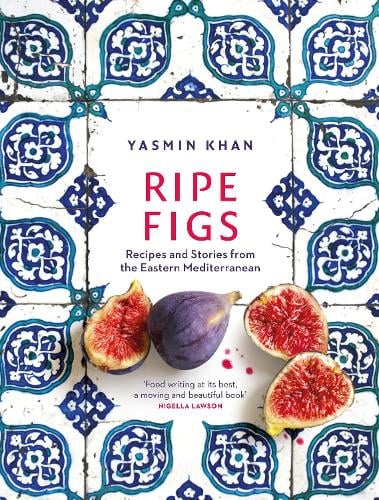
Cooking is one of my favourite hobbies and my local public library continues to be a source of wonderful new cookbooks to try. I'd especially recommend Ripe Figs by author and broadcaster Yasmin Khan, who traveled to the eastern Mediterranean to record the stories and food of the region's refugee communities. It's not an easy read, but it is a powerful one, and the food is absolutely delicious.

Ripe Figs: Recipes and Stories from the Eastern Mediterranean (Hardback)
Ripe Figs by Yasmin Khan
 
A second recommendation! I started cooking from Deb Perelman's popular food blog, Smitten Kitchen, over a decade ago. Her site is one of the places I regularly go for cooking inspiration and reliable recipes, so I was excited to receive a copy of her third cookbook, Smitten Kitchen Keepers, as a Christmas present. While the first recipe I tried from this book was not a winner (the crispy oven pulled pork was salty to the point of being almost inedible--I think there might be a misprint of tablespoon for teaspoon in the ingredients list), I would happy make the other three recipes I've tried again--in the words of the book title, they're keepers.

Smitten Kitchen Keepers by Deb Perelman

September

  1. Dolma from Supra by Tiko Tuskadze
  2. Granola with dried cranberries from Nordic Baker by Sofia Nordgren
  3. Tiger Prawn and Cabbage Fried Rice from Stir Crazy by Ching He Huang

 October

  1. Spiced cornbread with feta from Ripe Figs by Yasmin Khan
  2. Pumpkin and cardamom soup from Ripe Figs by Yasmin Khan
  3. Beetroot and fennel salad from Ripe Figs by Yasmin Khan
  4. Saffron and almond biscotti from The Nordic Baker by Sofia Nordgren

November

  1. Salted fried yellow bean pork with baby corn and sugar snap peas from Stir Crazy by Ching He Huang
  2. Peanut butter sandwich cookies from The Best of America's Test Kitchen 2013
  3. Black-eyed beans and rice with pumpkin from World Vegetarian by Madhur Jaffrey
  4. Chickpea soup from World Vegetarian by Madhur Jaffrey
  5. Cauliflower soup from The Kennedy Kitchen by Neil Connolly

December 

  1. Crisp-braised duck legs with aromatic vegetables by Mark Bitman from New York Times
  2. Chocolate hazelnut cookies by Genevieve Ko from New York Times
  3. White chocolate macademia nut cookies by Sohla El-Waylly from New York Times
And more (spending the holidays with my family was a great opportunity to cook and bake!) 

 January

  1. Crispy oven pulled pork from Smitten Kitchen Keepers by Deb Perelman
  2. Pumpkin snacking cake from Smitten Kitchen Keepers by Deb Perelman
  3. Turkish braised carrots and leeks from Ripe Figs by Yasmin Khan
  4. Kotnis lobio from Supra by Tiko Tuskadze

February

  1. Rosemary, sea salt, and sesame popcorn in Natural by Love Food
  2. Holubtsi from Mamushka by Olia Hercules
  3. Carrot tarte tartin from Smitten Kitchen Keepers by Deb Perelman 
  4. Cabbage and kielbasa with rye croutons from Smitten Kitchen Keepers by Deb Perelman
  5. Toasted ricotta gnocchi with pistachio pesto from Smitten Kitchen Keepers by Deb Perelman
  6. Kashmiri Potato Curry from Indian Slow Cooker by Neela Paniz
  7. Carrot Raita from World Vegetarian by Madhur Jaffrey
  8. Family Style Crème Brûlée from Smitten Kitchen Keepers by Deb Perelman
  9. Curried Red Cabbage with Cranberry Juice from World Vegetarian by Madhur Jaffrey
  10. Deruny (Ukrainian potato pancakes) from Mamushka by Olia Hercules