Sunday, 23 May 2021

Adding to the Odd Shelf

In her essay collection Ex Libris: Confessions of a Common Reader Anne Fadiman writes:

It has long been my belief that everyone's library contains an Odd Shelf. On this shelf rests a small, mysterious corpus of volumes whose subject matter is completely unrelated to the rest of the library, yet which, upon closer inspection, reveals a good deal about its owner. - Anne Fadiman, 'My Odd Shelf'

I love the concept of the Odd Shelf, and have been known, when I visit other people's homes, to wander around their libraries trying to see if I can spot one.

My Odd Shelf consists of anthologies. From The Best Science Fiction Stories (a very seventies collection); to The Wild is Always There, an astonishingly beautiful collection of writings about Canada; to Tellers of Tales, W. Somerset Maugham's 1939 attempt to define what makes a good short story via idiosyncratically selected examples; to A Stash of One's Own, a book of essays about yarn collecting by knitters, anthologies appear in almost every section of my carefully organised bookshelf. (In another delightful essay, 'Marrying Libraries', Fadiman describes her and her husband's approach to organising books. Like her, I am a 'lumper', wanting to keep similar books together so I can find them more easily. My lumping occurs by subject rather than type of book, so A Stash of One's Own and The Best Science Fiction are several shelves away from one another.) 

My collection of anthologies introduces me to writers and writing that are new to me. I'm fascinated by the role that a good editor plays in curating an anthology, selecting and arranging poems or essays or stories around a central theme so that together they say something that a collection of work by one author could never say on its own.

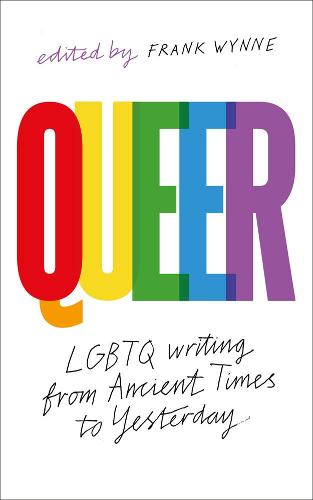
On one of my latest trips to Lincoln Central Library, I was delighted to discover the anthology Queer: LGTBQ Writing from Ancient Times to the Present, edited by the Irish literary translator Frank Wynne.  

Book cover with writing that reads: Queer: A Collection of LGBTQ Writing from Ancient Times to Yesterday (Hardback)
I love the design of this book.


When I brought it home, I discovered something odd. Let me share the first page of the table of contents with you:

Table of Contents of Queer, edited by Frank Wynne

The excerpts are organized by the approximate date of birth of the writer. In his introduction, Wynne explains that he wanted this to be an "own voices" anthology, so it focuses on the inclusion of writing about queer experiences written by queer people themselves. 

Have you spotted it? We go from Catullus (c. 84-c. 54 BCE) to Shakespeare (1564-1616 CE). This leaves a gap of over fifteen hundred years which is explained as follows:

The history of queer literature is filled with gaps, with silences. While the poems of Sappho were celebrated in her lifetime, while the great Arab poet Abu Nawas could openly write poems about same-sex desire, for much of recorded history, queer voices have been smothered and suppressed. Many of those who dared write did so in private. (pp. xii-xiii)

As you can see from the table of contents, poems by Abu Nawas (c. 756-c. 814 CE) aren't included in the anthology, leaving readers with the impression that the period from c. 50 BCE to the time of William Shakespeare was a dead zone for queer writing and experience worldwide. 

Was it, though? In a wonderful talk for the American Historical Association, "Premodern Pedagogies: Queer Medieval Materiality," (a recording is here), historian Hilary Rhodes discussed some of the difficulties of researching and teaching premodern queer histories. Dr Rhodes spoke about the idea of the "conspiracy of historians" that a lot of people bring to the study of queer history. The main argument of the conspiracy runs: people in the past didn't share our contemporary understanding of sexuality and didn't see themselves as queer, therefore we modern folk shouldn't say they were queer. In other words, historians' focus on understanding gender and sexuality in its historical context erases queer experience by claiming it didn't exist. 

Like any criticism of the way historians do their work, this one contains two truths and a lie. It is undeniable that historians have ignored, silenced, or even just backed away slowly from non-normative sexualities and genders in our texts. A second truth is that language and meaning are complicated things: the line between 'a medieval person might not have thought of herself as bisexual' and 'there were no bisexual people in the Middle Ages' is easy to elide, especially when a historian isn't sensitive to how a marginalized reader might react.

Here is the conspiracy's lie: premodern people did define, describe, and portray sexuality and gender in ways which were culturally and historically specific. This makes it challenging to determine whether premodern authors "qualify" (Wynne's word) as queer, given that the way an author from this time period would have defined their identity is sometimes hidden from history. And yet, if we take the writing themselves as evidence--in the sense that there was a whole chain of people, from the initial premodern author down to the chain of people who bothered to copy a text down the centuries, who must have cared for us to even have the text in the first place--perhaps we might start to see our way to a sort of answer, where we can both be sensitive to the enormous cultural gap between the modern and premodern, acknowledge the silences of history, and recognise that queer people have existed everywhere, always.

It seems to me that the gap in Wynne's collection inadvertently reinforces the idea that the period between 50 BCE and 1550 CE contained no writers or writing that can be recognized as queer. In effect, this serves to reinforce the "conspiracy of historians" by presenting these centuries as a time without queer voices. 

I want to stress my non-expert status here, refer you historians who know more than I do, and share recommendations for texts that you might enjoy reading to learn more about premodern approaches to gender and sexuality. Here are three to start out with.

1. The poetry of Shmuel haNagid (and other writers from Al-Andalus)

As an undergraduate student, I took a brilliant course on "Living Together: Muslims, Christians, and Jews in Medieval Iberia". Covering beginning of Al-Andalus (Muslim Spain) in the eighth century to the fall of the kingdom of Granada in the fifteenth, this class contained some of my favourite reading of my entire university career, especially the poetry of Shmuel Ben Yosef HaLevi HaNagid (993-1056 CE) as translated by Peter Cole. We also read Cola Franzen's Poems of Arab Andalusia.
 
Same-sex desire is a theme of many of these poems and any of them would have made wonderful candidates for inclusion in the anthology. The third of HaNagid's  three love poems, here, particularly stands out.
 
And for more medieval homoeroticism in verse, see here

2. Der Gürtel (the Belt) by Dietrich of the Glezze/Gletze (13th century)

I learned about this story from a twitter thread by historian Eric Wade, who cites the anthology of translations Erotic Tales of Medieval Germany ed by Albrecht Classen. Read the full thread for an amazingly bonkers tale of medieval gender and sexuality.
 

3. Le Roman de Silence by Heldris de Cornuälle (13th century)

I learned about this from the medievalist blog Jeanne de Mountbaston, written by Dr Lucy Allen. In her post 'A "Queer Medieval" Reading List", Dr Allen recommends her favourite primary and secondary literature for teaching about medieval gender and sexuality. Le Roman de Silence is one of several texts of her list that seem like they could have been added to Wynne's list.
 

Finally...

Will I add Queer to my Odd Shelf? At this point, halfway through reading it, I'm not sure. On the one hand, the anthology has introduced me to many authors and works that are totally new to me; I am grateful for this and excited to read more.
 
On the other, the false advertising of the subtitle 'from ancient times to yesterday' bugs me rather a lot. Fifteen hundred years is an enormous gap. On the other hand, the book reaches the twentieth century on page 42 (out of 601) so this may simply reflect the difficulties of applying the selection criteria--by a queer writer about queerness--to any pre-twentieth century writing, not just writing from the Middle Ages. Perhaps Queer has a place on my Odd Shelf after all.

Sunday, 9 May 2021

On Joining Twitter, Part 2: Academic Twitter

I continue to consider creating a twitter profile but have not yet made a decision. The popularity of Twitter within academia means that a lot of people have written about how and why they do (or don't) participate. There are now whole books on the subject, including Mark Carrigan's Social Media for Academics and Jojo Scobie's Twitter for Academics (an outgrowth of her blogging project, The Online Academic, which includes a helpful guide to Twitter jargon). There are even businesses which help academics engage in online communication, such as Jennifer van Alstyne's The Academic Designer, which blends free content with paid training and consultation. 

Here are some of the reflections I have found helpful and thought-provoking.

Reasons to use Twitter

Reasons not to use Twitter


(A risk management strategy can be helpful for researchers who work on tricky topics)


Can get caught up in Twitter’s culture of criticism and in dealing with trolls
 
Can simply be irritating


Can join and contribute to multiple or overlapping communities 

(this reflection was helpful)


Can be difficult to discuss controversial issues, especially early in one’s career


Can get more citations of a scholarly paper (though there are some interesting caveats)


Can do without it as a researcher


Can learn about publications, research, or events


Can have negative effects on learning by taking time away from other forms of reading and writing


Can network and interact with others in the field

(there are many examples; here's one I liked)


Can be used by employers in their screening processes; demonstration of social media reach and engagement needs to be carefully handled

Monday, 3 May 2021

On Joining Twitter, Part 1: Reasons

I have a book needing final edits and major proofreading, an academic article to restructure for an editor who's interested in it, two conference papers to research and write for the summer conference season, neglected (more accurately, abandoned) duties as a book reviews editor for a local history journal, and my first ever paid-magazine writing to complete for a loose late summer deadline.
 
So, naturally, I am panic-procrastinating absolutely all of it. Ugh.

I am very sympathetic to students who procrastinate, in part because I feel that a lot of them are doing it for the exact same reasons I do: a desire to Do The Thing to an exceptionally high standard and a deep-seated fear that achieving that standard is impossible. And as the window for achieving that standard becomes smaller and smaller, panic and paralysis grow greater and greater...

Which explains why I have been finding distractions aplenty. Some of those are good--I've been doing a lot of reading, and tried a lot of new recipes. Some of them make me feel awful afterwards--I've been spending a lot of time reading political and medieval history Twitter feeds as a distraction, and have been thinking seriously about creating my own. In this series of posts, I want to evaluate the pros and cons of joining social media for professional purposes, in order to make a decision about it and hopefully recover some of the time I currently spend thinking about it.
 
Why
"Why" by Ksayer1 is licensed under CC BY-SA 2.0

At this moment in my career, there are three main reasons why being more active and visible online is particularly attractive: self-promotion, networking, and public writing. Let's take each in turn. 
 

1. To Hype My Writing

Not all research is equally visible, and the work of those outside of traditional academic career structures is often particularly hard to find. Credentialed scholars with publications and projects in progress but no permanent research/teaching position are often called 'independent' or 'alt-ac' scholars in writing about academia. Those of us who are pursuing part-time or non-permanent academic work might also be called 'precarious' or 'contingent' scholars. Because of our position within academia, information about our work tends to be very dispersed. While PhD students and early career academics will have a university page that lists their current and developing projects, information about an independent scholar's work might be scattered across LinkedIn, Academic.edu, Humanities Commons, their employer's webpage, Google scholar records of their publications, and more.
 
As someone who has a number of projects nearing completion, readers are on my mind. What if I put all this writing out into the world and nobody reads it?  An article I read recently in the Chronicle of Higher Education recommends creating an author platform. Professor Devoney Looser acknowledges academic discomfort with marketing at the very beginning of her article:
I realize I’ve already lost some academic readers by using the word “sell.” Many of us went into higher education to avoid selling ourselves, our souls, or some widget. We were going to be about the love of ideas, not filthy lucre. That also meant being above the business of plugging our own research findings. Perhaps we mistakenly thought our ideas would sink or swim on their own merits, or maybe we imagined that selling books would be our publisher’s problem.
I share some of this discomfort about self-promotion: especially as a female independent scholar, putting myself out there can feel uniquely fraught with questions about whether my work is 'good enough' given the limits on my time, attention, and research resources that come from fitting academic writing around my job and other responsibilities.

But Looser's definition of author platform is helpful for making me feel less weird about it.
Having an author platform means you are not only publicizing your next article or book, you are seeking the right readers for it. You are thinking long term to actively manage the ways you put yourself forward as an authority. You’re working to pop up in someone’s Google search for your area of expertise.
Yes, that's it! That's what I want! I want readers, and I know that as an independent scholar it might be harder for them to find me. Looser goes on to give some thoughtful and practical tips about using social media effectively, focusing on principles of connecting and amplifying not just your own work, but other people's too. An article by Dr Irina Dumitrescu (a fellow medievalist!) makes a nice complement to this: her piece, 'time to get over your discomfort with book marketing', is focused specifically on step-by-step suggestions for promoting an academic book. Looser argues that social media engagement for the purposes of building an author platform shouldn't just be ceaseless self-promotion but instead a demonstration of a willingness to join a community and participate in conversations; and Dumitrescu has sage advice on that score too:
Do your social-media promotion in the spirit of scholarly generosity, and it will be less irritating to friends and colleagues. If you make a habit of reading, sharing, reviewing, and celebrating your colleagues’ work, too, they will not mind when you shine the light on your own publications. (Of course, it’s best to start appreciating others’ books well before your own comes out.)
But will social media conversations actually lead to readers? Perhaps, says Dr Micah Allen, in a thoughtful post on whether Twitter is a useful way to get people to read a new publication. Dr Allen looked at 'conversion rates'--how likely people are to click on a link in a tweet, finding that internal engagement (for example, likes and retweets), is typically above external engagement (clicking on the link and reading the paper). In fact, as someone with a solid platform, most of his paper tweets have a conversion rate of 2-3%, which he then contextualises with a survey of his followers and concludes that paper tweets do a pretty good job of getting publications in front of interested readers.

Spider Web
"Spider Web" by mkreyness is licensed under CC BY 2.0

2. To Build a Network

When I was an MPhil and PhD student, I had the opportunity to participate in a series of conferences called 'Texts and Identities'. The project ran for over a decade, travelling between the universities of Vienna, Utrecht, Paris, Cambridge, and Leeds for an annual conference. Getting to meet European scholars of my generation and hear their work was one of the best experiences of my doctorate. Texts and Identities came to an end when the senior scholars who founded it retired, but in many ways it formed one of the foundations for what I see as my scholarly network--people whose work I admire and follow, trusted acquaintances whose advice and suggestions and I might ask for and reciprocate.

One of the worst parts of no longer being a doctoral student (as well as being a contingent scholar) is that the fact these networks are no longer an annual part of my life. While I might volunteer papers for sponsored sessions, and attend conference talks I'm interested in, there's something to be said for something a little more systematic. Linus Tan's essay on networking, in which he discusses how he makes networking work as an introvert by treating it as a research project, spoke to me both as a strategy for making networking a pleasant experience:
When I find myself wanting to know more [about the person from reading their ResearchGate profile, social media, etc] that signals to me a genuine interest in that person. But if I start thinking of possible projects, I stop. Why? Because I think networking needs to always be about the person first, not the opportunity.

In other words, I feel disconnected from communities--medieval studies in general, Late Antiquity, late Latin literature--that I used to feel quite connected to; and simultaneously, I have the potential to belong to new and different communities (published book authors, independent/alt-ac/contingent scholars, librarians and archivists), than I did when I was PhD student. Connecting with people on social media would be a way to give back to and become involved in both my old and new communities as well as potentially put my work in front of members of those communities who might be interested in it.

3. To Do Public Writing

I want to write for general audiences. I am inspired by writing that has appeared in places like Tropics of Meta, Public Books, Contingent Magazine, Public Domain Review, and Lady Science. At the same time, public writing is not something that was talked about--at all--at any point of my education, and I've found this piece by Dr Irina Dumitrescu 'how to cope with a fear of public writing' really helpful for thinking about the kinds of writing I'm most interested in doing as well as ways to get around common fear-based roadblocks.
 
Even if the heyday of blogging is over, blogs are still one of the principle forms through which academics share their work with scholarly and public audiences. There are many different types of academic blogs; my favourites focus on advice, thinking in public, and sharing experiences. Restarting this blog was intended as a way to get ready for producing publishable work by ensuring that I practice writing regularly. I wanted to combat my panic-procrastination of all forms of academic writing by giving myself a low-stakes, low-pressure opportunity to produce regular writing, regardless of what else was going on in my life. I deliberately didn't specify whether blogging had to be academic in order to avoid trapping myself in a further spiral of panic-procrastination. Plus, I'm fascinated by the personal side of history writing: what personal, social, and environmental factors shape this scholar's interest in this problem?  Like Dr Anuja Cabral, whose post on writing and fear really resonated with me, I write as a way to understand.
 
What role might social media play in this process of writing to developing my understanding? I am still thinking this through! I don't currently have this blog linked to any of my professional profile pages and I remain unsure as to whether, if I did create a Twitter profile, I would tweet about any of my posts. The next post in this series will discuss some of the reasons why.

Sunday, 2 May 2021

A Triptych of Love Poems

Here's an embarrassing confession: in a country where people often sneer at the meaningless commercialism of the fourteenth of February, I love Valentine's Day. When I was in elementary school, we would always exchange little cards with everyone in our class and the teachers would decorate their classrooms. My mother delights and excels in small presents, so every Valentine's Day that I can remember, I have been given a card, a new pair of seasonally-themed socks, a box of chocolates, and sometimes a new pair of earrings or necklace.

This left me with the early impression that Valentine's Day was more about friendship and family than romantic love. The romantic aspect came to my attention in middle and high school, where participation was more geared towards couples and crushes: a few girls would carry balloons and teddy bears given to them by boyfriends, and student groups might sell flowers in the cafeteria as a fundraiser. But I kept my early impression: that romantic love is but one kind, and friendship and family and community were experiences of loving and being loved worth celebrating.

This outlook shapes the way I approach love poems: I usually find myself most drawn to the poems that speak to different types and experiences of love. Here are a few recent poems I read which aren't cookie-cutter romantic but still spoke to me as beautiful love poems.

a black and white photo of a man standing behind a seated woman on wooden stairs in a garden

"vintage portrait of old couple among foliage" by <def> is licensed underCC BY-NC 2.0

Seventh Sense

So you got married.
I'm happy for you.
But it's not only people--
wolves and she-wolves
join their fates,
in order
to avoid loneliness
and provide
lifelong support
to one another.
To marry like everyone does,
and produce a child,
doesn't require
great intelligence.
The question in all of this,
is how will the face that
now looks at you in the mirror
be judged tomorrow?

It is not surprising that,
from time immemorial,
people have often confused
their hot and stormy,
passing emotions'
with love,
since both can cause
the lightening to flash.

But not everyone
is capable of understanding
that in our human,
all-too-oblivious world,
love is the highest peak.
The ability to climb up
has been given to only a few happy people.
And possibly unfortunately,
of the ten thousand,
only two
manage to be successful,
on the sharp edge
of this amazing
imprisoning, stormy,
happy holiday.
This eternal holiday
of unceasing delight.
 
To get physically
but not spiritually close,
is the ultimate sadness.
That's why
there are so many
lonely people in the world--
the wingless tedium
of a single-sided coin.
 
For them no
one-off flights,
or holidays out of the blue.
Totally deprived
of a happy fate
they smile to your face
weeping bitterly in secret,
 
And at any crossroads
of life's path
you are always met
with the inexorable question--
Has your spouse become
a sensitive friend to your soul,
a friend of
your innermost desires,
one who feels 
your happiness and torment
with a seventh sense?

If not,
then all your striving
will be like trying to light a fire
on a windy day.
And it means that you end up
too far away from
the goals fate has assigned you,
too, too far...
That's just how inaccessible,
difficult,
and secret,
this multi-faceted,
willfully-choosy,
love is. 

~Muhktar Shakanov, translated in Contemporary Kazakh Literature: Poetry (National Bureau of Translations, 2019), pp. 106-108.
 
photo of a sunset over water

"Pacific Northwest" by Nick Kenrick is licensed underCC BY-NC-SA 2.0

Images of Salmon and You

Your absence has left me only fragments of a summer's run
on a night like this, fanning in August heat: a seaweed song.
Sweat glistens on my skin, wears me translucent, sharp as scales.

The sun wallowing its giant roe beats my eyes back red and dry.
Have you seen it above the highway ruling you like planets?
Behind you, evening is Columbian, slips dark arms

around the knot of distance that means nothing
to salmon or slim desiring. Sweet man of rivers,
the blood of fishermen and women will drive you back again,

appointed places set in motion like seasons. We are like salmon
    swimming against the mutation of current to find
our heartbroken way home again, weight of red eggs and need.

~Gloria Bird, in When the Light of the World Was Subdued, Our Songs Came Through ed. by Joy Harjo (New York, 2020), p. 221.

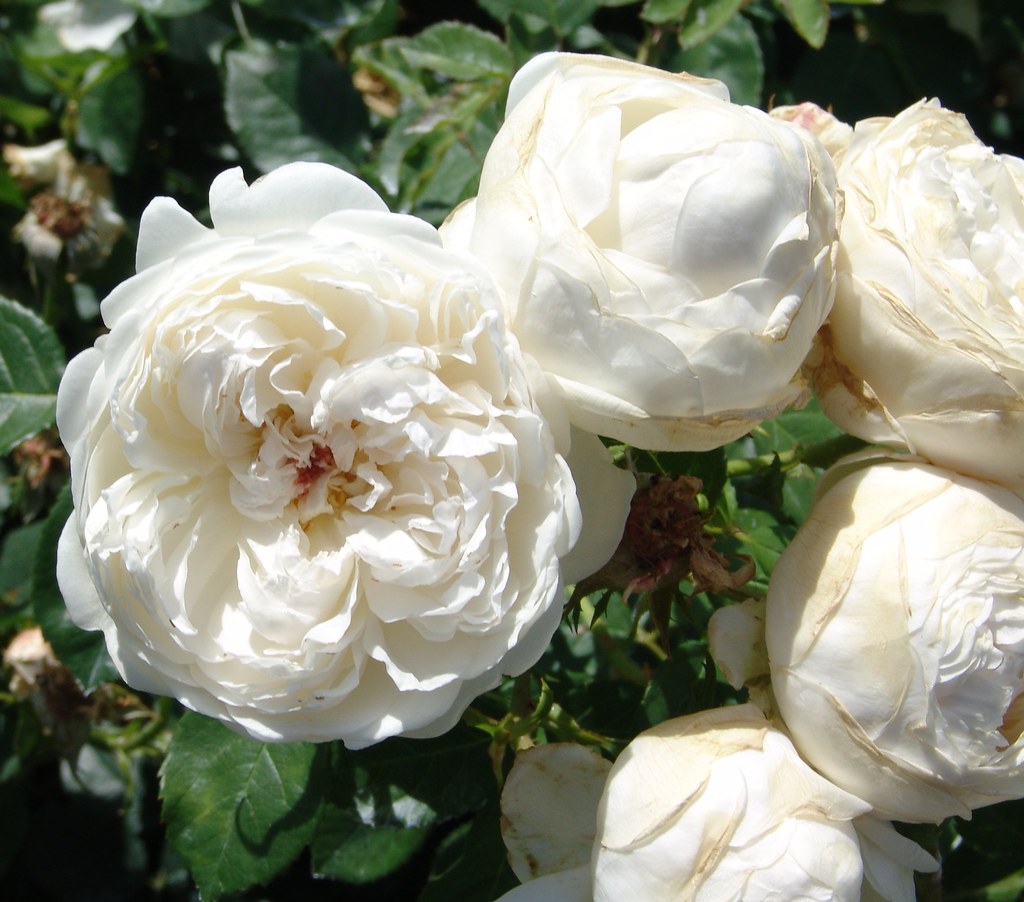
photo of three white tea roses
"Hybrid Tea Rose 'Winchester'" by Drew Avery is licensed underCC BY 2.0

The Gardener

Have I lived enough?
Have I loved enough?
Have I considered Right Action enough, have I
    come to any conclusion?
Have I experienced happiness with sufficient gratitude?
Have I endured loneliness with grace?
 
I say this, or perhaps I'm just thinking it.
    Actually, I probably think too much.
 
Then I step out into the garden
where the gardener, who is said to be a simple man
    is tending his children, the roses.
 
~Mary Oliver, A Thousand Mornings (New York, 2012), p. 7.

Saturday, 17 April 2021

My Favourite Academic Acknowledgments

The acknowledgments section of academic books fascinate me. In older publications, they tend to be quite formal, thanking the author's colleagues and friends with titles and full names as though they had never met. More recent books will name a long list of scholarly influences, colleagues past and present, and occasionally even librarians or editors. The final few sentences thank the friends, spouses, lovers, and children who pulled the book across the finish line to publication. Acknowledgments can be heartfelt, goofy, or stilted, but I always enjoy getting a small glimpse of the author as a person before I begin to read their work. 

Here is my favourite.

After ruefully observing the 'academic name-dropping' that passes for personal acknowledgments in academic books, Hanneke Wilson concludes the acknowledgments to Wine and Words in Classical Antiquity and the Middle Ages with this:

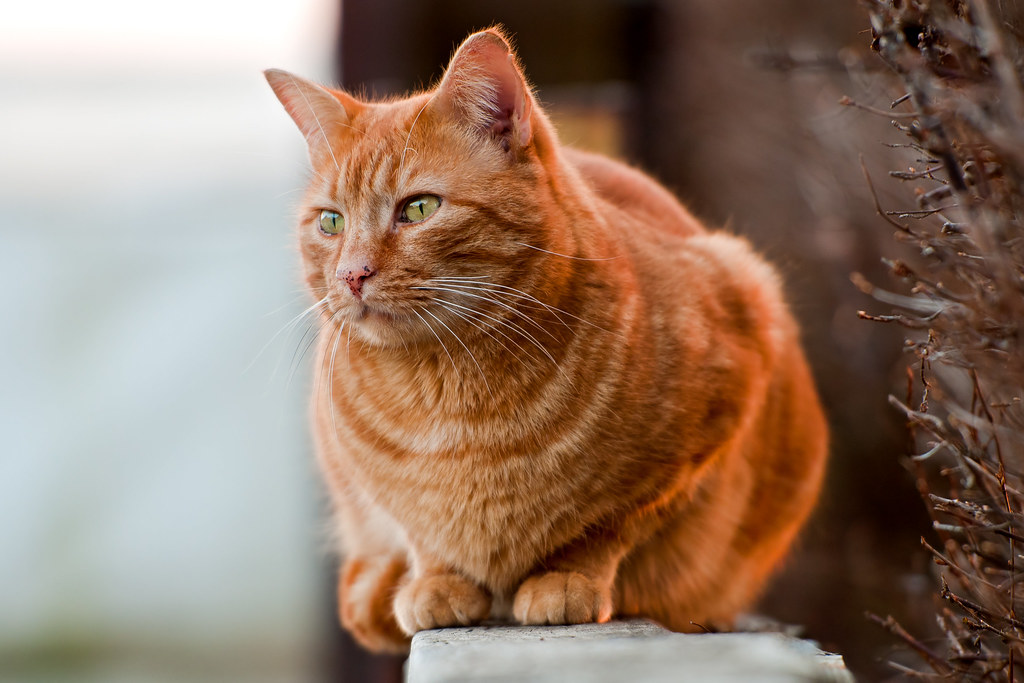
...among those is Nimrod, our large ginger tom, because his demands for lap-cat therapy have been a distraction at times; the ideal academic cat fits neatly between lap and desk.
Orange cat crouches on a stone wall

"Orange cat on the wall" by Tambako the Jaguar is licensed underCC BY-ND 2.0

Wednesday, 7 April 2021

New Recipes of Late Winter

Hey-yo, reader, I hope you're well. I am on my final days of Spring break. Despite my lofty intentions to do a ton of academic writing and editing, none of that has happened. Instead, I've slept in, read too many Twitter feeds as I continue to vacillate about creating one of my own, and done a lot of rambling along the River Witham.
 
a fence post with a circular yellow sign with a horned helmet on it, indicating the Viking Way
the Viking Way
 
My cooking feels like it's in the same slump as my writing and editing, so it's fun to look back and see evidence to the contrary. While I am not trying new recipes at the rate I did during the first lockdown, I'm still managing to get to about one new thing a week, and sometimes two. Some of these have been recipes I've wanted to try for a few years, like the Sicilian Vegetable Pizza Roll from The Bread Bible, or the Spice Cookies from Jerusalem, which are extraordinary wonderful.
 
I was given my copy of Luisa Weiss's Classic German Baking the Christmas after my PhD viva, and it is one of my favourite cookbooks because of the memories that surround it. After I submitted the corrections requested by my examiners I went on a MASSIVE grocery store trip to get fancy high-fat butter and other baking ingredients, and dove headlong into German baking. If you like cooking as a process and a project, you will probably enjoy this cookbook. None of the recipes are especially quick but in my experience all are worth the investment of time and groceries.
 
It was around February 2017, when I finished my PhD for good, that I started really wanting to bake a Dunkler Kirschkuchen (Spiced-Cherry Chocolate Cake), except I couldn't find sour cherries in any grocery store in Lincoln, and still couldn't even after I started going to the Super Lincs, the largest local international supermarket, in 2019. However, just before Christmas 2020, my luck turned, and I discovered where the store shelved the canned sour cherries, and then when I went back six weeks later, they were still available AND still in the same place (a thing which does not often happen with this particular grocery store), so I was able to get a jar to make a Dunkler Kirschkuchen.
 
And lo, it was worth the four year wait. I've so glad I still have a few pieces left in the freezer.
 
Here's the rest of the list of what I've been cooking of late! 

January 2021

  • Pork Roast with Orange Glaze from Cooking from Quilt Country
  • Chicken with Leeks and Apples from A Bird in the Hand
  • Sicilian Vegetable Pizza Roll from the Bread Bible
  • German Cabbage Rolls from Cooking from Quilt Country 
a long loaf of bread cools on a black wire rack
Sicilian Vegetable Pizza Roll...much tastier than this photo makes it look

February 2021

  • Chicken with Anchovies, Lemon, and Rosemary from A Bird in the Hand 
  • Cornmeal Pancakes from Cooking from Quilt Country
  • Quick Pickled Carrots and Rutabaga from Cooking with Shelburne Farms 
  • Celery Root Soup with Blue Cheese from Cooking With Shelburne Farms 
  • Pureed Beetroot Salad from Madhur Jaffrey's World Vegetarian
  • Mushroom and Root Vegetable Pot Pie from Cooking with Shelburne Farms 
  • Reuben's Legendary Apple Pancake from Classic Home Deserts
 
a clear glass dish holds a vegetable pot pie topped with biscuits
Mushroom and Root Vegetable Pie

March 2021 

  • Costa Rican Black Bean Soup from Madhur Jaffrey's World Vegetarian 
  • Potato Leek Pizza from Good and Cheap 
  • Red Lentils Cooked in the Bengali Way (Masoor Dal) from Madhur Jaffrey's World Vegetarian
  • Fuscia Dunlop's Sichuanese Celery with Beef from the Wednesday Chef  
  • Chili and garlic cucumber from Mamushka 
  • Tagine of Chicken, Carmelized Onions, and Pears from A Bird in the Hand 
cooked chicken tights, covered with pears and sesame seeds, in a black pot
chicken and pear tagine

And so far this month...

  •  Spice Cookies from Jerusalem
  • Vietnamese Caramelized Ginger Chicken from A Bird in the Hand 
  • Dunkler Kirschkuchen (Spiced-Cherry Chocolate Cake) from Classic German Baking  

Friday, 2 April 2021

Patricia Briggs and the History Major

Like a lot of historians, I don't read history 24/7. In my pleasure reading I usually want a break from reality and one of my favourite worlds to escape into is that of the urban fantasy universe created by Patricia Briggs. Briggs is the New York Times bestselling author of over two dozen novels, including the Mercedes Thompson series, which feature werewolves, vampires, shapeshifters, and more in a contemporary western United States. The heroine of the novels, the eponymous Mercedes (Mercy) Thompson, is a biracial auto mechanic who can become a coyote, and over the course of twelve books and counting, we see her come to understand her abilities and find her place in the magical community. These books are solid comfort reading for me: I come back to them again and again because I enjoy the characters' voices and care about their problems.

That said, there's one thing about these books that has always grated on me: Mercy has an undergraduate degree in history. In my latest re-reading of the books it's been bothering me more and more. 

Let's talk about why.

Mercedes Athena Thompson, BA History

In the first book, Moon Called, Mercy introduces her history degree to the reader like this:

I have a degree in history, which is one of the reasons I'm an auto mechanic. Most of the time, I satisfy my craving for the past by reading historical novels and romances. (p. 172) My mother still blames Karen [Mercy's college roommate] for my switching my major from engineering to history--which makes her directly responsible for my current occupation, fixing old cars. My mother is probably right, but I am much happier as I am than I would have been as a mechanical engineer. (p. 212)
a woman with a pawprint tatooed on her belly stands in front of a set of metal gates
Moon Called by Patricia Briggs

Even after multiple rereadings, the causal connection between getting a history degree and becoming an auto mechanic throws me every time. At the beginning of the series, Mercy owns and runs a small business, an auto repair shop she bought from her former boss, a metalworking fae named Zee, after he decided to retire. She returns to the beginnings of her career a few times in the series, like so:

If it weren't for his tendency to get bored with easy stuff, he'd never have hired me. Then I'd have had to take my liberal arts degree and gotten a job at McDonalds or Burger King like all the rest of the history majors. Blood Bound, p. 58

Grating, sure, but Mercy's character arc in the series is of someone finding her power and place in the world. We can dismiss this self-deprecation as the comments of someone whose confidence in themselves is somewhat shaky, right? Well, later in the series, on honeymoon with her new husband, a werewolf named Adam, Mercy is still going on about about the liberal arts to fast food pipeline:

"When we're through here, you can write to the anthropological journals and tell them your theories," said Adam. I narrowed my eyes at him. "Stuff that. I'll write a doctoral thesis. Then I can go do what most of the other people with doctoral degrees in anthropology do...the same thing that people with degrees in history do," I said. "Fix cars or serve french fries and bad hamburgers." River Marked, p. 151

The comments about the uselessness of her history degree come up throughout the series. "I have a degree in history, so I know useless things like that" she comments when reflecting on her knowledge of the origins of the word gremlin (Blood Bound, p. 56)--"useless" knowledge that somehow comes up again in the next book, together with her history degree, when Mercy defends Zee, who has been charged with murder, from an expert witness hired by the police:

Ah, an attempt to discredit me. If she'd expected to fluster me, she didn't know me very well. Any female mechanic knows how to respond to that kind of attack. I gave her a genial smile. "I've a degree in history and I read, Dr Altman. For instance, I know that there was no such thing as a gremlin until Zee decided to call himself one." Iron Kissed, p. 167.

For someone who doesn't think her degree was very useful, Mercy sure thinks about it a lot. A visit of a museum on her honeymoon causes her to think back to a history professor's comments on what is preserved and why:

These weren't the kinds of baskets used on a daily basis. Most of them were made to sell to collectors and tourists. They reminded me of a history professor of mine who'd mourned the loss of everyday things. Every museum, she said, had wedding dresses and christening dresses galore, Indian ceremonial robes and beaded or elk-tooth dresses worn only on the most special occasion. People don't save Grandma's work dress or Grandpa's hunting leathers. River Marked, p. 129.

Things Mercy hears and sees in her daily life constantly bring to mind her history degree. In Iron Kissed, she comments on her reaction to a song at a folk festival, "while getting my history degree, I'd lost any romantic notions about Bonnie Prince Charlie, whose attempt to regain the throne of England had brought Scotland to its knees" (p. 43). In Iron Kissed, she remember hearing Beowulf read aloud in a college class and reflects on her knowledge of the historical roots of the English language (p. 55), on which she comments "History degrees aren't entirely useless." In River Marked, she regards her knowledge of Plato's theory of forms as use of her history degree (p. 237); in Storm Cursed we find out that she wrote a paper on President James Monroe for a history class (81%); she also seems to have taken classes on Nazi Germany (Frost Burned, p. 21-2; River Marked, p. 12); and knows something of the history of the Canary Islands:

I'm a history major, so once Adam jogged my memory, I pulled up a few random factoids--I am a magpie of history trivia. Spain had conquered the islands that were not far off the coast of Africa over the course of a century, just in time for them to be used as supply ports for Columbus and most of the other Spanish explorers of the New World. I knew a couple of other very random things. First, at the behest of the King of Spain, Canary Islanders had settled what became San Antonio, Texas, and set up the first official government in Texas. Second, the original natives of the islands hadn't been of African phenotype. That and the local island story that there was a mysterious island among the Canaries that disappeared and reappeared had been used to fuel all sorts of Atlantis rumors. None of what I knew appeared useful in the present situation, so I kept my mouth shut. Night Broken, p. 190

In addition to her focus on history as facts and trivia, Mercy's degree seems to gave been focused on "people and politics [rather than] fashion and living conditions" (Silence Fallen, 28), which just sounds weird to me--in the history classes I've taken and taught, politics and fashion are far from mutually exclusive. Mercy seems to feel that real history is in-depth knowledge of politics. "Heck," she muses at one point in Storm Cursed where she and her werewolf pack are negotiating with the United States government, "I had a degree in history so I was supposed to be interested in things like that, and I didn’t know who the participants on the Joint Chiefs were" (34%).

The Mercedes Thompson series is currently twelve books long and by my count, there is only one book in the series, Silver Borne, where Mercy isn't dunking on the usefulness of history degrees or reflecting on the irrelevance of studying the past to her life and career. What does Patricia Briggs have against history majors? Is a history degree really as useless as Mercy claims?

What to do with a History Degree?

Briggs seems to have attended Montana State University to get degrees in history and German in the mid-1980s. Her first book was published in 1993, and the first book in the Mercedes Thompson series, Moon Called, was published in 2006. Interestingly, her education and start in publishing coincide with a drop-off in the number of history majors in the United States. Could the economic and social factors behind this trend be behind Mercy's comments about the usefulness of a history degree? 

Or perhaps the author might be drawing on her own experiences. On her interview page, Briggs describes her employment history in between graduating from college and becoming a full time writer as 'convenience-store clerk, insurance-office gopher, substitute teacher, museum assistant and a half-dozen more'. Is this typical for history majors?

Photograph of author Patricia Briggs--a head and shoulders portrait of a white woman with brown hair wearing a green top
Patricia Briggs, History Major and NYT Bestselling Author

It turns out that the answer is maybe! A detailed dive into the data on career outcomes for history majors reveals that the degree is far from useless. It just isn't the case that the only result of an undergraduate degree in history will be working in fast food or as an auto mechanic: only 1.7% of history majors go into food service after graduation. As Paul B. Sturtevant (a fellow medievalist) writes in "History is Not a Useless Major: Fighting Myths With Data":

Most myths begin with a kernel of truth that is then warped beyond recognition. The idea that a history degree doesn’t lead directly into a profession is true only for students who expect to become professional historians or to work in a closely related occupation. The vast majority of history majors, of course, do not become professional historians; according to the ACS [American Community Survey], only 4.5 percent of history majors become educators at a postsecondary level (that is, mostly college professors). The proportion who become museum professionals—0.5 percent of the total—is a very small slice of the overall pie as well.

But the ACS data imply that many history majors do not expect to become historians and that they find meaningful careers in a wide range of fields. A history degree provides a broad skillset that has ensured that history majors are employed in almost every walk of life, with some notable trends.

The notable trends Sturtevant cites include jobs in education, management and business roles, and work in the legal professions. Mercy had indeed intended to be one of those history majors who went into teaching, as her reflection on how she came to be running her business show:

He'd been working alone when I'd come needing a belt for my Rabbit (having just blown an interview at Pasco High; they wanted a coach and I thought they should be more concerned that their history teachers could teach history)... Iron Kissed, p. 168.

In one of the next books, we see her catching up with a former friend about the paths their lives have taken since college:

"So you decided not to become a history teacher," Amber said as she pulled away from the curb. Her voice was tight with nerves. The stress was coming from her end, I thought--but then she'd never been relaxing company. "Decided isn't quite the word," I told her. "I took a job as a mechanic to support myself until a teaching position opened...and one day I realized that even if someone offered me a job, I'd rather turn a wrench." Bone Crossed, p. 112

Mercy didn't end up using her degree in the way she expected but she's still a successful (though sometimes struggling) small business owner, and she continues to enjoy engaging with the past. Throughout the series, Mercy comments on using her degree to communicate with werewolves, fae, and other long-lived magical beings. Sometimes this takes the form of educating them on what has changed between the past and the present:

I looked up at the sky and thought about how to explain twenty-first century manners and morals to someone who had last been human before Europeans had set foot on this continent. "Touch," I said, "is basic to the human condition. Mothers touch their babies to bond with them. Touch brings comfort or pain. Touch is important. The most powerful person in a room is one who can touch anyone else--and no one can touch him back without permission." The Romans would have substituted "sex" for "touch", but I thought I didn't have to go that crude. Sometimes, when dealing with very old creatures, my history degree was unexpectedly useful. Fire Touched, p. 152

Even in everyday conversations, Mercy seems to find herself reflecting on her history degree. In Iron Kissed, she attempts to get information from a member of a local anti-fae group and gets lost in enjoyment of the chance to talk about history:

I'd started out with an agenda, but the discussion had made me forget entirely what I was doing. Otherwise I'd have been more careful. It's not often I got a chance to pull out my history degree and dust it off. But still I should have realized that the discussion had meant a lot more to him than it had to me. He thought I'd been flirting when I'd just been enjoying myself. (p. 139)

In a later book in the series, during a chat with a well-meaning multi-level marketer from her stepdaughter's school, she wool-gathers about the past as she listens to the pitch:

The world wasn't so clear cut, I mused as she talked. There were a lot of natural and herbal things that were deadly. Uranium occurred naturally, for instance. White snake root was so toxic it had killed people who drank the milk from cows who had eaten it. See? My history degree was useful, if only as a source of material to entertain myself while listening to someone deliver a marketing speech. Fire Touched, pp. 10-11.

This statement--as you've seen, it's part of a consistent pattern throughout the series--baffles me. In book twelve, Mercy describes herself as being in her mid-thirties, and the timeline of the entire series seems to begin when she is in her early thirties--in other words, her college days were awhile ago. Why does she still feel so defensive about her degree?

Why Bother?

Mercy's history degree is evidently a big part of her identity and comes up in unexpected ways throughout the series. Readers who are less emotionally and professionally invested than me in the value of a history degree might not react so strongly to these comments, but as a professional historian, and someone deeply involved in the education of history majors, it pisses me off to see the degree repeatedly described as useless, especially by an author who has a history degree. Of course, it is important to distinguish the author's views from the character's--in a 2016 interview with Paul Goat Allen, Briggs mentions her history degree, but it's not clear whether she sees it as useful or relevant to her career as a fantasy writer. 

As someone who teaches history, I would argue that history is as good a degree as any for someone who wants to be a successful writer. And furthermore, I'd like to see it represented in fiction as the valuable, vibrant field of study that it is. You don't have to be a professional historian or have studied the past beyond high school to appreciate going to a museum or historic house; to walk a heritage trail in your city or pay attention to occasions like Martin Luther King Day or Women's History Month. You don't have to have a history degree to enjoy books about the past, fiction and nonfiction alike. And yet the existence of all of these things depends on the work of history and heritage professionals, many of whom majored in history. It worries me that someone might pick up Briggs' books and take what she has to say about history degrees seriously. 

Fortunately, there may be change on the horizon. The latest book in the series seems to indicate a potential shift in Mercy's attitude towards her degree and its value. In Smoke Bitten, Mercy and her pack make a betting game out of guessing the name of an amnesiac werewolf:

Being a history major, I was more than a little grumpy that no one had told me all those stories—but I was learning. I kept the betting book, and before I would write down the name, I made the wolf doing the betting tell me about their candidate for the position. Maybe sometime I’d record all the stories I learned. I couldn’t publish them since a lot of them demonstrated just how dangerous werewolves were—and we were currently trying to soft-pedal that for the humans we lived among so they didn’t decide that the only good werewolf was a dead werewolf. But still … someone should write them down. Smoke Bitten, 23%

Given all the crap Briggs has written about history majors, it's encouraging to see Mercy moving from feeling defensive and dismissive of her history degree to making opportunities to learn about the past. Will this change her attitude towards her degree? I'm curious to find out.

Soul Taken, the thirteenth book in the series, comes out in May 2022.