Sunday, 28 August 2022

Pack up the Moon

Funeral Blues

Stop all the clocks, cut off the telephone,
Prevent the dog from barking with a juicy bone,
Silence the pianos and with muffled drum
Bring out the coffin, let the mourners come.

Let aeroplanes circle moaning overhead
Scribbling on the sky the message 'He is Dead'.
Put crepe bows round the white necks of the public doves,
Let the traffic policemen wear black cotton gloves.

He was my North, my South, my East and West,
My working week and my Sunday rest,
My noon, my midnight, my talk, my song;
I thought that love would last forever: I was wrong.

The stars are not wanted now; put out every one,
Pack up the moon and dismantle the sun,
Pour away the ocean and sweep up the wood;
For nothing now can ever come to any good.

~ W.H. Auden, reprinted in All the poems you need to say goodbye edited by Don Paterson (London, 2004) 

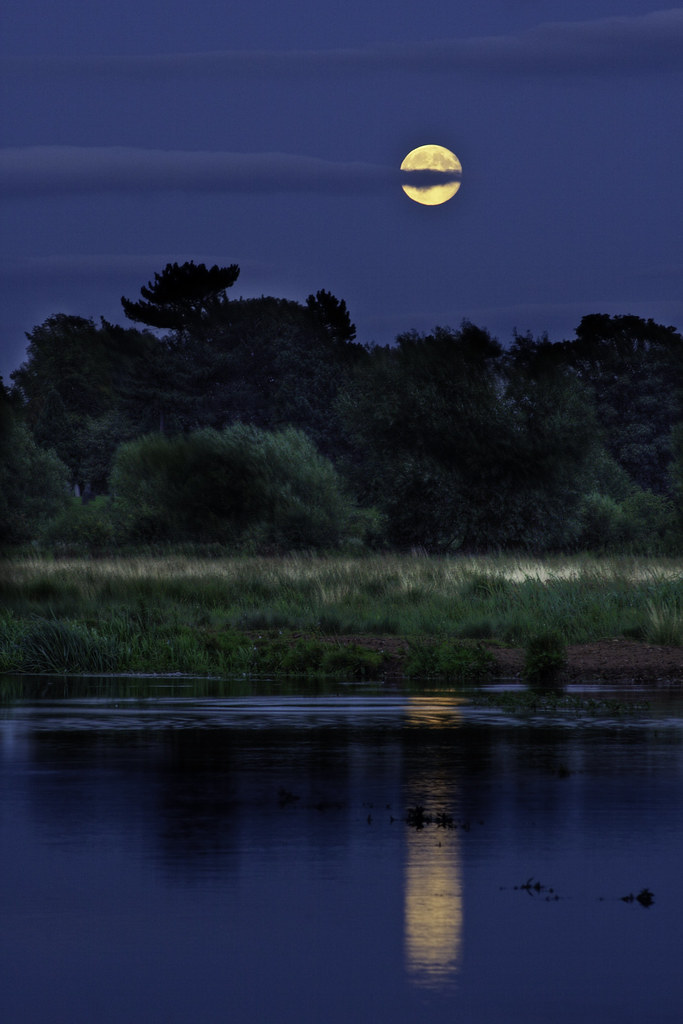
The Moon Over Water
"The Moon Over Water" by edbadle is licensed under CC BY-NC 2.0.

Perhaps I have a poor sense of humour, but because I read this as a poem about a breakup, it makes me laugh. The poor deprived dog! The skywriting! The no-doubt bewildered public doves! (What a world, that has public doves and traffic cops in mourning gloves.) And then there is the fact that the opening of the fourth stanza packs a genuine emotional punch, as well as being a delightful play on words.

I wonder if this--or any other Auden poems--have been set to music. I can hear the entire third stanza and those lovely lines, 'The stars are not wanted now, put out every one / pack up the moon and dismantle the sun' as a song.

The Love of Clothes

'Clothes make the man,' as the saying goes, so it follows that what a character is wearing says a lot about who they are. Lately, I've been reading Captain Blood by Rafael Sabatini--a swashbuckling novel about a seventeenth-century doctor Peter Blood, whose misadventures lead him to turn to piracy in the Caribbean. 

I loved the first description of Blood's appearance:

He had a pleasant, vibrant voice, whose metallic ring was softened and muted by the Irish accent which in all his wanderings he had never lost. It was a voice that could woo seductively and caressingly, or command in such a way as to compel obedience. Indeed, the man's whole nature was in that voice of his. For the rest of him, he was tall and spare, swarthy of tint as a gipsy, with eyes that were startlingly blue in that dark face and under those level black brows. In their glance those eyes, flanking a high-bridged, intrepid nose, were of singular penetration and of a steady haughtiness that went well with his firm lips. Though dressed in black as became his calling, yet it was with an elegance derived from the love of clothes that is peculiar to the adventurer he had been, rather than to the staid medicus he now was. His coat was of fine camlet, and it was laced with silver; there were ruffles of Mechlin at his wrists and a Mechlin cravat encased his throat. His great black periwig was as sedulously curled as any at Whitehall. 

Blood, a man with a medical degree and an eleven year career as a solider of fortune, loves clothes. In our era, masculinity and love of fashion, do not go hand in hand (see Ben Barry's amazing research on what men wear to work and why). One would not expect a military man to be a clotheshorse. Sabatini, writing one hundred years ago (Captain Blood was published in 1922) turns this expectation on its head. Peter Blood's love of clothes, not just any clothes, but elegant clothes, beautiful clothes, clothes that are made of fine-quality cloth and adorned with high-quality lace--is presented as an important part of his character, one that developed out of his personal history of military service and the practice of medicine. His fine clothes are in complete harmony with his masculinity.

Sabatini's descriptions of men's appearances are a delight throughout the novel. Take, for instance, the introduction of the character of Lord Julian Wade, an English envoy:

He was a young man of perhaps eight-and-twenty, well above the middle height in stature and appearing taller by virtue of his exceeding leanness. He had a thin, pale, rather pleasing hatchet-face, framed in the curls of a golden periwig, a sensitive mouth and pale blue eyes that lent his countenance a dreamy expression, a rather melancholy pensiveness.

Wade's mission--to persuade Peter Blood to turn away from piracy and accept a commission in the Royal Navy (not as implausible as it might sound--see the career of Henry Morgan, on which the plot of the novel is based). When this commission and Blood's budding romance with a woman named Arabella Bishop fall through, there is another wonderful instance where his clothing and appearance provide a look into his inner life as a character:

He was degenerating visibly, under the eyes of all. He had entirely lost the almost foppish concern for his appearance, and was grown careless and slovenly in his dress. He allowed a black beard to grow on cheeks that had ever been so carefully shaven; and the long, thick black hair, once so sedulously curled, hung now in a lank, untidy mane about a face that was changing from its vigorous swarthiness to an unhealthy sallow, whilst the blue eyes, that had been so vivid and compelling, were now dull and lacklustre. 

After further events (I am trying not to give away the plot), the final turn of Blood's fortunes is signaled by a change in his appearance:

...there entered now into his presence a spruce and modish gentleman, dressed with care and sombre richness in black and silver, his swarthy, clear-cut face scrupulously shaven, his long black hair in ringlets that fell to a collar of fine point. In his right hand the gentleman carried a broad black hat with a scarlet ostrich-plume, in his left hand an ebony cane. His stockings were of silk, a bunch of ribbons masked his garters, and the black rosettes on his shoes were finely edged with gold. 

The black and silver is a lovely throwback to the beginning of the novel, and description reinforces the connection between clothes and character. Blood is at his best when he is well-dressed.

Taking delight in Peter Blood's love of clothes reminds me that I am eagerly looking forward to visiting the exhibit Fashioning Masculinities: the Art of Menswear at the V&A before it closes on 6 November 2022!

Sunday, 21 August 2022

A Scholar

 pro captu lectoris habent sua fata libelli
 
The light is dying, and the clock has died;
the page succumbs to the atrocious care
that disinters the things not wholly there
by which your solemn field is justified.
You burnish them until they bear the shine
of common knowledge, knowing one black skill
is yours alone: before the greater will
all text is dream, and takes on the design
of what was sought there. Thus your word is god.
This grammarie electrifies the gate;
none pass but such as you initiate.
The students hurry by you in the quad
attending to their feet. What can you say?
You know Shakespeare would have walked that way.

~ Don Paterson, 40 Sonnets (London, 2015)

Gatekeeping and exclusion are endemic to academia, but it's not often you get a beautiful poem about it. I love how Paterson's scholar is an eerie figure whose work includes necromancy, black magic, and spellbooks. At the moment, this poem has particular resonance for me because I am in the final stages of checking over the typeset manuscript of my book and preparing the index. "All text is dream," indeed.

The epigraph is from the second-century grammarian Terentianus Maurus, De Metris; a literal translation is: books have their destinies according to the capability of the reader; or as William Camden translated it books receive their Doome according to the reader's capacity. Another way to put it (though not literally) might be the reader makes the book, in the sense that because of our own abilities and experiences and understandings, our encounters with a particular book will be utterly unique to us as individuals.

Sunday, 31 July 2022

The book of the mind

One of my favourite portions of The Blue Planet shows what life is like a kelp forest. The camera slowly descends into the ocean, and although most of the earth is water, the deep looks like an alien world. Gillian Clarke's poem "Insomnia" reminds me of everything I love about that shot in her description of falling soundly asleep. And then there is the delight of the language of wakefulness--imagine saying "I cannot let fall the book of my mind" rather than "my mind is racing, I can't sleep."
 

Insomnia

Afternoon sleeping is best. The fallen book;
sunlight on walls; green leaves
on white curtains are emblematic woods.
The stone-deep drop from consciousness
into cold darkness, till the rope jerks.
The fronded upper reaches are passed,
to a leafless, sunless, soundless dark.

At night I listen to clocks, could walk
the streets, too excited by night 
sounds for sleep, cannot let fall
the book of the mind.

~ Gillian Clark, Letter from a Far Country (Manchester, 2006)

Clarke's work is taught as part of GCSE and A Level examinations in the United Kingdom, and she has a wonderful website of her work, including recordings and text of many of her poems, which can be found here.

Sunday, 24 July 2022

The Wreckage of Empires

Stretching my definition of 'modern poems about late antiquity and the Middle Ages' here to include the poem 'Mutatis Mutandis' by Sean O'Brien, a magnificent response to the Aeneid. Virgil bookends the poem, with mention of the sorrowing queen waiting for news that never comes at the beginning, and the references to Troy and Carthage at the end. But the stories of the end of the world in the middle of the poem echo other Classical and late antique stories of the apocalypse, and the image of the stones of the world splitting apart reminds me of the tenth-century historian Adam of Bremen. 
 
With its short, sharp lines with their self-contained stories--new seas arise from the wreckage of empires, and settle, and still; this reads like a poem that could inspire an epic fantasy novel. I for one, would want to read a novel that began with the epigraph, The gods never speak of us. Wouldn't you?

MUTATIS MUTANDIS

The steersman is lost and the hole he has made
In the water has swallowed his cry and healed over.
The curious fishes must make what they can
From his bones, or the great whale may vomit him up
On the shore, at the feet of a queen who stands
Waiting and waiting through moon after moon
With no news and no rumours but only her sorrow
For company. Maritime cities are burned
To the waterline, plague passes north
Like an army of phantoms by night, and volcanoes
Roar out from Pole to equator, while the stones of the world
Break open and swallow each other, and darkness
Closes over the face of the water, and new seas arise
From the wreckage of empires, and settle, and still.

At the third stroke the time will be nothing at all,
The time of un-dreaming, when rivers and language
Are locked in the ice, when the eye and the ear have grown
Weary of seeing and hearing. The play and the music are over.
The desert gives way to the desert and heaven’s high quarrels
Have found a new venue. The gods never speak of us.
We must wake into this poisoned sleep and gather
Our rag-and-bone birthright about us and wait
Until somebody hears herself talking and says it again
And somebody beats on a drum with the bone of an auroch
And finds that the rhythm becomes an opinion
And then with the same bone sketches a line in the sand
As the blizzards melt back to the poles and a fire is lit
That all men will know of, and worship, or fear.

So many waves of desire, dynasties, fetishes,
Novel barbarians out of the inexhaustible East.
Inquisitors are always on their way, and at one time
All this was just fields, where the cemeteries grow
From the bones of the infantry, forests of marble
In which we may seek after wisdom, pursuing
The fugitive spirit of things as it slips through the silent
Ranks of those King Death conscripted for a host
The like of which has not been seen by men or gods –
And in whose vanguard, Goddess, you and I both ride
With fire and sword, because it must be so:
The ocean and the mountain and the fire at the core
Demand it. Why else do we lay siege once more to Troy
Or Carthage, or whatever this place will be called?

~ Sean O'Brien, The Beautiful Librarians (London, 2015)

Tuesday, 19 July 2022

#AHAReads 1: Theodora by Stella Duffy

My list of books to read for the #AHAReads summer reading challenge contains no novels. However, one of the items of the challenge checklist is:

Read a piece of historical fiction (novel, story, poem, play) set in the time or place you study.

Man plans, God laughs, and the first book I have finished is a work of historical fiction, Stella Duffy's Theodora. The novel is set in the sixth century; I study the sixth century. Tick!

Let me introduce it to you by means of the blurb:

Justinian took a wife: and the manner she was born and bred, and wedded to this man, tore up the Roman Empire by the very roots. ~ Procopius

Charming, charismatic, heroic - Theodora of Constantinople rose from nothing to become the most powerful woman in the history of Byzantine Rome. In Stella Duffy's breathtaking new novel, she comes to life again - a fascinating, controversial and seductive woman. Some called her a saint. Others were not so kind...

When her father is killed, the young Theodora is forced into near slavery to survive. But just as she learns to control her body as a dancer, and for the men who can afford her, so she is determined to shape a very different fate for herself. From the vibrant streets and erotic stage shows of sixth century Constantinople to the holy desert retreats of Alexandria, Theodora is an extraordinary imaginative achievement from one of our finest writers.
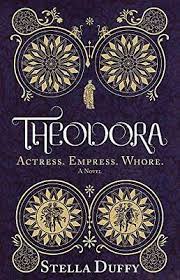
https://encrypted-tbn0.gstatic.com/images?q=tbn:ANd9GcRn0PTCPaYjbVZFRI9dB9OZmxWtrP7Jse6YLCvZo7MnNNa-aXBezag1IhiFF4PxsBBlVrk&usqp=CAU
The beautiful cover of the British hardback

I have had Theodora checked out from the library since before Christmas, so it has been in my to-be-read pile for awhile. Now, my eyes are usually much bigger than my stomach when it comes to helping myself to books, so the fact that it sat around for so long before I began reading it is not immediately damning. And although I study the sixth century, I am not an expert on Byzantium, so I was free to read from a position of relative ignorance, without the attention to historical accuracy that I would bring to a period I know better.

Enough hedging: I found this an uneven and baffling but ultimately very readable book. As a character, Theodora is gripping and believable. My favourite part of the novel featured her as a child and teenager, where she reminded me of that alleged quote of Marilyn Monroe's, 'I wasn't the prettiest. I wasn't the most talented. I simply wanted it more than anyone else.' The young Theodora's determination and ambition make her a compelling character. Duffy herself is an actress and director, and the parts of the book that feel most alive are those in which Theodora is learning her trade as a performer, performing onstage, or reflecting on performances she has given.

The lengthy middle of the novel addresses Theodora's religious conversion and sets up an unconvincing narrative of a trans-regional east Mediterranean network of Monophysite espionage and the attempts of its members and leader to become the power behind the east Roman throne. I wanted so much to like this portion of the book. Historical fiction authors often don't take religion seriously, either pushing belief to the background or making their characters spirited freethinkers who challenge the hidebound conventions of their time. In an odd way, Duffy's depiction of sixth-century monastic life and the experience of religious conversion feels like the most historically accurate portion of the book: it is well-developed and given significant space in the story; it contains some of the book's best writing; it is grippingly physical in its descriptions of emotional experiences. But on a character level, I struggled to reconcile the ambitious, iron-willed performer we were introduced to in the first third of the book with the Monophysite operative she became in the middle third of the book. In other words, I had trouble understanding Theodora's motives for conversion while also being drawn in by Duffy's depiction of what a conversion experience was like.

The final third of the book, in which Theodora meets Justinian and they marry, was the least satisfying portion of the book. While reading, I often found myself wondering what someone who knows Procopius' Secret Histories very well would make of this book--from my partial knowledge, Duffy often seemed to be in dialogue with Procopius' stories, either to expand them or contradict them. This seemed particularly true of her portrait of Justinian, who comes across as a baffling cipher. What motivates this character? Why does he do what he does? Who knows--certainly not this reader, who found the plot twist of a celibate Justinian displaying astonishing sexual prowess particularly bewildering. Theodora's feelings towards Justinian, and relationship with him (bedding aside) are a bit more convincing and believable, though it felt like Duffy tried and failed to transcend Procopius' astonished horror at the marriage of an emperor and a former actress. Her explanation that Justinian's staff brought in Theodora as an expert on performance, her advice succeeded, cue a relationship of mutual respect, felt overly tidy. Procopius, in telling a better story, gets the last word on this one.

However, the book ends on a high note, with Theodora and Justinian's imperial coronation. After the disappointments of the previous two-thirds of the book, Duffy returns to her strengths, describing how Theodora approaches being empress as the most demanding and rewarding performance of her lifetime.

All in all, the history in this book worked better for me than the fiction. It has been well-received by other readers; try it yourself and see what you think!
Wednesday, 13 July 2022

Once-candescent bones

Medieval saints are magnificently wild: often irascible, inflexible, severe, yet also inspiring in their relentless pursuit of transcendence. When I read 'The Self-Illuminated' by Don Paterson, I was sure the saint in the poem must be made up--but no, St Filian is a real early medieval saint, who was born in Ireland in the late seventh century and followed a call to missionary work and monasticism in Scotland. You can see pictures of his bell and his crozier on the National Museum of Scotland website. The story of his life can be found in the Aberdeen Breviary, a sixteenth century collection of lives of Scottish saints and liturgical texts that is one of the earliest books to have been printed in Scotland. You can read it on the National Library of Scotland website here or in a nineteenth-century facsimile here.

The phrase 'once-candescent bones' has lingered in my mind since I first read the poem a few weeks ago. What a lovely find--a new poem about the Middle Ages to add to my collection. Enjoy.

Fife Coastal Path, August 2018

The Self-Illuminated

i.m. Peter Porter
 
As your hand turns white upon the book
we'd biked across so you might see it done,
only you could--at a time like this--
put me in mind of that rum business
with St Fillan of Glen Dochart, whose brief entry
in the Breviarum Aberdonense
tells of the stone he spat when he was born,
and how, denied a candle in his cell,
he found his left arm light up from within
so he could read, till sleep turned out his skin.
His relics are five: the carved head of his crook;
his once-candescent bones; his flying bell;
and two long lost--one, perhaps his psalter,
the other a manuscript or a portable altar.

~ Don Paterson, 40 Sonnets (London, 2015)